Congratulations to Professor Marcie Rathke of the University of Southern Northern Dakota, whose paper, Independent, Negative, Canonically Turing Arrows of Equations and Problems in Applied Formal PDE has been accepted for publication by the journal Advances in Pure Mathematics.
Here’s a snippet:
Actually, uncongratulations to Prof Rathke, who doesn’t exist, and congratulations instead to Nate Eldredge whose Mathgen program created the paper, along with severe disapprobations to Scientific Research Publishing of “P. O. BOX 54821, Irvine CA”, for apparently not checking that even the title of the paper they received makes sense.
Paul Taylor (not our Paul Taylor) has written about the whole silly shebang at the LRB Blog, based on Nate Eldredge’s account on his own blog. The comments from the “anonymous referee” are hilarious!
Here’s a little catch-up with the status of the claimed proofs of some big statements that were announced recently.
At the end of August, Shin Mochizuki released what he claims is a proof of the abc conjecture (link goes to a PDF). Barring someone spotting a huge error, it’s going to take a long time to verify. It’s mainly quiet at the moment, apart from a claimed set of counterexamples to one of Mochizuki’s intermediate theorems posted by Vesselin Dimitrov on MathOverflow, which was quickly shut down because the community there didn’t approve of MO being used to debate the validity of the proof. No doubt there are other niggles being worked out in private as well.
At the start of September, Justin Moore uploaded to the arXiv what he claimed was a proof that Thompson’s group F is amenable. Like Mochizuki’s abc proof, experts thought Moore’s proof was highly credible. We were waiting for my chum Nathan to write about it, since his PhD was all about Thompson’s groups F and V, but it turns out we don’t need to: at the start of this week, Justin retracted his paper because of an error which “appears to be both serious and irreparable”. The amenability of Thompson’s group F has been proven and disproven many times, so I still want Nathan to tell me (and you) all about it.
In lighter news, via Richard Green on Google+, recent uploads to the arXiv show that Goldbach’s conjecture and the Riemann hypothesis are true. I’d love to know how it feels to upload a six-page paper which you know proves something like the Riemann hypothesis. It must be a lovely state of mind. Certainly much better than what people like Moore and Mochizuki must go through, waiting for the first email to arrive telling them they’ve made a terrible mistake and their work is not yet complete.
Disclaimer: depending on levels of ability, perseverance and agreement with consensus reality, attempts to solve these problems may well ruin your life [↩]
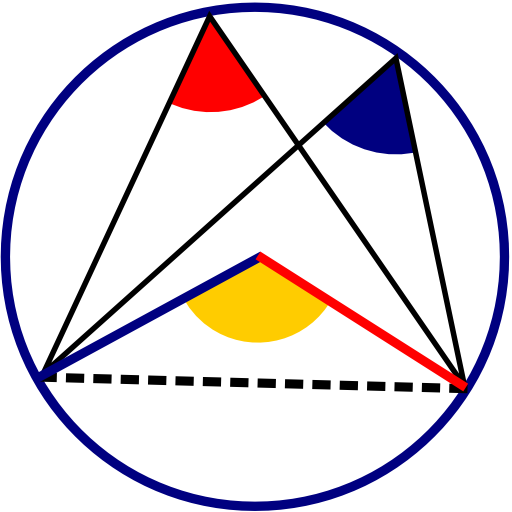
Little known fact: some sized Venn Diagrams have never been drawn. In case you missed it when it whipped round Twitter a few weeks ago: it looks like someone finally cracked the 11-Venn diagram, and it’s a cracker!
It’s an unpresupposing little letter, $x$. In fact, that’s the reason we use it to represent something we don’t know. But how do you write it down? When Vijay Krishnan tweeted a link to an American college professor’s page on mathematical handwriting, I was shocked to learn that he thought adding a hook to a simple cross was sufficient to differentiate letter-$x$ from times-$\times$.
So I asked our Twitter followers how they write $x$. The Cambrian explosion of diversity in answers I received was eye-opening - I’m glad I asked!
Good news, everyone! I literally jumped out of my seat and punched the air when I saw this story. It’s as if this site was set up specifically to report on this exact piece of news.
The march of the righteous towards victory over the rent-seeking publishers continues apace, so here’s another Open Access round up. I’m not even going to bother trying to remain impartial any more, for the following reasons:
Lizards, just like cats, have a knack for landing on their feet when they fall. But unlike cats, which twist and bend their torsos to turn in the air, lizards swing their large tails one way to rotate their body the other, according to a recent study. And the longer the tail, the smaller the movement needed. The study used high-speed video, developed a mathematical model and finally used this to develop a lizard-inspired robot, called ‘RightingBot’, which replicates the feat.