Double Maths First Thing is spinning plates
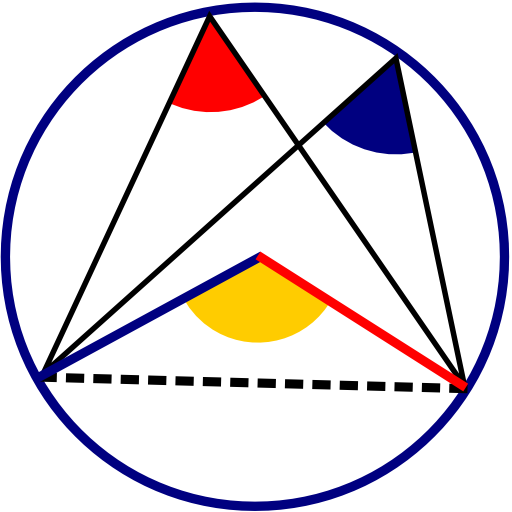
Hello! My name is Colin and I am a mathematician on a mission to spread the joy and delight of doing maths. This week’s “oo!” moment was this lovely observation by Ruud de Rooij, followed by an “oh wow!” when I figured out the induction step of the proof. My solution, which is obviously a spoiler, is here.
Thanks to everyone who pointed out an error in last week’s post: this is the correct link to Ayliean’s Wordle Tetris video. Thanks also to everyone who fed back on Issue 4D – I was worried it might get some pushback, but I’m glad to know that my geeks are with me.
Links
My partner has ancestors from Lviv in Ukraine, which led me to learning about The Scottish Book some years back. I loved the story of Per Enflo and the goose. One of the problems was about whether you can deduce the shape of a drum from the sound it makes. The answer is (in theory, at least) no – and Brantley Vose and team have tried to check experimentally. Lovely stuff. Dave Richeson has also been doing some experimental maths after talking to Colm at G4G.
Cycling back to maths and music, here’s a smashing piece about Jimi Hendrix’s engineering chops. Meanwhile in “questions you didn’t know you needed answered”, which countries are the squarest and the most circular?
DMFT favourite Karen Campe got in touch to point out that her blog has reached its tenth anniversary! Here’s to many more.
Pattern is a big thing for mathematicians – we love the story of Mendeleev leaving gaps in the periodic table and Colin Wright’s famous juggling-trick-deduction talk. That’s right, I speak for all mathematicians now. Ryan Moulton is applying a similar analysis to breakfast. The most important pattern of the day, if you ask me.
Lastly, a historical story that had passed me by: Demian Goos finds evidence that some of Cantor’s famous proofs are at least partly Dedekind’s.
Currently
Rob Eastaway has some free talks next week: one at the London Interdisciplinary School in Whitechapel, London on Tuesday 10th March at 5pm, and one in Manchester on Thursday March 12th at 5pm.
At “press time”, by which I mean “press ‘schedule’ and forget about DMFT for another week time”, Tony Mann hadn’t pressed ‘submit’ and forgotten about the Carnival for a few months, but I imagine he’ll do that very soon. Next month’s host is Tom Crawford, and you can submit anything interesting at the Carnival page.
A grant I approve of, but wish there was no need for: the Grace Chisholm Young Fellowships are designed to allow mathematicians to take a break in their career for – for example – family responsibilities, while not leaving a gap on their CV. While it’s administered by the LMS’s Committee for Women and Diversity in Mathematics, it’s not restricted to women. (I’m a man who took a career break to be primary carer for the kids, and think it should be more common.) Deadline for applications is April 27th.
That’s all I’ve got for this week. If you have friends and/or colleagues who would enjoy Double Maths First Thing, do send them the link to sign up – they’ll be very welcome here.
If you’ve missed the previous issues of DMFT or – somehow – this one, you can find the archive courtesy of my dear friends at the Aperiodical.
Meanwhile, if there’s something I should know about, you can find me on Mathstodon as @icecolbeveridge, or at my personal website. You can also just reply to this email if there’s something you want to tell me.
Until next time,
C