In this series of posts, we’ll be featuring mathematical video and streaming channels from all over the internet, by speaking to the creators of the channel and asking them about what they do.
We spoke to Alex, whose channel Another Roof covers higher-level maths topics he can’t necessarily cover with the school students he teaches.
Channel title: Another Roof
Link: youtube.com/anotherroof
Topics covered: Maths, with an emphasis on building theory
Average video length: 40 minutes
Recommended videos: The Surprising Maths of Britain’s Oldest* Game Show, It Took 2137 Years to Solve This
What is your channel about, and when did it start?
I’m Alex, and I’ve been teaching in some capacity since I was 16. I started as a tutor to my friend’s sister, then tutored kids in schools, taught and lectured undergraduate students while I completed my PhD, and finally became a full-time teacher at a school. As you’ll see by my lengthy responses to these questions, I just love explaining stuff.
I was an undergrad when channels like Numberphile and Veritasium took off, and I loved that people were using the platform to educate. I could do that, I thought, but I never had the confidence. Ten years later, I finally made my first video.
I think teaching in a school pushed me to do it — as much as I enjoyed that job, I didn’t have an outlet to discuss higher-level mathematics. So, I started lecturing advanced stuff to my camera, and luckily, people watched the results.
Who are you? Tell us about yourself.
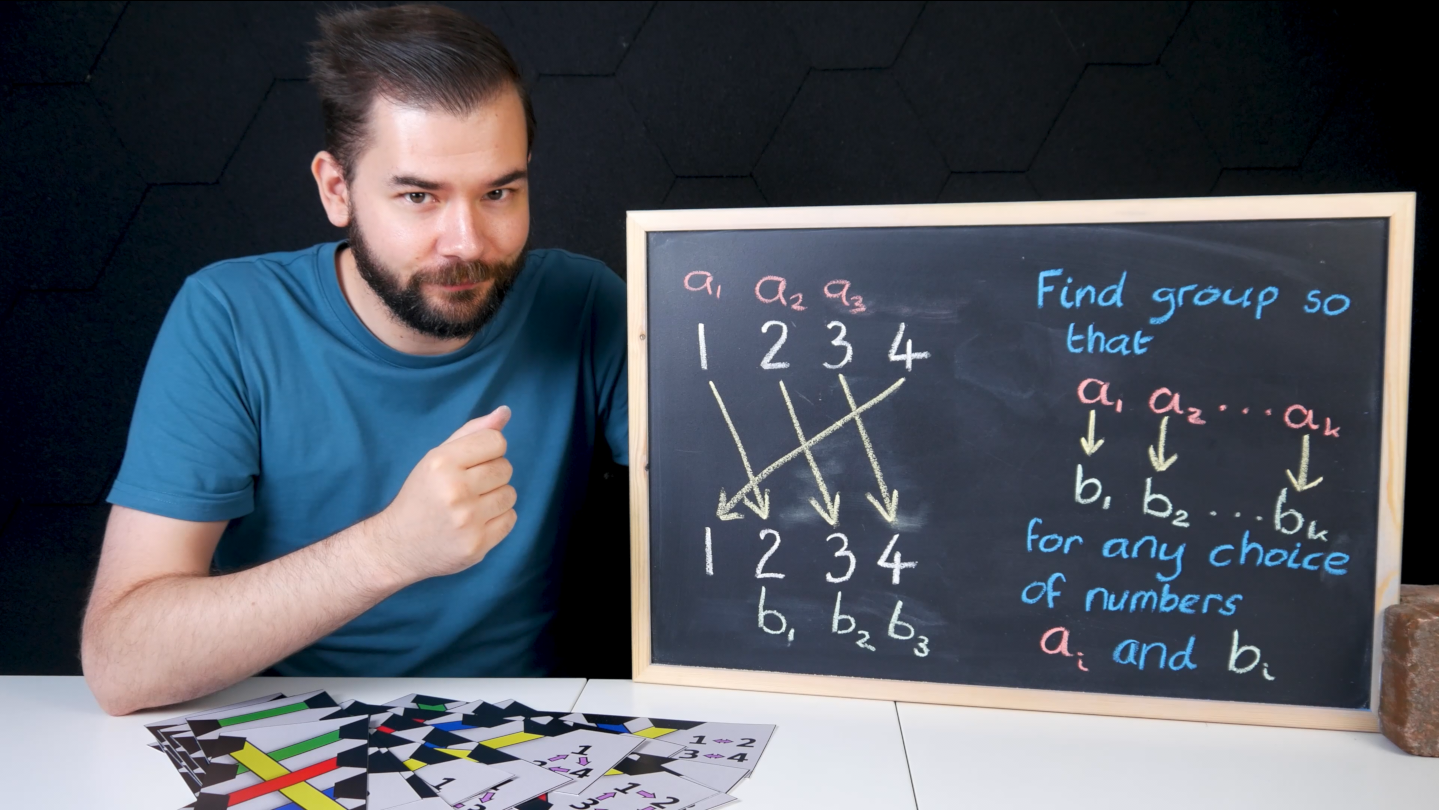
Aside from making YouTube videos I continue to teach maths and physics on a private basis to students aged 14-21, whether they are preparing for their GCSEs or studying for an undergraduate degree. Even if I achieved 3Blue1Brown-levels of success, I don’t think I could stop teaching. Positive comments are one thing, but seeing the joy of a eureka moment in the eyes of someone who severely struggles with maths — that’s what I live for.
Who is the intended audience for the channel?
I usually pitch my videos to an audience who at least have a STEM background. This is probably terrible marketing but I don’t think my videos are for everyone — I do my best to make them accessible to a wide audience and bring as many people on the journey as possible. That said, I appreciate that the subject matter can be quite dense and 40 minutes might be too long for people unfamiliar with the topic.
How long are your videos and how often are they released?
Unfortunately, I’m afflicted with perfectionism so I don’t release videos as often as I would like. I aim for one every six weeks or so (current project notwithstanding). To compensate for this, my videos tend to run a little longer than the average popular science video, and go into a deeper level of detail. Sure, I could tell these mathematical stories by skipping details, but my goal isn’t to get to the punchline — the journey to the answer is the most illuminating aspect of mathematics.
Why should people watch your videos?
British Mathematician Timothy Gowers wrote an article about the “Two Cultures of Mathematics,” (PDF) where he discussed how pure mathematicians tend to lean towards being problem-solvers or theory-builders. When I started my channel, most of the channels that inspired me leant towards videos depicting a tough problem and a nice solution. I love solving problems but what fuelled my passion for mathematics is constructing theory from a few simple assumptions. It grants us access to world where we are free to create, unconstrained by the number of dimensions our physical bodies are trapped in, or by the Euclidean distance on which our universe insists. So, I feel my videos lean more towards theory-building than those of my peers. And I mean that literally, as the mathematical building blocks I build are often actual bricks displaying axioms and results!
I began this journey with a four-part series on the Zermelo-Frankel axioms of set theory, showing how we can start with a few rules about building sets and build various number systems up to the complex numbers. My series on the Golay Code and Sporadic Groups culminates with the simple axioms of group theory and how they lead to some of the most wondrously unexpected structures yet discovered. Even my videos on problem solving, like asking whether a bouncing DVD logo will always hit the corner, usually involve generating knowledge from the ground-up.
What are some highlights of the channel so far?
I try to keep myself sane by reminding myself not to obsess over the view-counts. And I consistently fail at this. So, I did celebrate when my Countdown video crossed one million views. Whatever else happens in the current algorithmic climate, at least I’ll have one that crossed that threshold.
On the other end of the scale, a video that didn’t perform well was one on the Witch of Agnesi, a strange curve with an even stranger name. I wound up visiting the John Rylands library and flicking through a 250-year-old book to uncover why it became known as the witch, meanwhile visually answering why \(1 – \frac{1}{3} + \frac{1}{5} – \frac{1}{7} + \ldots \) is equal to \(\frac{pi}{4}\). It didn’t do well but I’m really proud of it!
What exciting plans do you have for the future?
Since Christmas, I’ve been working on one single epic video that I’m hoping to release around the end of August. I’m keeping the topic under wraps, but it’s about a massive mathematical event with lots of drama and twists, and centred around a subject that affects all of us. I cannot wait to finish and share it — subscribe so you don’t miss out!