You're reading: Posts By Christian Lawson-Perfect
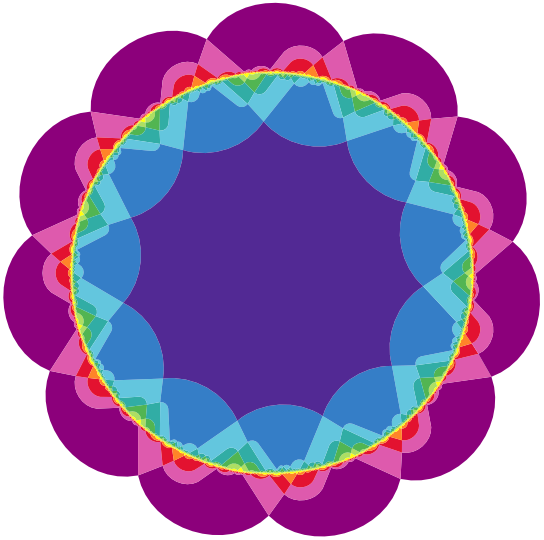
11-category Venn diagram drawn
Little known fact: some sized Venn Diagrams have never been drawn. In case you missed it when it whipped round Twitter a few weeks ago: it looks like someone finally cracked the 11-Venn diagram, and it’s a cracker!
Prismatoy: a parallelepiped you can hold
Applied mathematicians love parallelepipeds. The one I share my office with is always drawing them, and banging on about how great they are. Well, I think I know just what to get him for Christmas.
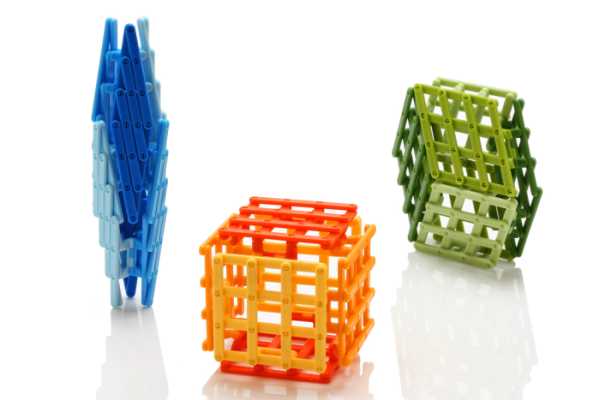
Hopson Kinetic has, for reasons only they can know, made a plastic parallelepiped toy called Prismatoy. It’s constructed from “72 individual jointed parts” and is roughly the size of a stack of floppy disks. The slogan is, “What shapes will you find?” Without having played with one, I’m going to go with “a variously sheared cube”.
It’s $14.99, and comes in orange, green or blue flavours. The site says “international shipping is currently unavailable”, which I assume means they won’t deliver outside the US.
Online shop: Hopson Kinetic
Using Computer Modern on the web
Computer Modern is the family of typefaces developed by Donald Knuth for TeX. It’s so good-looking that some scientists do research just so they can write it up in Computer Modern.
I love TeX and everybody knows it, so I was pretty delighted to hear that the cm-unicode project compiles versions of the Computer Modern fonts in a few formats, including TTF. Having the fonts in TTF format means you can use them in non-TeX environments, in particular on the web.
I’ve run the cm-unicode fonts through codeandmore’s @font-face kit generator to get all the weird formats that the various browsers insist on. The result is a set of packages containing everything you need to use the Computer Modern typefaces on the web.
I’ve put up a page containing examples of each face in use and links to the packages. Enjoy!
Let’s talk about X
x
It’s an unpresupposing little letter, $x$. In fact, that’s the reason we use it to represent something we don’t know. But how do you write it down? When Vijay Krishnan tweeted a link to an American college professor’s page on mathematical handwriting, I was shocked to learn that he thought adding a hook to a simple cross was sufficient to differentiate letter-$x$ from times-$\times$.
So I asked our Twitter followers how they write $x$. The Cambrian explosion of diversity in answers I received was eye-opening – I’m glad I asked!
Engineered paper by Matthew Shlian
[vimeo url=http://vimeo.com/47502276]
Matthew Shlian sculpts paper by folding and cutting it.
Bill Thurston has died
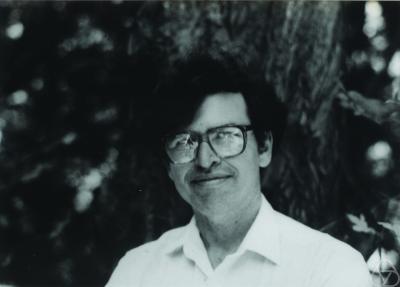
William Thurston died yesterday of cancer, aged 65.
Thurston was one of the greatest contemporary mathematicians; a huge figure in low-dimensional topology. I won’t bother writing out a mathematical biography – Wikipedia and MacTutor have all the relevant information, as usual, and I won’t pretend I know a huge amount about the exact details of Thurston’s achievement. Instead, I’ve tried to gather together a few links from around the web that give an idea of why Prof Thurston was so widely admired.