Maths – as teachers are fond of telling anyone who’ll listen – is everywhere. In this difficult second episode of the difficult second series of Relatively Prime, Samuel Hansen shows us a few important places where it can be a help: at the petrol pump, at the birthday party, in the car park and at the bar — or rather, in deciding whether to go.
You're reading: Posts By Colin Beveridge
Relatively Prime Recap: Season 2, Episode 1: The Lexicon
![]()
I’ve been waiting for the new season of Relatively Prime for more than three years. I’ve listened to Chinook, the highlight of Season 1, countless times since then. And finally, finally, it’s arrived in my podcast feed.
Woo, and for that matter, hoo!
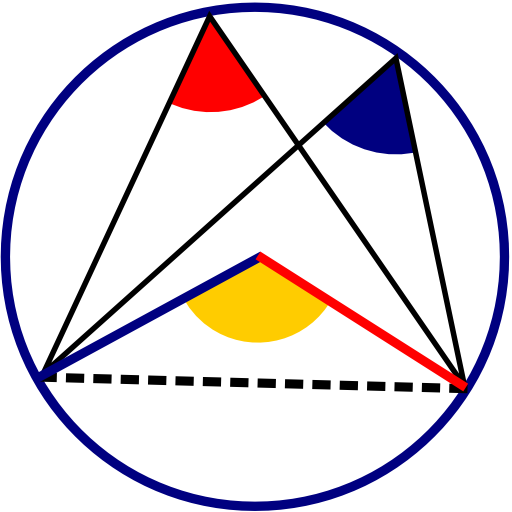
A geometrical approximation for π
If you were paying very close attention last week, you’ll have noticed my attempt to come up with an estimate of π, geometrically, as part of The Aperiodical’s π Day challenge (even if it’s not really π Day):
Oo, my second effort at estimating π came to 3.14151, correct to 0.003%! cc @aperiodical pic.twitter.com/2vuvys0mka
— Colin Beveridge (@icecolbeveridge) March 10, 2015
Education Round Up
Hello. I’m Colin Beveridge and I’m stealing Christian’s round-up introduction, since we’ve had a handful of links of teaching and learning sent our way. Let’s get this show on the road!
The Chris Tarrant Problem
This is a puzzle I presented at the MathsJam conference. It’s a problem that gave me a headache for a week or so, and I thought others might enjoy it, too. I do know the answer, but I’m not going to give it away — you can tweet me @icecolbeveridge if you want to discuss your theories! (As Colin Wright says: don’t tell people the answer).
You’ve heard of the Monty Hall Problem, right?
Review: Wuzzit Trouble
Had Wuzzit Trouble been around in 2001, when I was teaching Diophantine equations… well, there wouldn’t have been an iPhone to play it on, and it would probably have been too graphically-intensive for the computers available at the time. However, I’m willing to bet fewer of my students would have fallen asleep in class.
Axes to Axes
In which the intrepid maths-crime-fighting duo of Gale and Beveridge find themselves thrust back to a time before people could do maths properly.
It had been a quiet night at the Aperiodical police station. Apart from a few cases of broken scheduling in Excel formulas – nothing a bit of TIME() in the cells wouldn’t put right – there was nothing.
At 11pm, the phone rang. I looked at Sergeant Gale. Sergeant Gale pointedly looked at the phone, raised an eyebrow, and returned to his sudoku.
“Maths Police, bad graphs department. Constable Beveridge speaking, how can I help?”