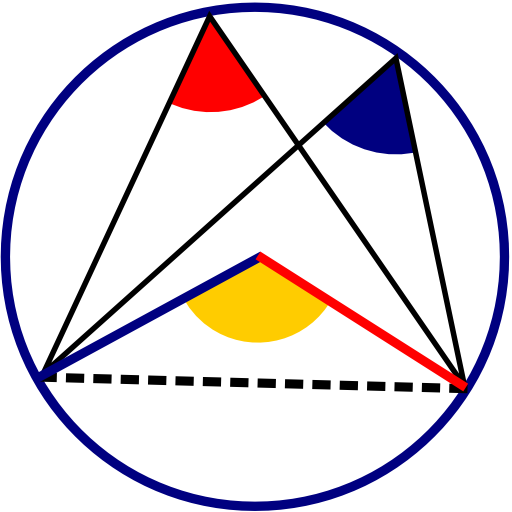
We’ve gone crashing into October and that means it’s also #Mathober, an annual maths/art celebration taking place on the internet. If you’re into maths or art, or both, and would like to try producing something creative this month, on an informal schedule, #mathober provides a structure for you to do that.
You're reading: Posts Tagged: fractal kitty
Double Maths First Thing: Issue 2D
Double Maths First Thing is halfway through Ouch to 5k.
Hello! My name is Colin and I am a mathematician on a mission to spread the joy of doing maths. And this week, I’ve been doing some cool maths, looking at Oskar van Deventer’s Blocks puzzle and models of crowd movement.
I’m also half-following the British & Irish Lions rugby tour: I’m told by reliable sources that no pair of the 47 squad members share a birthday. What are the chances?!
Links
Since pi approximation day is coming up next week, let’s start by looking at pi’s evil twin, the lemniscate constant.
KMB, via a comment on last week’s post pointed me at the fun-but-infuriating Intvania
Tom Mellor has sent me an equally infuriating set of mathematical dingbats. Enjoy/suffer!
Bob Bosch is doing, as usual, lovely things with knight’s tours.
And to round off a mathstodon-heavy link section (with more to come), here’s Fractal Kitty with some origami butterflies.
Currently
Not only is Tuesday Pi Approximation day, it’s also the traditional date for MathsJams around the world, including my corner of it; find your local Jam, or details on how to start one, here.
If you or someone you know has recently finished a great dissertation, and wants to write an article about it for Chalkdust (a magazine, I understand, for the mathematically curious), the IMA are offering a £100 prize to the best submission. Learn more here.
And if you’re interested in mathematical animation, the June TMiP Animation Challenge playlist is live. Read more about the challenge here.
That’s all I’ve got for this week. If you have friends and/or colleagues who would enjoy Double Maths First Thing, do send them the link to sign up — they’ll be very welcome here.
If you’ve missed the previous issues of DMFT or — somehow — this one, you can find the archive courtesy of my dear friends at the Aperiodical.
Meanwhile, if there’s something I should know about, you can find me on Mathstodon as @icecolbeveridge, or at my personal website. You can also just reply to this email if there’s something you want to tell me.
Until next time,
C
Double Maths First Thing: Issue 1F
Double Maths First Thing only exports lost puffins
Hello! My name is Colin and I am a mathematician on a mission to spread joy and delight, and to find excuses to do interesting maths. (If you could use an interesting mathematician — for the purpose of solving problems, slinging code, writing content or making the world a better place, give me a shout!)
This week it’s the first half of the Easter break here — and the kids have finally reached an age where they value a lie-in. I finally understand why middle-aged people say the morning is the best part of the day: you can get on with stuff without having to referee squabbles of tell them to turn Spongebob down for the fifteenth time.
Links
Let’s start with some lovely mathematical art: Dori the Giant’s 13 Animals, each made from 13 circles. I think the walrus is my favourite.
I enjoyed this tootstorm from Robin Houston about Yuu Asaka’s deconstructed jigsaw puzzles. I love it when someone says “it’s always this way. Why not do it a different way?”
Unless, of course, they’re in charge of the world’s largest economy and don’t have a Scooby-Doo what they’re doing. Matt Parker has the breakdown, so that I don’t have to.
While doing research on mountweazels, I came across the Wikipedia page for Claude Litre. Having written a song that claimed there was an SI unit named after Nelson Candela, I heartily approve.
I suppose there ought to be something halfway serious in here, even if it’s the holidays: here’s a nice piece about breaking down tricky probabilities.
Currently
We’ve got a new Carnival of Mathematics courtesy of Fractal Kitty — in case this round-up of interesting maths isn’t enough for you. (It includes many things I missed).
One of the perks of running a newsletter is that I get to promote excellent work by excellent people — if you teach maths, and need either 15-minute activities (which can be stacked to make longer sessions), you should check out Alison Kiddle and Katie Steckles‘ webshop at 15minutemaths.com
That’s all I’ve got for this week. If you have friends and/or colleagues who would enjoy Double Maths First Thing, do send them the link to sign up — they’ll be very welcome here.
If you’ve missed the previous issues of DMFT or — somehow — this one, you can find the archive courtesy of my dear friends at the Aperiodical.
Meanwhile, if there’s something I should know about, you can find me on Mathstodon as @icecolbeveridge, or at my personal website. You can also just reply to this email if there’s something you want to tell me.
Until next time,
C
Double Maths First Thing: Issue 1A
DMFT is six months old! It’ll probably be walking soon.
Hello! My name is Colin and I am a mathematician on a mission to spread joy and delight in doing maths, for any reason or for none.
I have taken on a slightly silly, but at the same time DEADLY SERIOUS challenge to become good enough at blindfolded solving to take part in a competition in May in Weston-super-Mare (twinned, according to Moose Allain, with Champion the Wonder Horse). If you want to follow my progress, follow this link to Mathstodon.
I also ran the past month’s Carnival of Mathematics — they’re always on the lookout for new hosts, so do follow the instructions if you have some sort of maths blog and would be willing to host.
Links
A very easy first link this week, especially for a folk-topologist: when rivers end up in different watersheds. (A folk-topologist just needs three dimensions and a proof.)
Filed under “things I never knew existed and NOW I NEED TO HAVE”: a pop-up Elements of Euclid. If it goes missing from the Smithsonian, I trust you’ll be able to provide me with an alibi.
You know what else is cool? Quaternions are cool. Jason Fantl has a post explaining how to derive them, and I hope to have time to read it (rather than just look at the pictures) soon.
Possibly even cooler than quaternions is mathematical art, and Fractal Kitty is one of the top exponents (see what I did there?) of it. I enjoyed this post about colouring circles on a path.
Finally, exploring new concepts in paper structure, here is a choose-your-own-adventure exploration of parking functions.
Currently
I don’t BlueSky, but one doesn’t need to to see the #MathArtMarch challenge prompts and responses that Ayliean is currently organising. Join in! Catch up if you want to! Dip in and out if you prefer!
On Thursday March 6th (tomorrow, if you’re reading this the day it’s released), Dr Jamie Gallagher is giving a free online talk about science engagement at 2pm.
That’s all I’ve got for this week. If you have friends and/or colleagues who would enjoy Double Maths First Thing, do send them the link to sign up — they’ll be very welcome here.
If you’ve missed the previous issues of DMFT or — somehow — this one, you can find the archive courtesy of my dear friends at the Aperiodical.
Meanwhile, if there’s something I should know about, you can find me on Mathstodon as @icecolbeveridge, or at my personal website. You can also just reply to this email if there’s something you want to tell me.
Until next time,
C