
Vi Hart, Andrea Hawksley, Henry Segerman and Marc ten Bosch each independently have long track records of doing crazy, innovative stuff with maths. Together, they’ve made Hypernom.
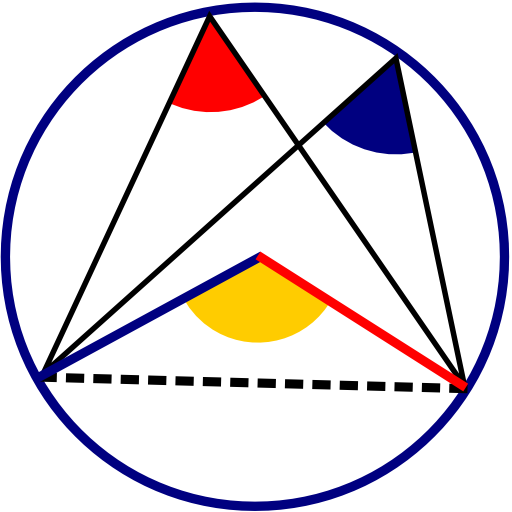
Vi Hart, Andrea Hawksley, Henry Segerman and Marc ten Bosch each independently have long track records of doing crazy, innovative stuff with maths. Together, they’ve made Hypernom.
My wife’s grandmother is a fearsome character. She’s in her nineties but still has all her wits about her. In fact, she’s got more than her fair share of wits. Whenever we visit her, she hits me with a barrage of questions and puzzles collected from the last several decades of TV quiz shows and newspaper games pages. My worth as a grandson-in-law is directly proportional to how many answers I get right.
One of her favourite modes of attack is the “30 Second Challenge” from the Daily Mail. It looks like this:
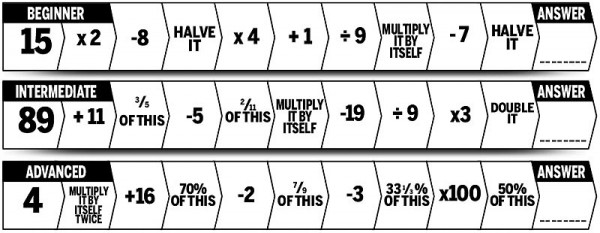
You start with the number on the left, then follow the instructions reading right until you get to the answer at the end. It’s one of Grandma’s favourites because it’s very hard to do in your head when she’s just reading it out!
I decided it would be a fun Sunday morning mental excursion to make a random 30 second challenge generator.
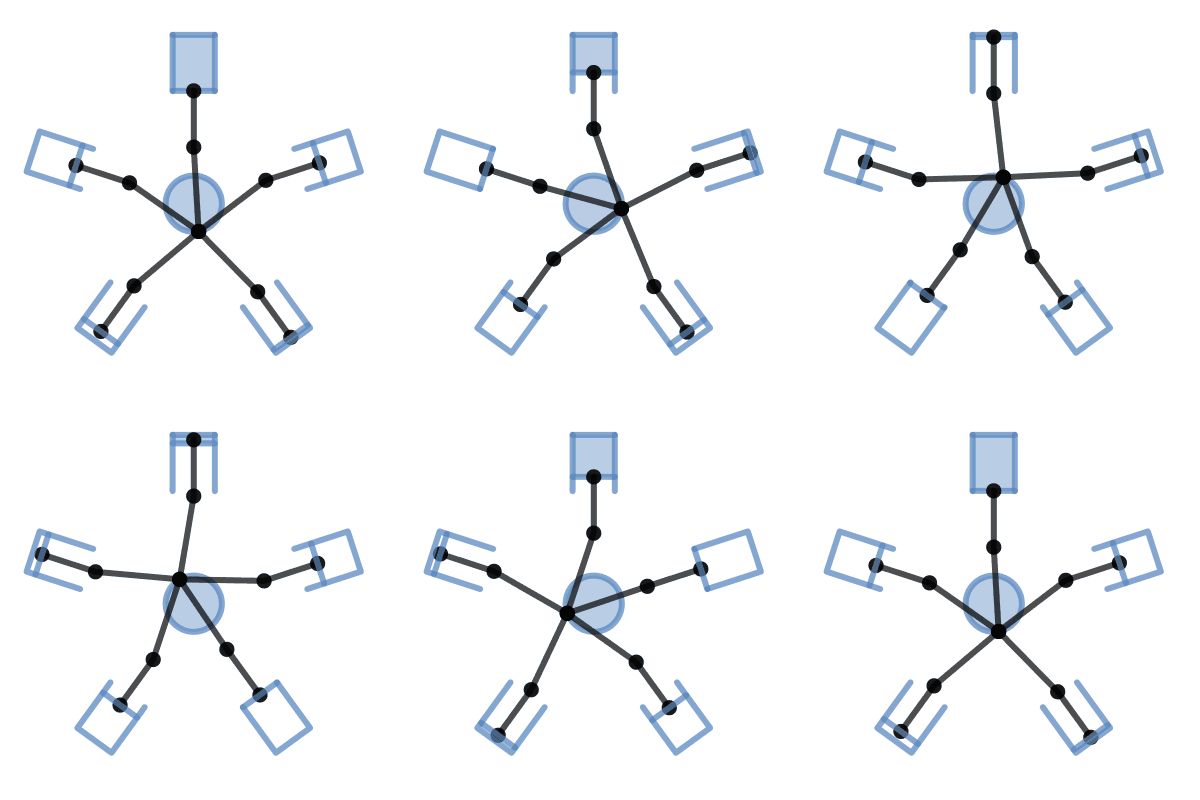
Desmos is the web-based interactive geometry program that isn’t GeoGebra. It’s very popular with teachers.
Someone’s made a nifty tool to turn a Desmos construction into an animated gif. It’s called – you guessed it – GIFsmos. They’ve got a blog containing a few nice animations, but it doesn’t seem to have been updated since I discovered it in March. Anyway, the tool still exists, so go and see what you can create!
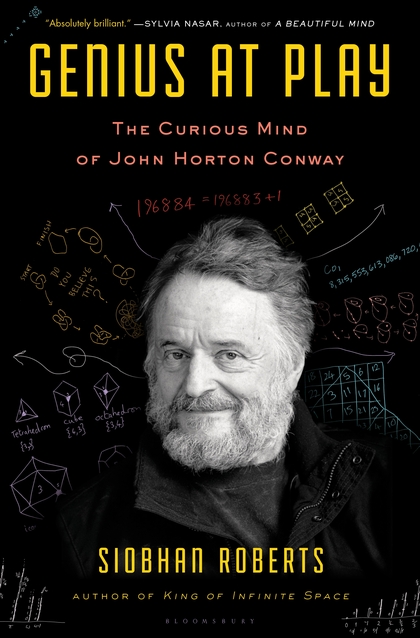
The author Siobhan Roberts has sent us a copy of her new book, Genius at Play. There was a strong implication that we should review it. I’ve now read the book, so I’ll do that: I enjoyed it.
Now, uninteresting international standards news!
It’s easy to forget about MathML, because unless you’re a publisher or doing complicated things with data flows, you never need to see it.
I’m not doing a great job of selling this story, am I? I couldn’t even find a picture to illustrate it.
After a lengthy lull in which MathML was deeply unpopular, mainly due to browser makers not supporting it but mainly due to it being extremely hard for the average mathematician to work with, the format which aimed to be able to represent all maths is having a bit of a resurgence these days. The web is catching up – MathJax uses MathML to represent mathematical notation internally, and that is adding pressure to browser makers to implement support for rendering MathML without any additional library.
The W3C have announced that MathML 3.0 is now an ISO/IEC international standard. That doesn’t have much impact on anything other than giving it a stamp of approval, so you can carry on with your day.
See, I told you this wasn’t interesting.
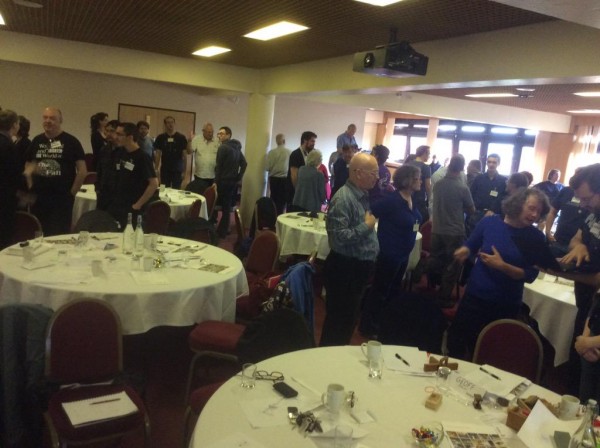
Photo credit: Dave Hughes
The MathsJam annual conference is a magical time when maths geeks converge on a conference centre in the middle of nowhere near Stone and spend a weekend sharing their favourite puzzles, games, and mind-blowing maths facts.
Registration for the 2015 weekend, taking place on 6-7 November, has now been opened. More information about the conference, and how to register, can be found on the MathsJam Conference website.
We’ll all be there: join us!
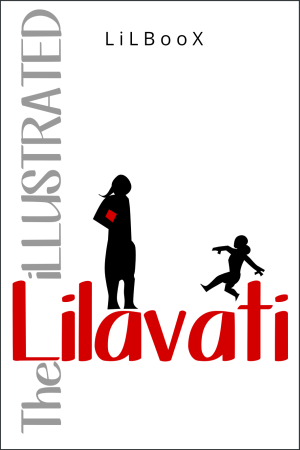
Somdip Datta wrote in to tell us about his illustration of the classic maths textbook, Lilavati, by the Indian mathematician Bhāskara II.
Lilavati contains definitions, algorithms and problems dealing with arithmetic, geometry, combinations, and quadratic equations, all written in meter.