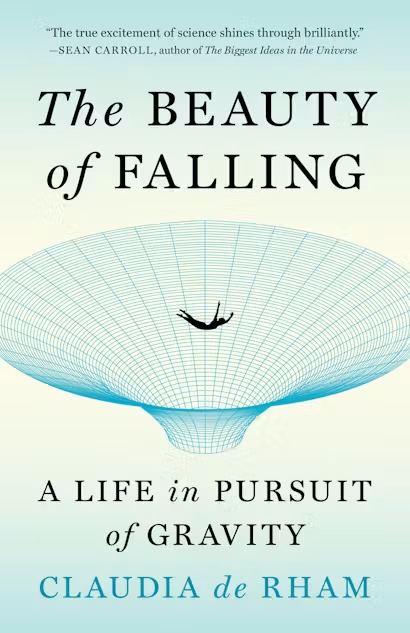
We were kindly sent a copy of Claudia de Rham’s new book ‘The Beauty of Falling’, and asked irregular contributor Elinor Flavell to write this review.
We were kindly sent a copy of Claudia de Rham’s new book ‘The Beauty of Falling’, and asked irregular contributor Elinor Flavell to write this review.
We were sent a free copy of this book by the publisher, and invited irregular contributor Elinor Flavell to read and review it.
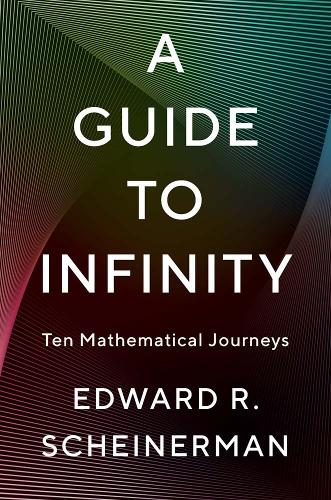
Been feeling finite recently? Bounded by life? Those larger numbers feeling out of reach? Then you need “A Guide to Infinity: Ten Mathematical Journeys” by Edward R. Scheinerman. Over ten chapters, Scheinerman takes the reader through the infinity at the end of the number line, that other infinity between zero and one, the other other infinity found in shapes, and many other other other infinities.
The book reads like a set of lecture notes – and like lecture notes, has its pros and cons. This is not the book to give your friend to convince them that maths is amazing. However, if it’s been a while since you studied infinity, or you are looking for something to fill your time before you start university in the autumn, or maybe you are currently studying topics around infinity, you may find this book helpful.
Like lecture notes, there are lots of definitions, which can be useful when building up your knowledge about infinity. However, like lecture notes there is also assumed knowledge, and use of words before formal definitions! Those who are more familiar with mathematical jargon may find it easier to peruse.
At the end of each chapter there are several questions to the reader – which I think are great! They clearly follow from the material in the chapter, but are quite open questions, and more than one question made me stop to properly think about it.
For me, “A Guide to Infinity” does not quite contain enough information on the wider context and history of infinity. Scheinerman does make a few mentions of names, but I wanted more! Of course, as a historian of maths I am biased towards including historical material in books, but I think it would have complemented the book well – without this, it reads, as I keep saying, like a set of lecture notes.
As anyone who has taken a lecture series can tell you, not all lecture notes are created equal – and as lecture notes go, “A Guide to Infinity” is good. However, it does not quite match its claim of being “An accessible Introduction to Mathematical Infinity for the Endlessly Curious”. Infinity is a hard topic to start with – and for me, “A Guide to Infinity” does not quite hit the spot.
A Guide To Infinity at Yale Books
A Guide To Infinity on Bookshop.org
A Guide To Infinity on Waterstones.com
This is a guest post by Elinor, who’s been collecting her favourite maths art from the month of March.
March is a month of change in the UK: the days get longer, the temperature is slowly creeping upwards, and we start to believe that spring may be arriving. Through this month of change I have been really enjoying all the #MathArtMarch posts that have been appearing on Mathstodon and Bluesky.
This is a review of the book Mapmatics: How we Navigate the World through Numbers by Paulina Rowińska. We were kindly sent a copy of the book to look at, and Elinor Flavell shares her thoughts.
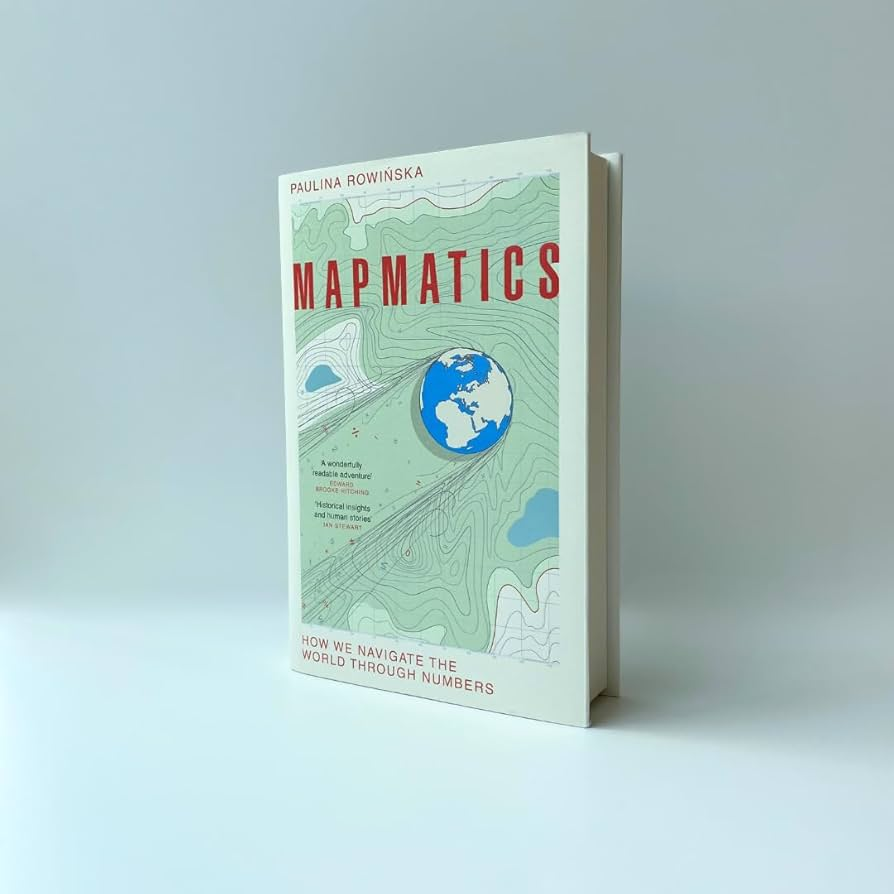
Do you love maps? Do you hate maps? Have you never given much thought to maps but are now worried that it might be good to know how to navigate if your phone dies? Well, Mapmatics is for you!
Do you know a geography nerd who is always bringing up maps? Do you know someone who always seems to get lost, despite it being easier than ever to get around? Or do you have that one friend who still doesn’t believe that everything can be related to maths? Well, Mapmatics is for them!
Mapmatics is for everyone!
Mapmatics is for you, and for anyone in your life who would like to more deeply understand the connections between maths and the world around them. On the surface Mapmatics is a book about how we create and use maps to interpret the world around us. But Rowińska shows that the reason we can do all of these things with maps is because of mathematics.
Over eight chapters, Rowińska talks us through problems that humans have wrestled with through the centuries – from “how can we take a 3D globe and turn it into a 2D map?” to “how can we map the inside of our planet without actually going to the centre of the earth?”. And with each problem she takes us through the underlying mathematics. Each chapter explores a different aspect of maps, and includes a diverse range of topics, from gerrymandering to the London Tube map.
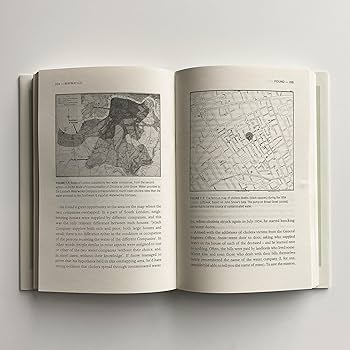
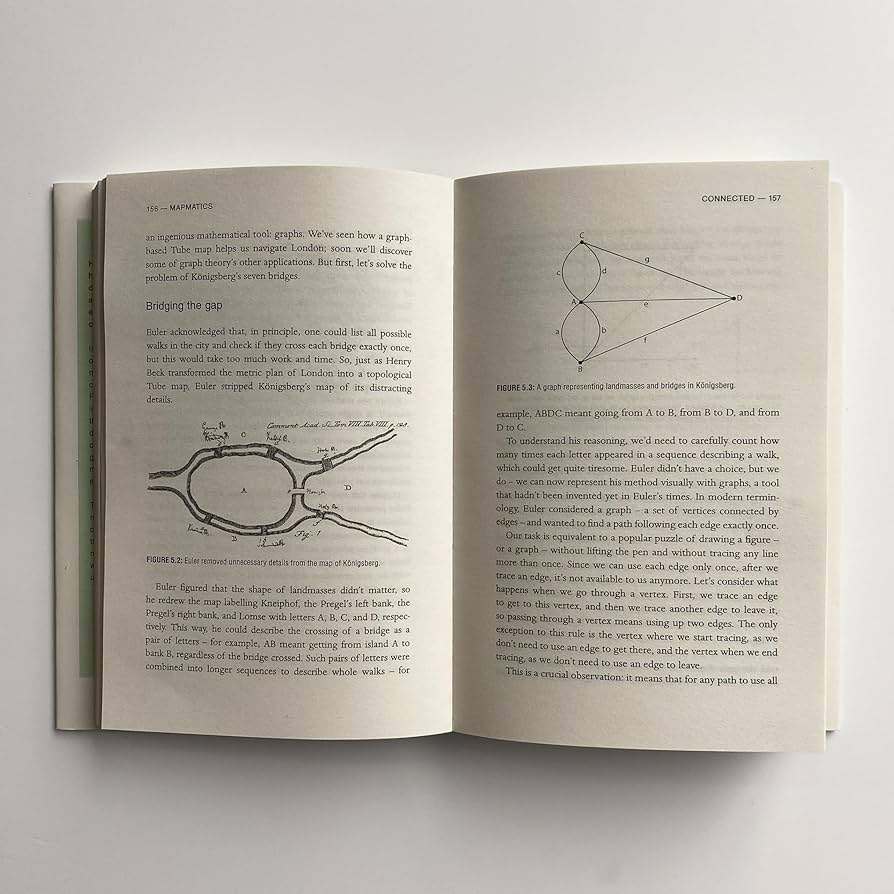
Rowińska does a great job at explaining some rather complicated ideas while talking about lots of other researchers, giving you plenty of resources to go and learn more about a certain subject, if you so wish; and she includes some very helpful diagrams! She is very good at defining and explaining geography jargon in terms which a geography novice such as myself could understand. However, I would have found it helpful to include a glossary in the book so I could refer back to them. I also found it rather refreshing that in her examples she does not stick to the gender neutral “he” when talking about a random person experiencing something.
I have two primary criticisms of the book: Rowińska starts off the book by talking about her first experience of maps, but I would love to know more about her link to maps and geography and what prompted her to write the book in the first place. Secondly, I would love to see even more diagrams – in colour- in the book as I think this would support some of the more difficult mathematical ideas included. However, I realise this is the eternal struggle between author and publisher.
This book would suit anyone who loves understanding the mathematics behind things that we use every day. From a technical point of view, I would recommend having at least done mathematics in your final years of secondary school, as some of the mathematics presented would be challenging otherwise.
Overall, this is an engaging book that covers a huge variety of applications – from earthquakes to animation, and will be of interest to anyone who likes to understand the intersection between maths and other topics.
Mapmatics, at Pan Macmillan
Mapmatics, at Bookshop.org
Mapmatics, at Waterstones.com