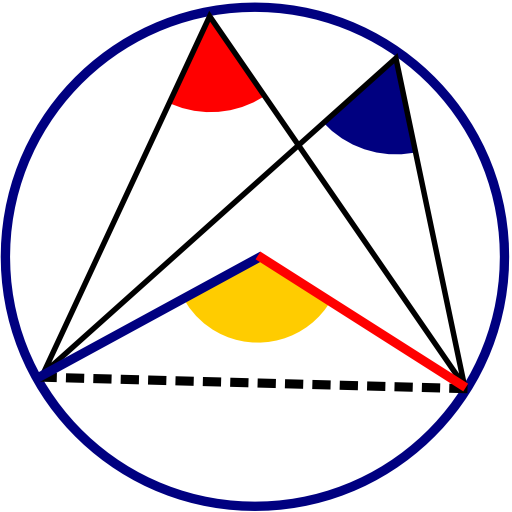
 You may be aware that Gathering for Gardner 10 took place last week.
You're reading: Posts By Peter Rowlett
All mathematical blogging to cease
The feeds at Mathblogging.org ran dry this morning following a realisation that every topic has now been covered.
The news prompted a major fall in the Mathblogging.org share price, sparking concerns about the aggregator’s future.
The news is particularly unwelcome for The Aperiodical, a blogging collaboration which is still yet to formally launch. The realisation came to light when the team behind The Aperiodical concluded that there was nothing new to blog about.
“We thought we could write a post about representing Sicherman dice as a different dissections of a diagram,” said Katie Steckles on behalf of the group, “but it’s been done”.
The team then thought they might write about the asymptotic distribution of a single eigenvalue gap of a Wigner matrix, a description of Nicolas Bourbaki’s wedding invitation or a story about a US President finding an original proof of the Pythagorean Theorem, but all have been written.
“We worked all through the night trying to think of ideas,” Steckles explained, “but came up blank. Every possible topic has been blogged somewhere, and there’s certainly no point in mathematics blogs repeating each other.”
So what now for the group? “We’ll just have to wait until someone invents some new mathematics.”
Until then, all mathematical blogging worldwide will cease and mathematical bloggers will have to find some other contribution to make. Some have announced plans to move down the xkcd purity scale until they find a subject that can be infinitely re-interpreted.
Carnival of Mathematics in a Mathblogging.org world
For a while now (what, over a year?) the folks at Mathblogging.org have been choosing their weekly ‘picks’ of the blogs coming through their aggregator. The promise at the start of each post has amazed me:
We try to read every blog post that goes through Mathblogging.org. For the Weekly Picks, we collect posts from last week that give you an impression of what the mathematical blogosphere has to offer.
This, to me, seems an incomprehensibly difficult task. There’s so much out there and a massive selection of blogs are now indexed at the site. In light of this resource, our current attempt to revive the Carnival of Mathematics did leave me wondering whether we were barking up the wrong tree in ‘a Mathblogging.org world’.
Now the incredible level of effort that must be needed for this ever-increasing task has proven unsustainable. In a post entitled “The Weekly Picks are dead, long live the Weekly Picks“, Peter Krautzberger outlines a plan to cope with this:
The goal of the Weekly Picks has always been to show off the wealth of the mathematical blogosphere and to offer an accessible introduction to the various types of mathematical blogs out there…
For the next few weeks, we will focus the Weekly Picks on a different category each week. This will give us the room to present the full spectrum of the community.
This seems to be a reasonable plan to deal with this ever-growing task, and I’m delighted to hear the Mathblogging.org folks are human after all! However, there is a problem:
We realize this means we might be missing some great posts that just happen to appear on a week where we do not cover that category.
Aha, here is somewhere the Carnival can step in. If you feel a post you’ve written has been overlooked because Mathblogging.org wasn’t looking at your type of blog this week, you can submit it to the Carnival of Mathematics. (Of course, it’s then up to the current host to decide whether to include it.)
This approach has its problems too – much is missed, or determined by various biases or whether bloggers have heard of it or remember to submit. But while the Mathblogging.org ‘weekly picks’ represents a completist approach now focused on each category in turn, the Carnival attempts to catch the best posts across all with its anarchic, community-led method. Perhaps there is room in the world for both approaches, after all.
Carnival of Mathematics page launched
There is a new page collating all previous Carnival of Mathematics posts and listing future hosts, and through which you can volunteer to host future Carnivals: “Carnival of Mathematics“.
John Conway profile
An interview/profile of John Conway has been published at The Daily Princetonian. Conway talks about his life and his methods.
“We’re remarkably free here,” Conway said of his position at Princeton. “Nobody tells me off for playing games. In fact, I’ve made playing games be serious.”
Source: Math and games.
Devlin’s 21st C. mathematician that can’t be outsourced
Keith Devlin has written a piece in the Huffington Post.
Repetitive tasks such as high-tech assembly-line manufacturing, airline reservations, and customer support are not the only things that can be outsourced in the flat world of the twenty-first century. So too can many less routine tasks that require a university education in science, technology, engineering and mathematics (STEM).
In particular, procedural mathematics (solving differential equations, optimizing systems of inequalities, etc.) can be outsourced.
Devlin argues that all mathematical skills taught at university can be outsourced to computers or other countries and says:
If we cannot compete, then we need to play a different game. Fortunately, that other game is one we already do well at: originality and innovation.
Advance in snowflake growth simulation
Scientific American are reporting that “a team of mathematicians has for the first time succeeded in simulating a panoply of snowflake shapes using basic conservation laws, such as preserving the number of water molecules in the air”.
This explains that previous simulations often simulate the crystal surface using interlocking triangles, but that:
the triangles often deform and collapse in simulations, leading to singularities that bring the simulation to an abrupt halt… Garcke’s team got around this difficulty by devising a method to describe the curvature and other geometric information about the snowflake surface so that it could be appropriately encoded into a computer.