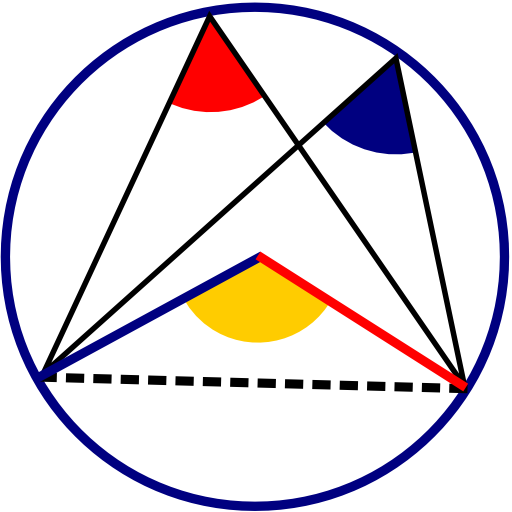
As a final update, I’ve now finished my πkm running quest. I’m very tired now! Thanks to everyone who has donated at pikm.run, spread the word about it, come running with me or otherwise facilitated this. Here’s the final set of photos and video clips from the last week, and for the data fiends among…
Wikiquote edit-a-thon – Saturday, May 12th, 2018
TL;DR: We’re holding a distributed Wikipedia edit-a-thon on Saturday, May 12th, 2018 from 10am to improve the visibility of women mathematicians on the Wikiquotes Mathematics page. Join in from wherever you are! Details below, and in this Google Doc. Extension and abstraction without apparent direction or purpose is fundamental to the discipline. Applicability is not…
πkm running challenge: 21-day round up
I’m still going! Two-thirds of the way through my epic running binge, and I’ve managed to keep it up every day so far. Since my last round-up on 7th, I’ve run another πkm each day, and my fundraising total is now at 22%, which is over £700 (and if you didn’t notice, that sentence just…
Hannah Fry’s ‘Contagion’ programme broadcast tonight
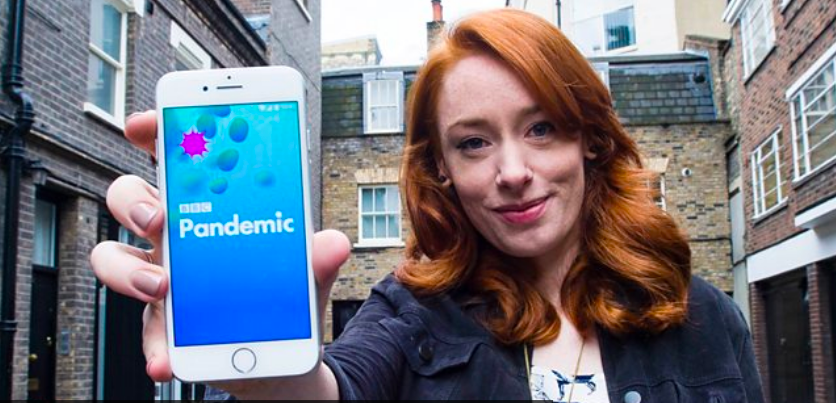
You may remember back in September we posted about a mass-participation science experiment, aiming to model the spread of diseases in human populations using a smartphone app. The results of this experiment, presented by the contagiously loveable Hannah Fry, will be presented in a documentary this evening on BBC4. You can also see Hannah chatting about the experiment on this evening’s The One Show.
Contagion! The BBC4 Pandemic, on the BBC watch-o-tron
Abel Prize 2018
The Abel Prize for 2018 has been awarded to Robert Langlands, for his work on representation theory and number theory. The Abel Prize website has a page with more information, including a lay explanation of Langlands’ work by Alex Bellos.
Robert P. Langlands wins the 2018 Abel Prize “for his visionary program connecting representation theory to number theory.” Congratulations! pic.twitter.com/HBiTJhChe0
— The Abel Prize (@abel_prize) March 20, 2018
Exactly how bad is the 13 times table?
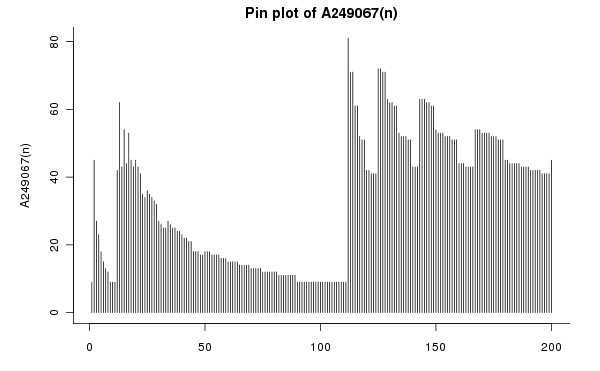
Let’s recite the $13$ times table. Pay attention to the first digit of each number: \begin{array}{l} \color{blue}13, \\ \color{blue}26, \\ \color{blue}39, \\ \color{blue}52 \end{array} What happened to $\color{blue}4$‽ A while ago I was working through the $13$ times table for some boring reason, and I was in the kind of mood to find it really quite vexing…
The OEIS now contains 300,000 integer sequences
The Online Encyclopedia of Integer Sequences just keeps on growing: at the end of last month it added its 300,000th entry. Especially round entry numbers are set aside for particularly nice sequences to mark the passing of major milestones in the encyclopedia’s size; this time, we have four nice sequences starting at A300000. These were…