Maths Week England happened a couple of weeks ago. I had put my name on the speaker directory, and sure enough a maths lead from a primary school in County Durham emailed me to ask if I could go in and do something for them.
It’s been a few years since I last did a school visit, so I thought I’d better plan a new activity. I’m thinking about tilings for the Beach Spectres project, so I thought this would be a good opportunity to test the idea of getting people to stamp out tilings.
Primary school kids are just beginning to learn about the concept of tessellation, so I didn’t want to get into symmetries and periodicity.
I designed and 3D printed some stampers in a variety of polygonal shapes.
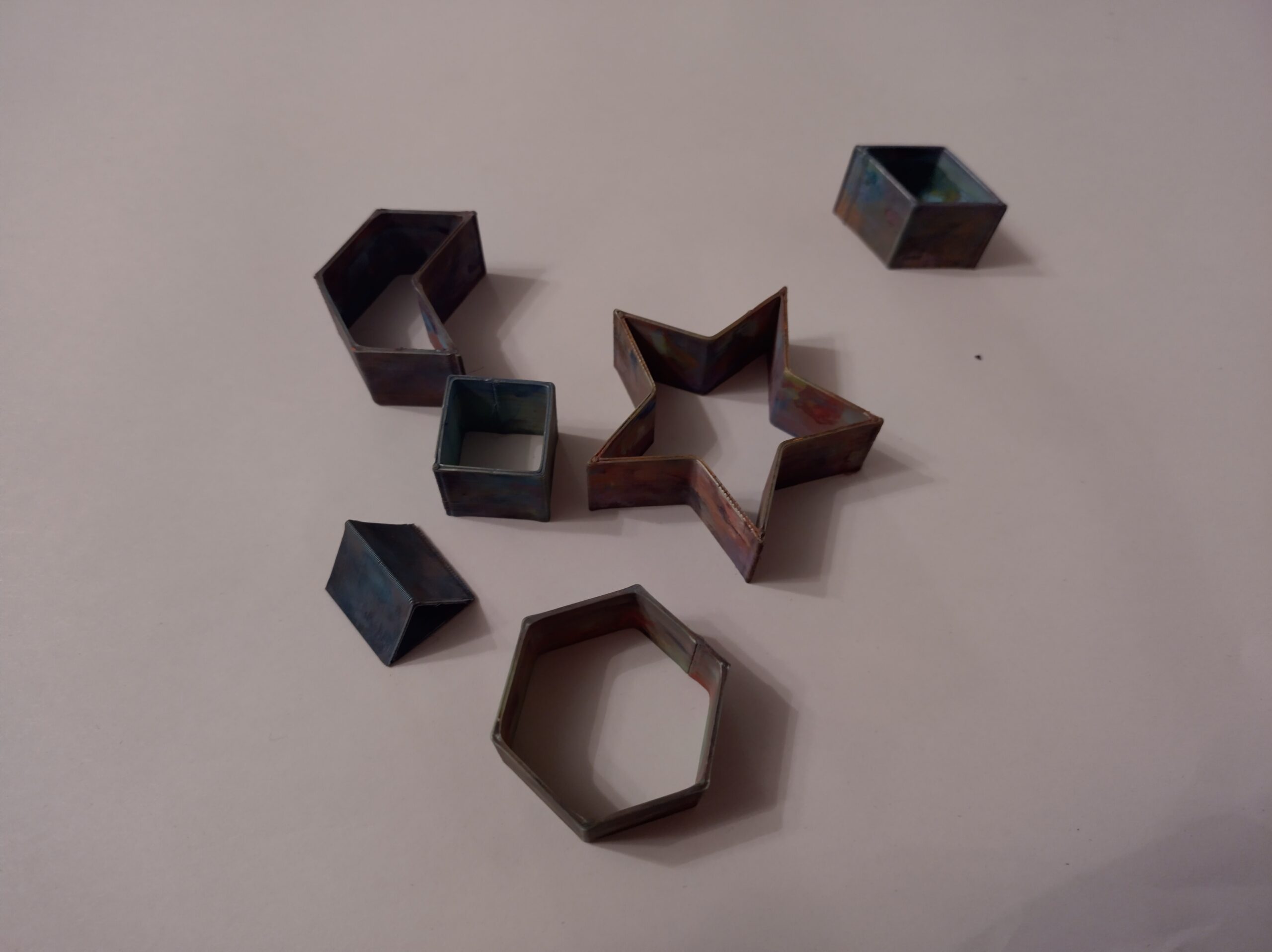
And the activity was really simple: use the stampers and work out which shapes tessellate.
This gave the kids a lot of leeway to decide for themselves what to do, and let me wander round the classroom talking to kids while keeping an eye on the mess level.
I put a medium amount of thought into the shapes I chose: I wanted a couple that would easily tessellate, so the square and the regular hexagon, and a couple that definitely wouldn’t, so the regular pentagon and five-pointed star. I chose some other shapes that would tessellate with a bit of thought. I made sure there was only one side length across all the shapes, so that the kids could investigate combining shapes together.
I was unsure whether teachers would appreciate me coming in and making a huge mess with paint, but my wife, Helen, who’s a primary teacher said it felt like a good plan.
In fact, Helen said since I’m planning an activity, I might as well go in to her school with it too. I’m not completely sure I agreed to do the nine half-hour classroom visits that she scheduled!
After all that, I thought I might as well offer to do the same thing in my children’s school, which is just across the road. They asked me to do an assembly first, which meant I had to prepare some slides.
So in the end, I did this session 16 times that week!
At the start of the session, I demonstrated picking up a square, dipping it in the paint, and stamping on the paper a few times, to get a 2×2 grid.

It went really well – the kids were really engaged and the teachers said it was a good activity. Most kids started off by following my example, picking a shape and (more or less) putting down several touching prints.
After that, many of them started being more creative, mixing several shapes to make pictures of things like houses, faces or butterflies.
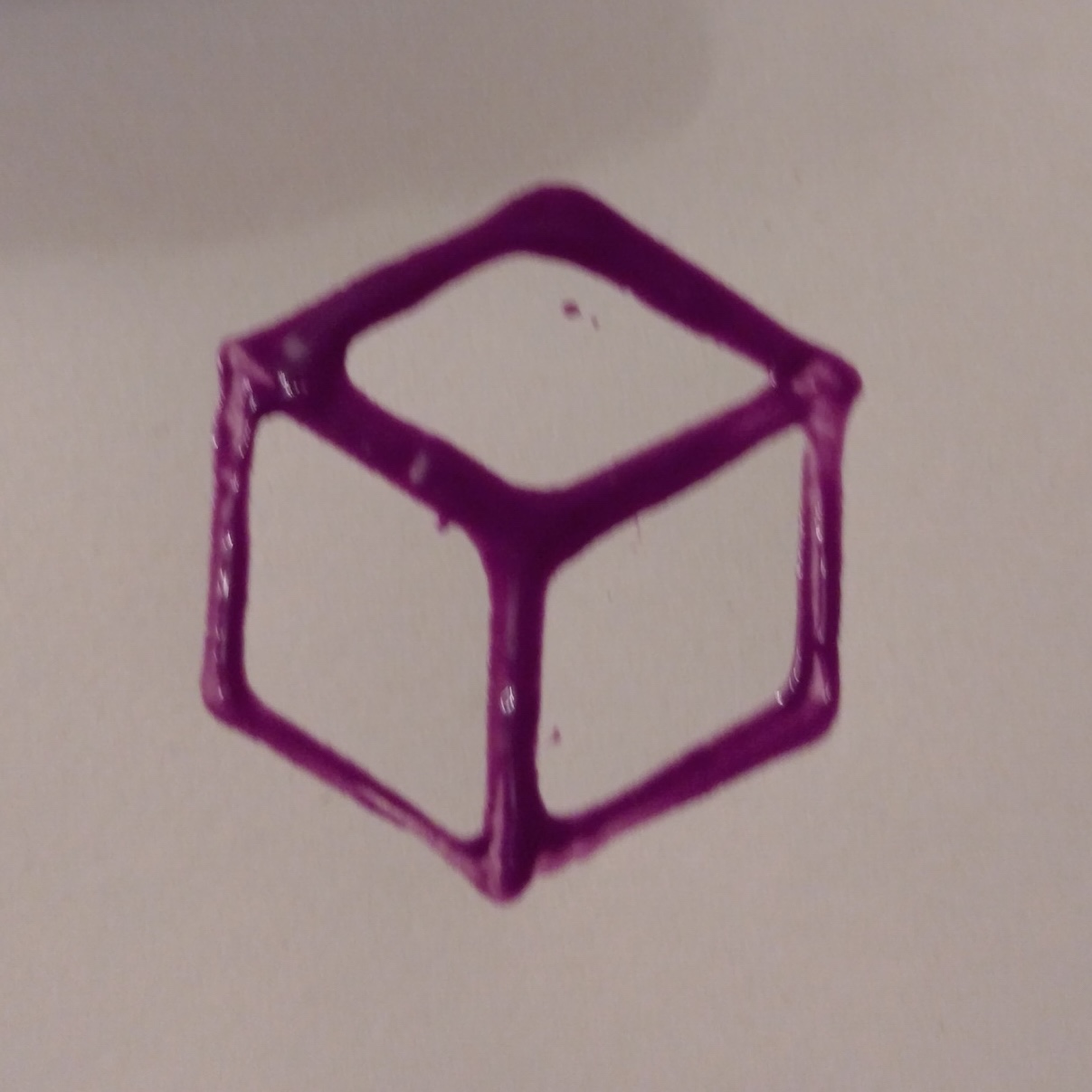
At least one child in every class noticed that three lozenges ◊ could make a picture that looks like a cube.
A small number of children in each class weren’t bothered about tessellations and just stamped shapes all over their piece of paper. I thought that was fine – they were focused on what they were doing and not disrupting anyone else. Several teachers mentioned that as well as thinking mathematically, the kids were getting good practice with their fine motor skills.
In every class, someone noticed or I mentioned that the chevron shape is an irregular hexagon, and six triangles fit inside a regular hexagon.
I finished each session by showing “one of my favourite tessellations”, from a mosque in Rabat:
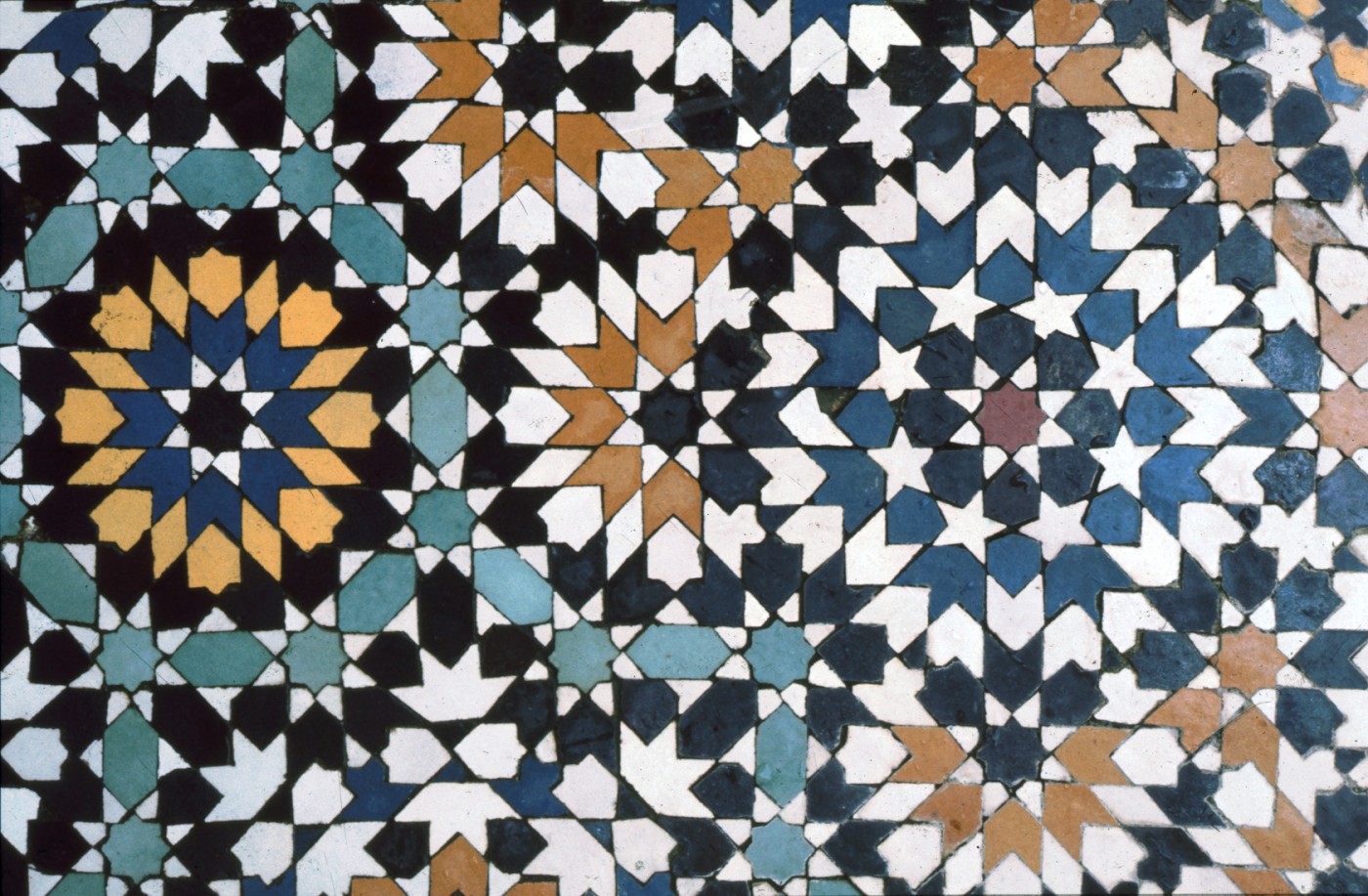
I got the image from the Wade photo archive.
I then pointed out that my hoodie was covered in a tessellation, and none of the kids got anywhere near guessing that the monotile shape was only discovered two years ago! I wanted to emphasise that there are still new things to find and that nobody knows everything.
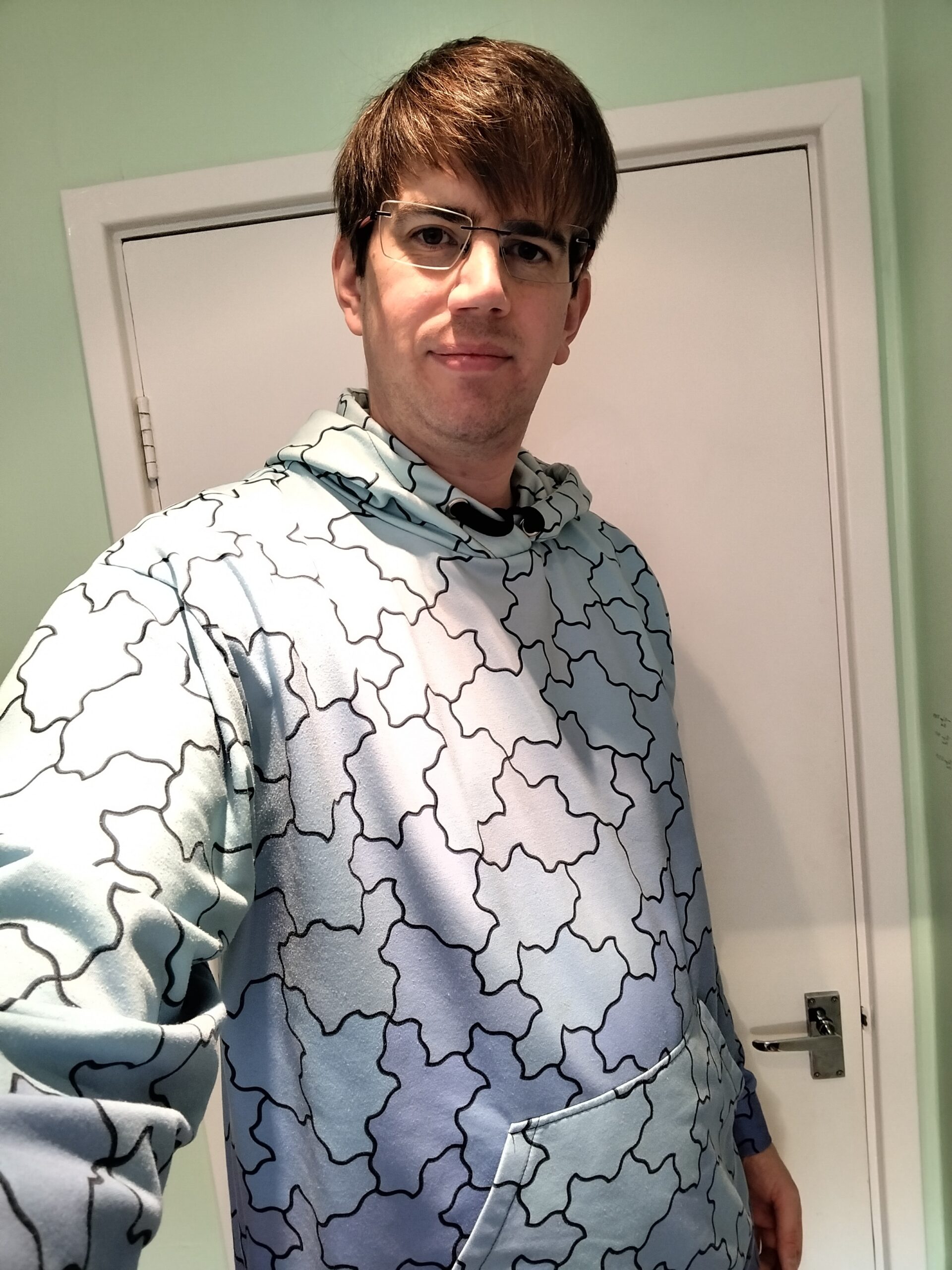
It was interesting to see the minor differences between the three schools – one school had really weirdly thick paint, while another only had tiny paint palettes that barely fitted the stampers.
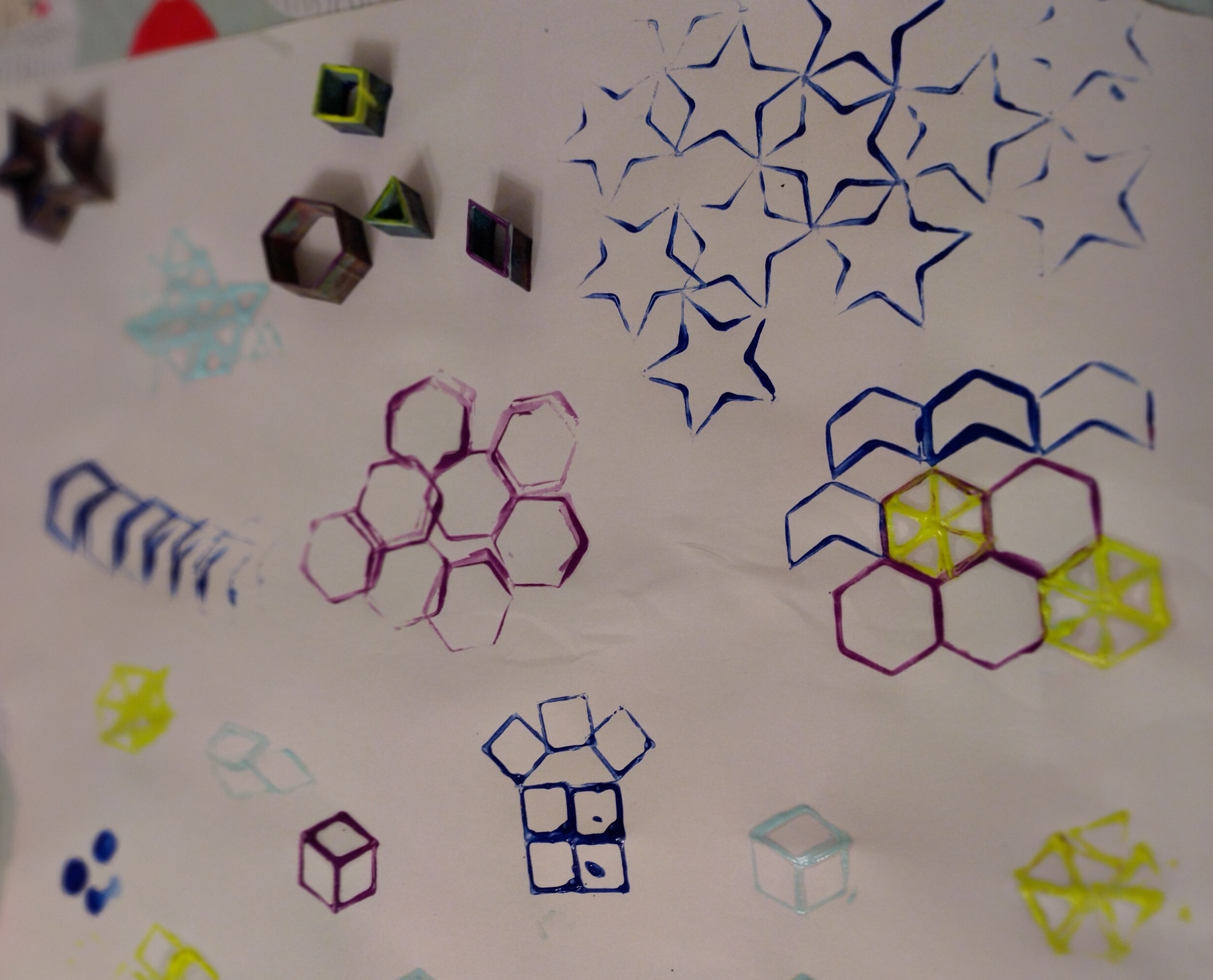
I’m particularly proud that I didn’t get any paint on my clothes – a real achievement for someone as dyspraxic as me!
One final lovely thing is that the stampers have accumulated a really interesting patina from all the paints that have soaked into them.

I’ve put my OpenSCAD and STL files for the stampers on Thingiverse and on my code repository. Feel free to print these out yourself and try this activity with your own small people!