Here’s a round-up of some of the news from this month.
Never-ending Turing centenary, part XLVI
The Alan Turing centenary shows no signs of abating.
First of all, there’s a marvellous new art installation under Paddington Bridge in London, in memory of Turing. There’s also a theatre piece called Breaking the Code, showing at Manchester’s Royal Exchange Theatre until 19th November.
Secondly, work continues to introduce legislation in the UK pardoning all gay men who were convicted of crimes related to homosexuality, in the same way Alan was a few years ago. Ministers said they were ‘committed’ to getting the law passed, but in an emotional session the bill was “talked out” by minister Sam Gyimah, meaning it wasn’t voted on.
LMS wins the first Royal Society Athena prize
The London Mathematical Society (LMS) has been honoured this autumn by receiving the first Royal Society Athena Prize to recognise its advancement of diversity in science, technology, engineering and mathematics (STEM) within the mathematical community. The prize was awarded in a ceremony at the Royal Society’s annual diversity conference on 31 October.
Royal Society press release
Fourth Christopher Zeeman medal goes to Rob Eastaway
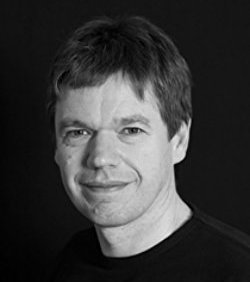 Mathematician, author and friend of the site Rob Eastaway has received the 2016 Christopher Zeeman medal, awarded to recognise and acknowledge the contributions of mathematicians involved in promoting mathematics to the public and engaging with the public in mathematics in the UK.
There will be an award lecture taking place on 22 March 2017, and details will be announced in Mathematics Today and the LMS Newsletter.
IMA website article on the award
Rob Eastaway’s citation (PDF)

 Puzzlebomb is a monthly puzzle compendium. Issue 59 of Puzzlebomb, for November 2016, can be found here:
 The next issue of the Carnival of Mathematics, rounding up blog posts from the month of September, and compiled by Manjil, is now online at