First, you may want to watch the “MATH/MATHS LIVE” video and listen to the 2nd promo. Afterwards, you may want to watch Samuel Hansen’s response, in which he demonstrates how truly delusion he has become.
You're reading: Posts By Peter Rowlett
Math/Maths Week!
Since June, Peter Rowlett and Samuel Hansen have been recording a weekly transatlantic chat about mathematics news called the Math/Maths Podcast. Peter is the “maths” side of the conversation from Nottingham, England, and Samuel is the “math” side from Las Vegas, USA. In November 2010 Samuel will visit Peter in Nottingham for a week of UK-based mathematical activities.
I posted a listing on my website of our activities during that week and how you can get involved if you’re interested: Math/Maths Week! I hope to update it as I get further information.
Math/Maths Podcast Live Recording
In November, Samuel Hansen will visit the UK for, at least, MathsJam, the 13th IMA Early Career Mathematicians Conference, a tour of maths and computing history in Nottingham and… a live recording of the Math/Maths Podcast at the University of Greenwich. (That’s live in the sense of “before an audience”, rather than “streamed live”.)
We’re planning an afternoon at Greenwich, including a talk of what we learned on our maths & computing history tour, the podcast (“LIVE!”), a walk to and round the Greenwich Royal Observatory and a trip to a nearby watering hole.
To advertise this, I put together a poster. If you are in the area I would encourage you to put this up to help advertise the talk. This is a PDF on scribd and there are a couple of links to download or print a copy. Click to enlarge: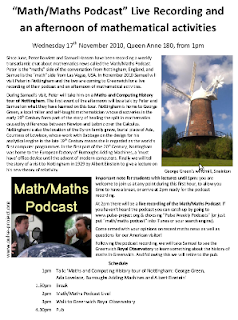 Meanwhile, Samuel Hansen has been hard at work and has produced a video to advertise the event too:
Update: Math/Maths Week!.
Web resources for a 14 year old girl struggling with maths & confidence
Yesterday on Twitter I asked a question that had been asked of me: “Help: looking for web resources for 14 year old girl struggling with maths, particularly fractions, & maths confidence.“
I love Twitter for this kind of thing. People are so helpful. I am grateful to @SteelingSeconds, @Samuel_Hansen, @fittdr, @Domestic_jules, @ColetteWeston, @nick4glengate and @christianp for their answers. Also huge thanks to the following, who retweeted my question: @UKRC, @Hel_TCW, @kunglu, @Mwmyn, @afriquanwoman, @MoreUtterPiffle and @Loiscarter. Here are the responses I got:
The Khan Academy
Recommended by @SteelingSeconds and @Samuel_Hansen, The Khan Academy is a set of free videos explaining maths topics at a variety of topics, with a corresponding set of exercises. Here’s a description from the website:
The mission of the Khan Academy is to provide a world-class education, for free, to anyone in the world. It consists of 1700+ (and growing) videos on YouTube covering everything from basic arithmetic to advanced calculus, chemistry and biology, along with a series of exercises that allow students to practice and assess their knowledge at their own pace.
Since my specific question was about fractions, here is an example of multiplying fractions:
Primary Resources: Maths
Although it goes back to Primary Maths, @fittdr suggests Primary Resources and says she “found it to be good revision for my kids”. The site describes itself as “Free lesson plans, activity ideas and resources for primary teachers.” For example, here is an exercise sheet on adding and subtracting fractions.
BBC Bitesize
@Domestic_jules and @ColetteWeston both recommend BBC Bitesize, a site which covers KS1-KS4 in England. The site has a series of reading material, activities and quizzes for self-testing. For example, here is a link to the KS3 fractions section.
nrich
@Domestic_jules also recommends nrich, a site with hundreds of classroom resources indexed by topic. For example, this Fractions Jigsaw.
MyMaths
@nick4glengate says his 13 year old likes the MyMaths website. This is a subscription service. There are some free samples available on the website, for example this game on ratios.
Mangahigh
@christianp says Mangahigh “really is very good”. Backed by Marcus du Sautoy, the website says:
Mangahigh is the first maths games site to teach the UK National Curriculum entirely through games. Our unique, curriculum-compliant maths casual games go beyond the scope of any maths games previously developed, and inspire incredible enthusiasm in students.
The fractions game is Flower Power.
Who are your important living mathematicians?
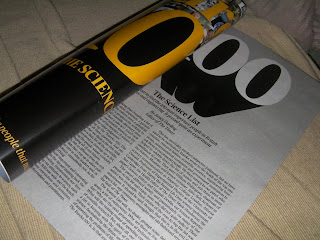
Paywall notwithstanding, you may have seen today the Times’ Eureka magazine celebrating science with a list of “the 100 most important people in British science and engineering“. With apologies for decisions made and promise of causing “some debate” from the Editor.
So the question is: where are the mathematicians? Andrew Wiles is top, at #41. Simon Donaldson is #75. Marcus du Sautoy is #76. There are a few ‘almost rans’* but I think that’s it for mathematicians listed for their mathematics.
So, being a partisan modern thinker (no Renaissance men here) I wonder: why so few mathematicians? Of course this raises questions, and Mark Henderson is right to ask: Who are the mathematicians that are missing? (And, really, how many mathematicians should we expect?)
Whether you read it or not, if you were asked for examples of “important” (set your own criteria) living UK mathematicians, who would you offer? Answers in comments or to @peterrowlett please! I’ll read out your answers and ask this question again on the Math/Maths Podcast 17 when we record it on Monday.
* The ‘almost rans’: Stephen Hawking is #3, but is listed as “cosmologist and best-selling author”. Simon Singh is #33, mostly as a libel reformer and, despite his excellent Fermats Last Theorem and status as a friend of mathematics, not a mathematician. Iain Lobban is at #12, again not a mathematician but GCHQ, which he Directs, is noted as a large employer of first-rate mathematicians. Adrian Smith is at #70. He’s a statistician but listed as a civil servant and outspoken critic on science education (and, incidentally, as “former wPrincipal [sic] of Queen Mary, University of London”).
Ed & me
Here’s an update. If you didn’t read ‘Is Ed Miliband a “maths geek”?‘ now is a good time.
So I didn’t get a reply from Ed, nor from anyone with concrete knowledge of his maths geek status. (Though I am grateful to @ColinTGraham, @MitchKeller, @Tysess and @stecks for re-tweeting my question to him.) But here are some more snippets I’ve learned.
Ed studied economics at Oxford and the LSE, and taught economics at Harvard on sabbatical from the Treasury. However, there are more and less mathematical ends of economics. Somehow, I hope his “maths geek” status is more than that.
Ed does seem to have had a flair for mathematics in school. He and his brother David went to Haverstock school, from where the Camden New Journal has teacher Oscar Gregan, who taught David mostly and Ed a little, paraphrased as saying that Ed’s “reputation in the staffroom was that of being something of a number-crunching genius” and quotes him saying “David was not a natural, geeky mathematician – Ed was more like that”. “Later”, claims the Scotsman, “it was his speed at mental calculations that caught Gordon Brown’s attention”.
So the question is: Does a childhood talent for “number-crunching”, good mental arithmetic and an academic pursuit of economics translate into maths geekery?
There’s a tantalising piece of information that seems to point Ed to the geeky end of the spectrum: the BBC quotes Robin Blackburn remembering meeting Ed as a child and saying “Ed amazed me by being able to do the Rubik’s Cube… in one minute 20 seconds and, as I recall, just with one hand too.” If true, this hints at excellent geek potential.
Is Ed Miliband a "maths geek"?
In an article “Ed Miliband: Self-confessed maths ‘geek’ with a talent for diplomacy”, the Telegraph claimed the new leader of the opposition is a “self-confessed maths ‘geek'” but where, I wondered, did he “confess” it? James Grime adds a corollary: what did he mean by ‘maths geek’, anyway? In other words, we are asking, is he one of us? If so, having a pro-maths (or science) chap as leader of the opposition has to be a good thing.
The key paragraph, which defines the two points of the article title, is:
A self-confessed maths “geek”, his number-crunching skills were highly prized by Brown at the Treasury. But he also gained a reputation as a diplomat, whose skill at defusing internal rows was reportedly much in demand.
But where is the source? I asked the newspaper on Twitter but have yet to hear back. Imran Khan, Director of the Campaign for Science and Engineering, repeated the claim in the Guardian, but he has no primary source. Of course I’ve Googled, but mostly just find references to the Telegraph article. A little more digging unearthed this BBC article which contains virtually the same paragraph, the one that is the premise for the Telegraph piece, a full ten days earlier. Here, the relevant paragraph is:
A self-confessed Maths “geek”, Ed’s number-crunching skills were highly prized by Gordon Brown at the Treasury but he also gained a reputation as something of a diplomat, whose skill at defusing rows was reportedly much in demand in the never-ending war of attrition between Brownites and Blairites.
But still no source. Setting aside the possibility that the premise of the Telegraph article is based on a quote from the BBC one (at this point, they might both be based on the same source), can anyone help with the primary source? Or can anyone, through other means, answer the question: is Ed a maths geek, and what does he mean by it?
Update 28/09/10: After @ColinTGraham pointed out Ed is on Twitter, I tweeted my question directly. Of course, it’s possible Ed has better things to do with his day, or that he may get one or two other tweets per day to distract from my question.
Update #2 03/10/10: I didn’t get a question from Ed, but the next blog post updates with what I’ve learned.