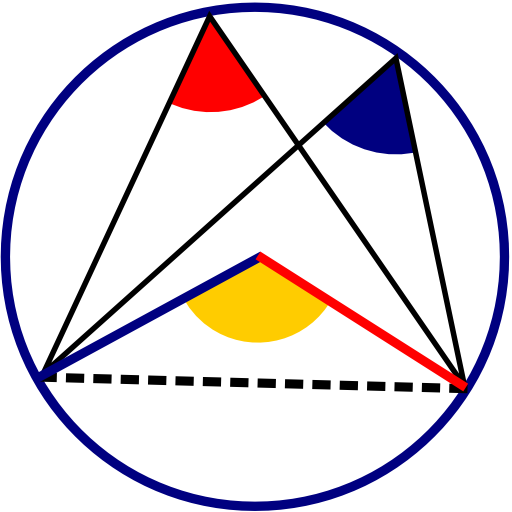
Since it’s Pi Day in March, and ridiculously there are still people who haven’t spurned π completely in favour of τ, maths/media pixie Marcus Du Sautoy is running a free online event, called Pi Day Live (hashtag: #pidaylive). Since everything is more exciting when it’s happening LIVE, actually and IN REALITY, they’ll be conducting a live experiment, using circle measuring, marble arranging, Buffon-y needle dropping and in some extreme cases, river length approximation to calculate, LIVE, in REAL LIFE, approximations to the value of Pi.
You're reading: News
Big Data Week
Anyone who’s a fan of data and bigness will be pleased to hear that 22-28 April is going to be Big Data Week. This ‘global festival of data’ will take place in participating cities all over the world, including London, Sydney, Barcelona, Shanghai, Amsterdam, Chicago and Utrecht (we only have a MathsJam in one of those so far, but we’re working on it).
The aim of the week is to allow data scientists to work with businesses from different sectors to take advantage of the bigness of data these days – vast amounts of information collected using new technology, whose potential for future applications is mindblowing. One day we could even assemble a list of every sandwich anyone’s ever eaten. Planned events in Big Data Week will include meetups, networking events, hackathons, debates, discussions and data visualisation demos – and hopefully we’ll come out of it with more infographics than you’ve ever seen.
More information:
A date for the diary: Big Data Week at the Royal Statistical Society Website
Principia Mathematica – THE MUSICAL
Principia Mathematica is Bertrand Russell and Alfred North Whitehead’s epic maths text which outlines the foundations of mathematics and logic, famously proves that 1+1=2 in 200 pages, and took so much re-writing it nearly sent them both mad in the process. It was also a hugely significant work, attempting to describe a set of axioms and inference rules in symbolic logic from which all mathematical truths could in principle be proven. While this goal was doomed to failure by the Incompleteness Theoreom of Gödel, the project was of great importance in the history of maths and philosophy.
If you haven’t heard of Principia, I recommend reading the excellent Logicomix, which tells the story of Russell’s life and the creation of the book; I also recommend attempting to read Principia Mathematica, although as far as I know, very few people have succeeded in this.
Anyway, the third and final volume of the book was published 100 years ago this year, and in celebration, as the title of this post has completely given away, theatre company The Conway Collective is putting on a musical written by Tyrone Landau and based on the book ((I have literally no idea how that would work, and I spent six months of my life working on an operatic theatre piece about the Poincaré Conjecture.)).
The world premiere of the musical is taking place on 20th February, at Conway Hall in London, and the event description notes that
The evening is scored for singers, dancers, musicians and philosophers.
It also requests that you “prepare to be astonished”, although frankly I’d be astonished if I weren’t astonished. Oh no, Russell’s paradox!
Further information:
Event information on the Conway Collective website
Formula for BMI has an ‘ill-founded definition’
Have you ever calculated your BMI and been given a reading of ‘overweight’, when you clearly aren’t? Or maybe you’ve been training hard in the gym but your BMI has increased?
Many of us, including GPs and fitness instructors, use BMI as an indicator of whether we are ‘fit and healthy’ and reliably use it to adjust our lifestyle. However, mathematician Nick Trefethen, Professor of Numerical Analysis at Oxford University, has proposed that the formula is poorly defined and has proposed an alternative.
He claims that the BMI formula, which is calculated as weight in kilograms divided by the square of the height in meters, is an ill-founded definition of body size, and isn’t a useful measure.
Collaborative Mathematics: kids (and non-kids) work together on problems over YouTube
Jason Ermer’s Collaborative Mathematics project has launched its first video challenge. The project aims to allow mathematics to happen collaboratively via the medium of online videos, and video responses. The idea is that having watched the challenge video, you work with a group of friends (collaboratively) and post a response video, and then watch others’ response videos, and hopefully somewhere along the line mathematics will happen.
Your help needed: survey of international mathematical cultures
Dr Aiping Xu of Coventry University is asking staff who have experience of mathematics education in the UK and other countries to complete a short questionnaire as part of a survey of international mathematical cultures for the Higher Education Academy. The questionnaire explains the purpose of the study.
A growing number of international students study mathematics at UK universities. Although mathematics itself may be the same the world over, the subject is learnt within a cultural setting and different countries have different mathematical cultures. The purpose of this project is to try to identify key ways in which the mathematical culture of other countries differs from that in the UK, so that both academic staff and students can be made more aware of these differences and so that appropriate induction can be provided.
I am told the questionnaire should take no more than 15 minutes to complete.
Take the survey: Investigation of international mathematical cultures.
GCSE switch-off is off
The BBC are reporting that plans to change key subjects, including mathematics, from the current GCSE assessment system to a new, tougher ‘English Baccalaureate Certificate’ and to have a single exam board for each subject are “to be abandoned”.
Further information: Planned switch from GCSEs to Baccalaureate in England ‘abandoned’ at BBC News.