It was an open question whether 33 could be written as the sum of three cubes. Thanks to Andrew R. Booker, it now isn’t.
\begin{array}{c} (8866128975287528)^3 \\ + \\(-8778405442862239)^3 \\ + \\(-2736111468807040)^3 \\ = \\ 33\end{array}
It was an open question whether 33 could be written as the sum of three cubes. Thanks to Andrew R. Booker, it now isn’t.
\begin{array}{c} (8866128975287528)^3 \\ + \\(-8778405442862239)^3 \\ + \\(-2736111468807040)^3 \\ = \\ 33\end{array}
Presented by Katie Steckles and Peter Rowlett, episodes of Mathematical Objects will take an object, real or abstract, as inspiration to chat about a mathematical topic. This introduction explains the idea ahead of the first episode, coming soon.

Podcast: Play in new window | Download
Subscribe: RSS | List of episodes
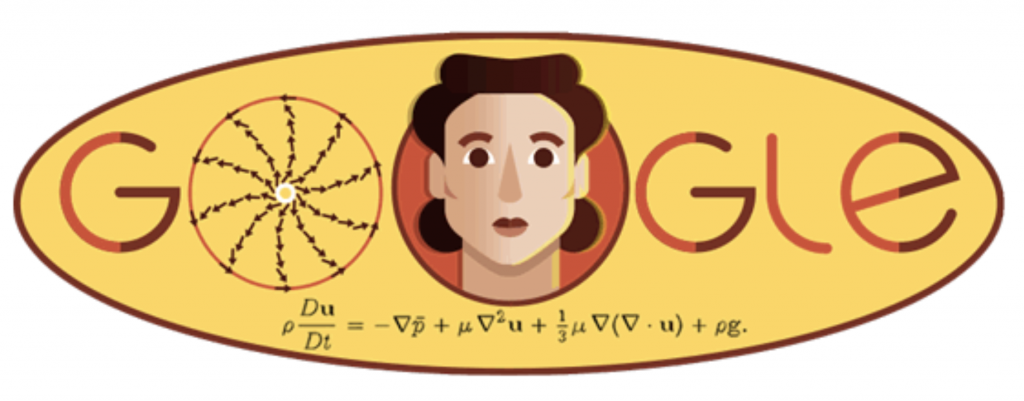
Today’s Google Doodle (visit google.com to see it, or if you miss today, you can find it in their archive) celebrates Russian mathematician Olga Ladyzhenskaya. In recognition of her 97th birthday, the Doodle includes the Navier-Stokes equations, of which Ladyzhenskaya provided the first rigorous proofs of convergence using a finite-difference method.
It’s that time of year again – 3.14 (March 14th), a.k.a π day, is just around the corner, and if you want to do something fun on the day, now’s the time to plan it. One nice way to celebrate this brilliant infinite string of digits is by creating π-inspired art, and we’ve spotted a couple of relevant links if that’s your jam.

February is Black History Month in the USA, so the website Mathematically Gifted and Black is honouring a different black mathematician each day in February, for the third year.

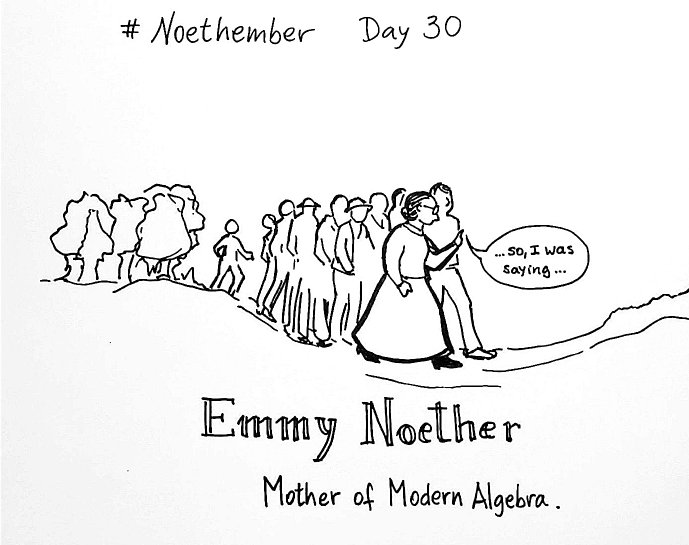
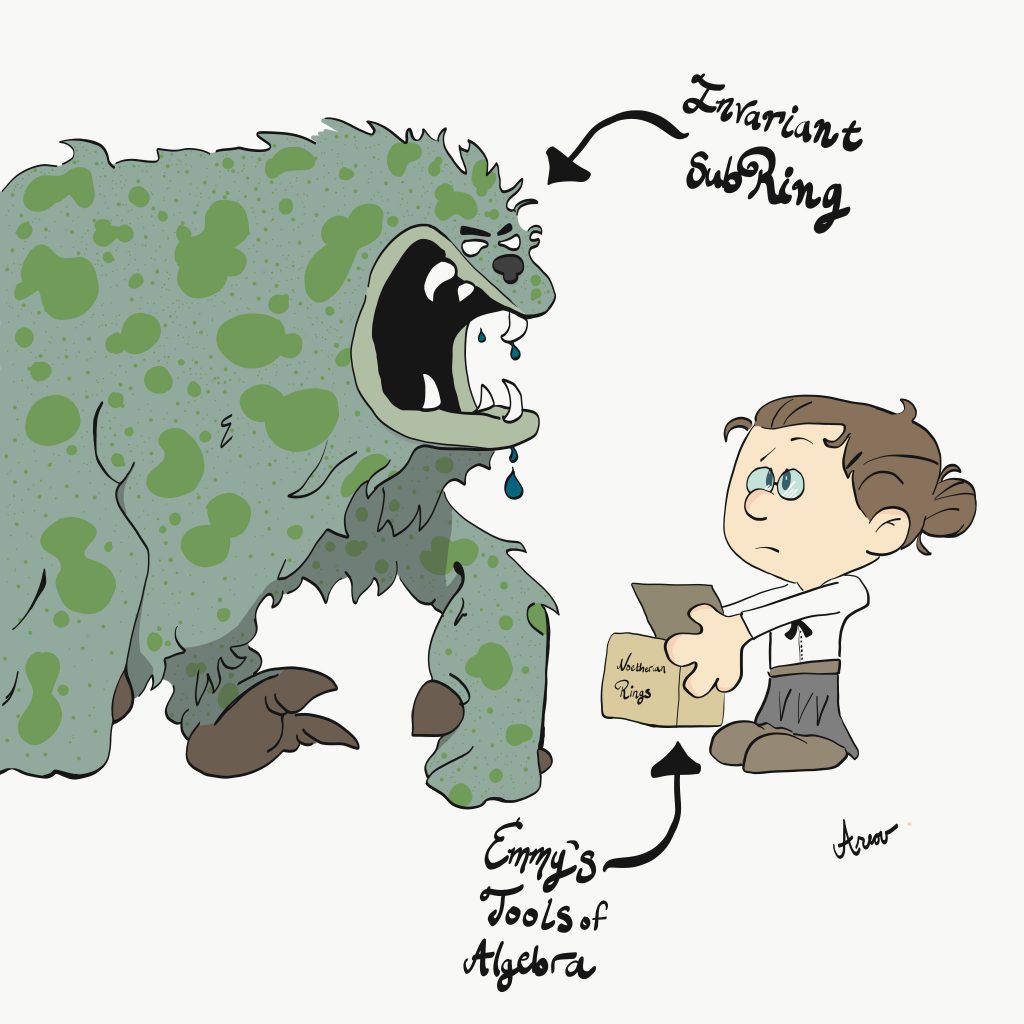
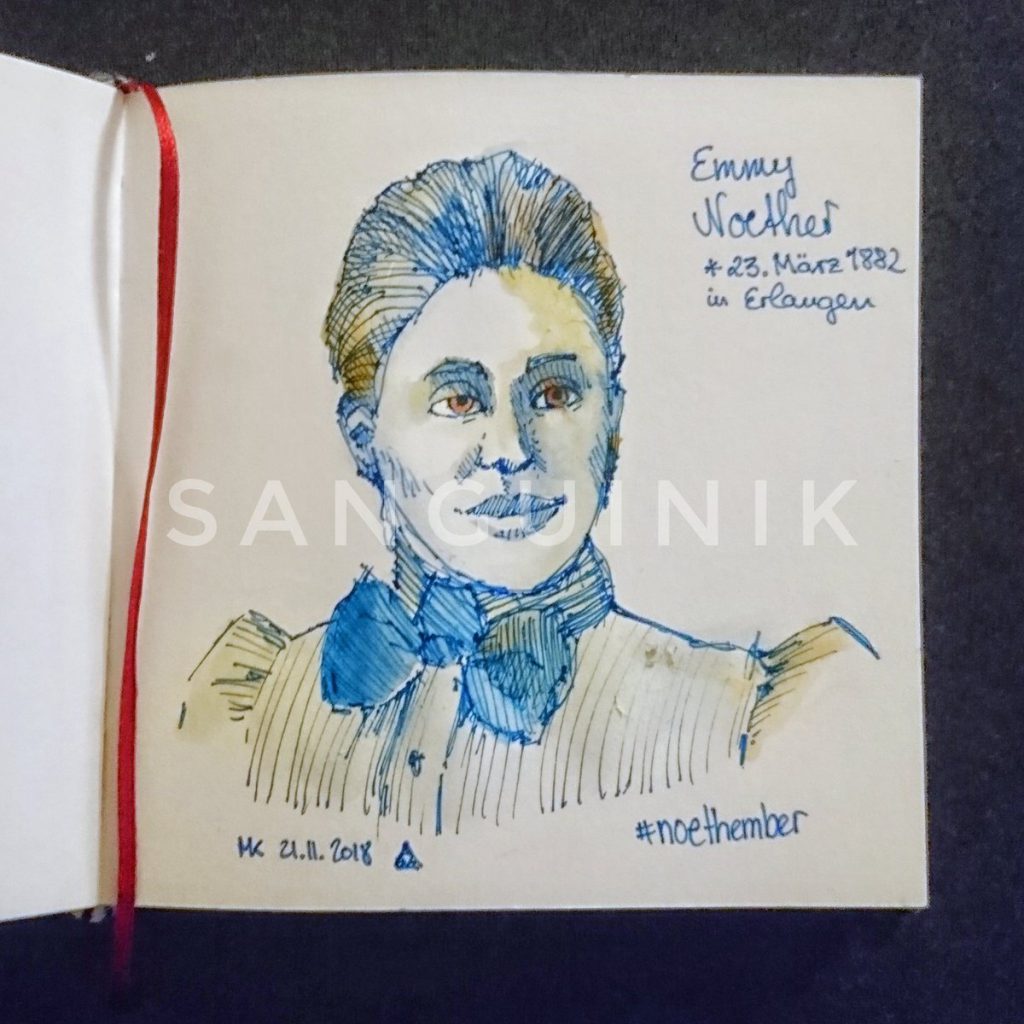
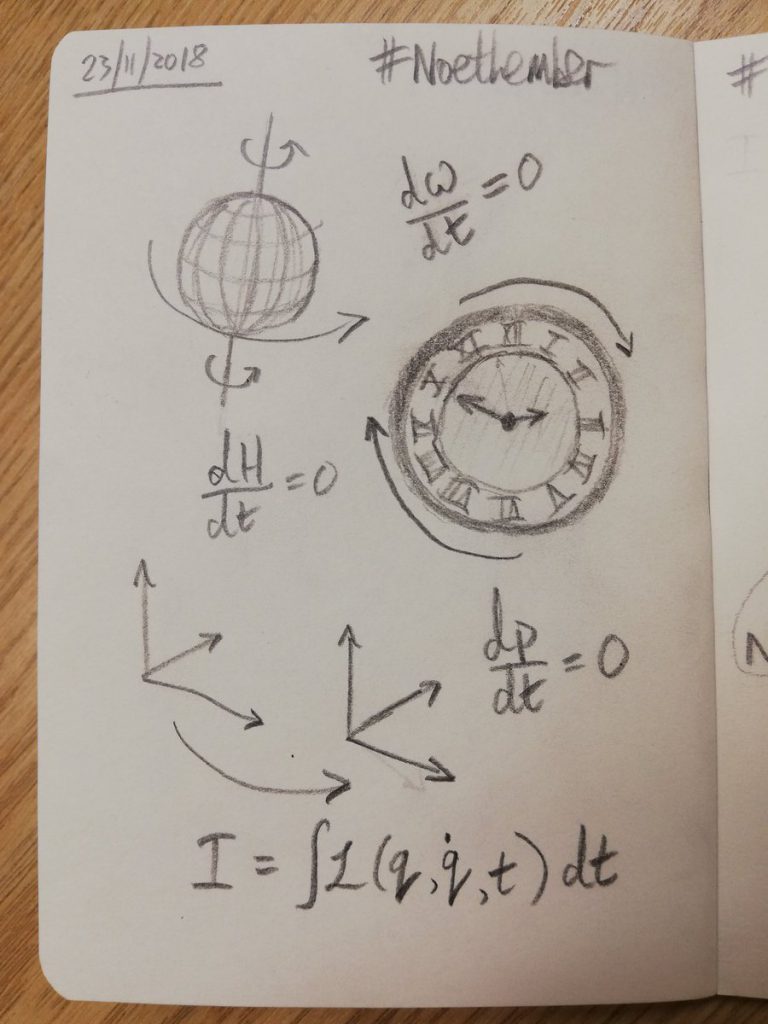
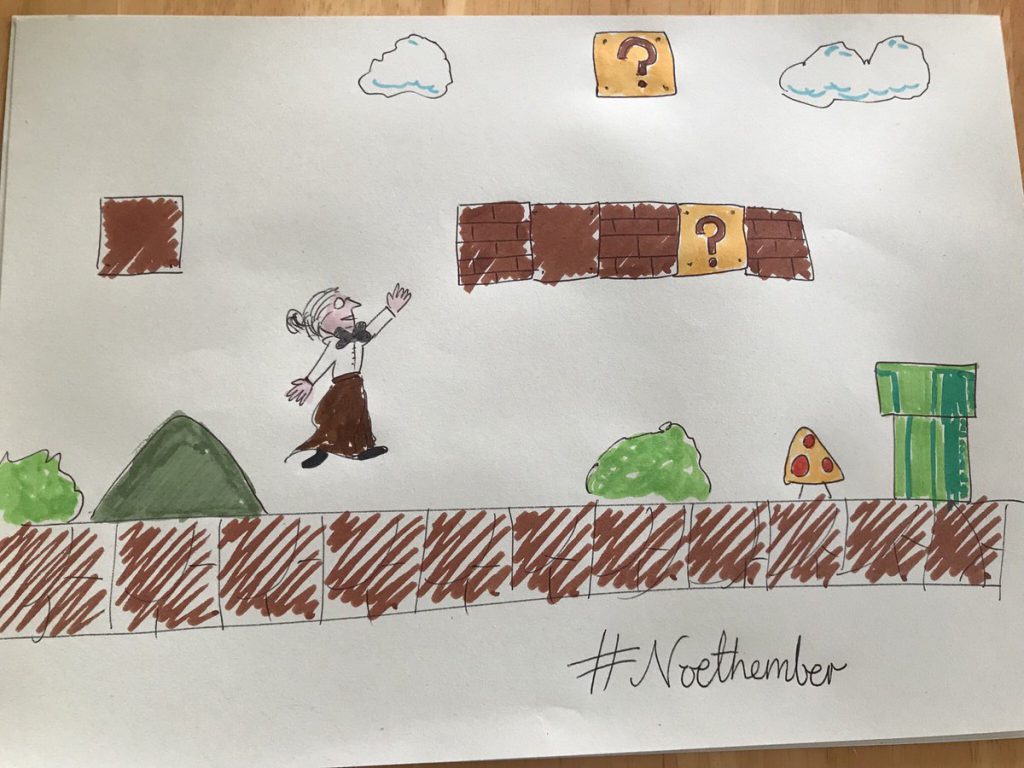
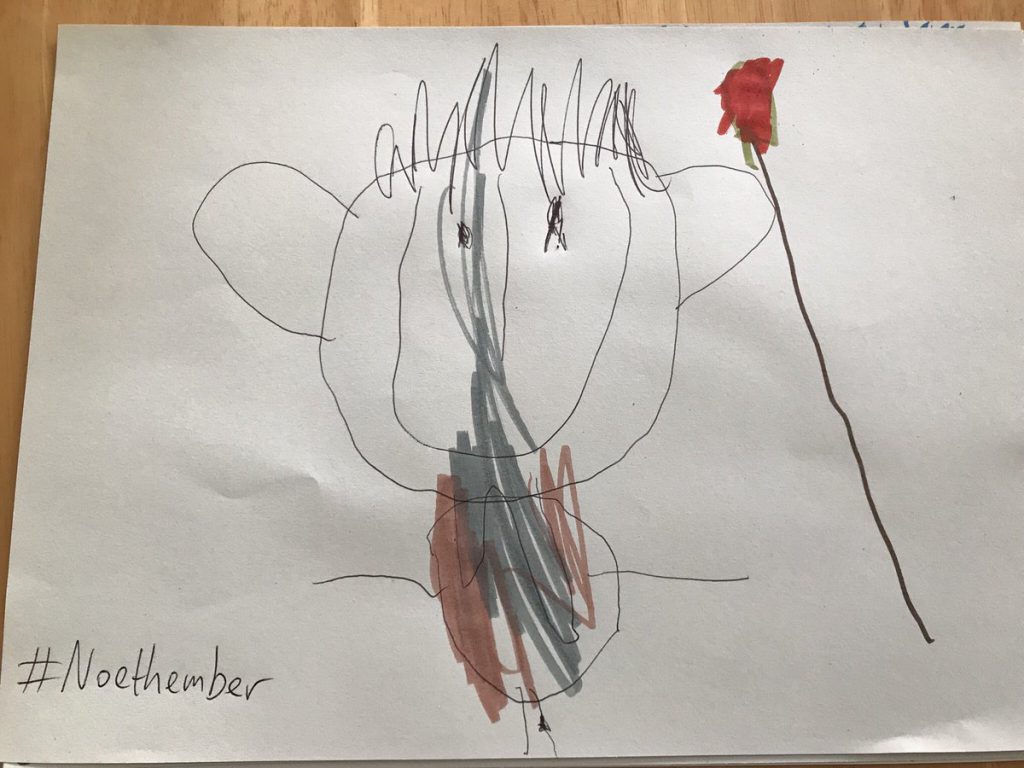
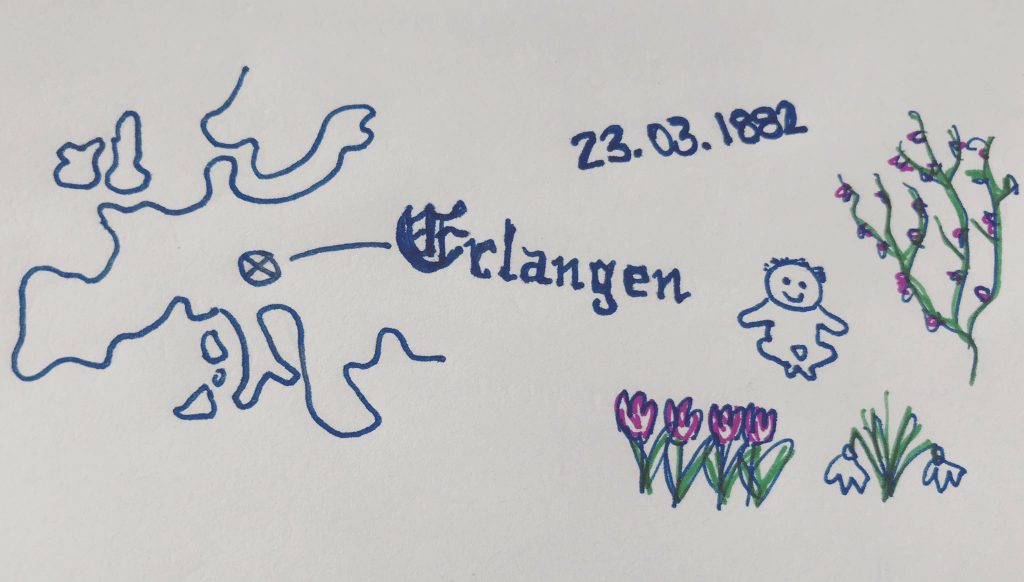

Last November, under the banner of #Noethember, we helped organise an international drawing challenge themed around mathematician Emmy Noether. The project resulted in a huge number of drawings and a warm feeling among those who participated. For 30 days, people across Twitter shared their sketches illustrating facts about Noether’s life and work.
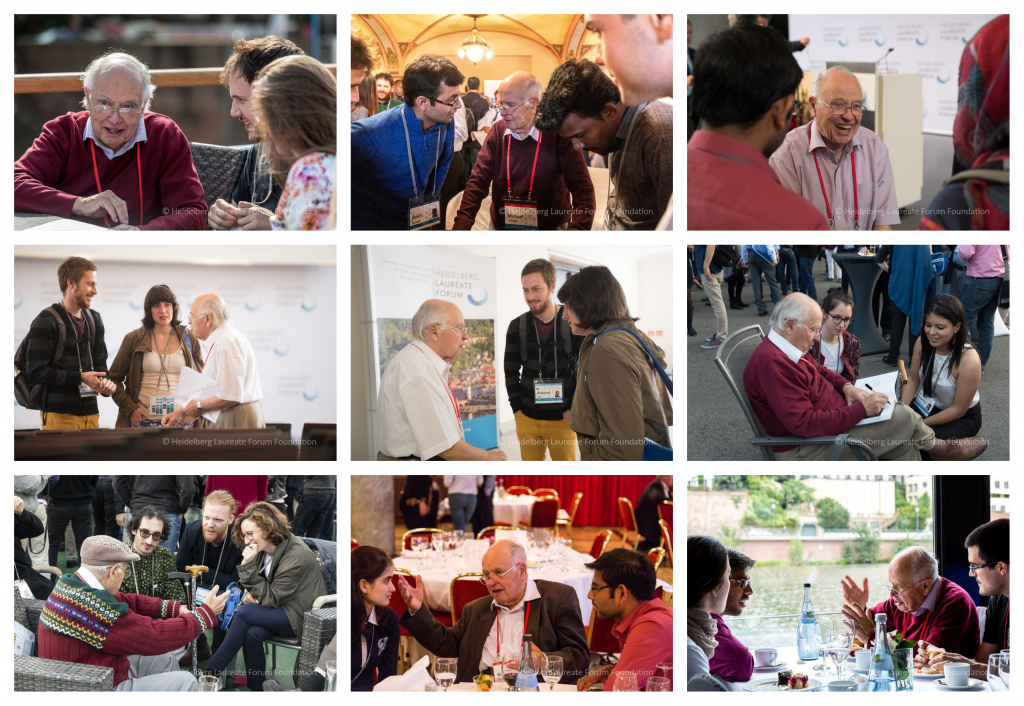
Over the weekend we heard the sad news that mathematician Sir Michael Atiyah has passed away on 11th January. One of the few mathematicians to have been awarded both a Fields medal and an Abel prize, Atiyah leaves behind an extensive mathematical legacy and will be missed by many.
A tribute to former President of the Royal Society Sir Michael Atiyah OM FRS (1929 – 2019), on the Royal Society website
Mathematician Sir Michael Atiyah dies aged 89, at BBC News
Michael Atiyah, Mathematician in Newton’s Footsteps, Dies at 89 at the New York Times