This is part of the Aperiodical Advent Calendar. We’ll be posting a new surprise for you each morning until Christmas!
You're reading: Main
The Aperiodvent Calendar, 2015
Everyone enjoys counting down to Christmas so much, that it seems to happen earlier and earlier each year. Well, sticking to the standard format of counting from 1st December down to 25th using a specially prepared calendar, we present the Aperiodical’s 2015 Advent Calendar, featuring behind each door not a small disappointing piece of chocolate, but a randomly chosen nugget of mathematical goodness for your enjoyment.
From YouTube videos to websites cataloguing number sequences, we’ve got a nice surprise for you each day. We’ll be adding each door as a post on the site, plus you can find them all collected together below, along with interesting number facts. Enjoy!
plotly.js is now open source

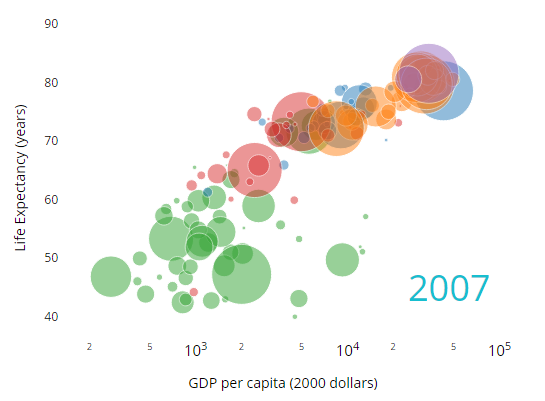
Plot.ly is a fairly comprehensive tool for creating whizzy interactive charts from data. It provides a suite of tools to make a whole range of different types of charts.
Until now, it’s been a web service you send data away to in order to get a chart back. I’d always been wary of that, because I worry about what happens when Plotly the company gets sold off or goes bust, and plot.ly the service gets shut down.
Well, now I can use a little bit of plot.ly, because they’ve released the bit of the chart-drawing code that runs in your browser under the MIT open source licence, meaning anyone can use it independently of Plotly’s servers.
With just the open-source stuff, the process of creating a chart is quite torturous because you have to define what you want by following a fairly illegible JSON schema. That means there’s still a reason to use the proprietary stuff that gives you a nice interface from Python or R, though I suppose people will soon enough start making their own versions of those that just tie into the Javascript stuff.
More information
Spoof My Proof
At the Maths Jam conference, I was delighted to chair the first ever (and possibly only) edition of Spoof My Proof, a panel show devised by Colin Beveridge and Dave Gale as a special edition of their podcast Wrong, But Useful – the show that iTunes reviewer @twentythree calls an “unassuming, gentle and informative chat on mathematics”.
László Babai reckons he can decide if two graphs are isomorphic in quasipolynomial time
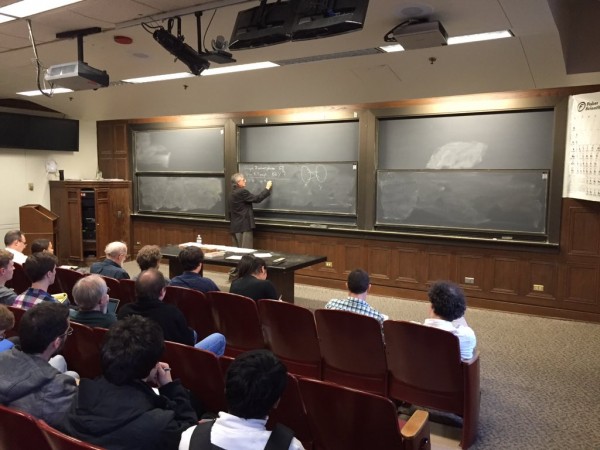
László Babai in Chicago. Photo by Gabe Gaster, used with permission.
We’ve been slow to cover this, but if this week has taught us anything, it’s that taking your time over Important Maths News is always a good idea.
A couple of weeks ago, rumours started circulating around the cooler parts of the internet that László “Laci” Babai had come up with an algorithm to decide if two graphs are isomorphic in quasipolynomial time. A trio of mathematicians including Tim Gowers were on BBC Radio 4’s In Our Time discussing P vs NP while these rumours were circulating and made a big impression on Melvyn Bragg as they talked so excitedly about the prospect of something big being announced.
If Babai had done what the rumours were saying, this would be a huge advance – graph isomorphism is known to be an NP problem, so each step closer to a polynomial-time algorithm raises the P=NP excite-o-meter another notch.
Riemann Hypothesis not proved, part 2
Who could have guessed that this non-story about somebody being out of his depth and quite obviously wrong would get so out of hand? Here’s an update on The Continuing Tale Of The Man Whose Claims Couldn’t Be Verified.
AMS online opportunities
The American Mathematical Society have created a system of online listings for people offering awards, fellowships, professional opportunities and other maths-related callouts. There’s a website at ams.org/
The system is aimed at mathematics faculty/scientists, institutions, programs, postdocs/early-career mathematicians, postgrads, undergrads, high school students and teachers (so, pretty much anyone involved in maths), and we’ve cheekily used it to post a call for submissions of articles for our Irregulars column, where we feature guest posts from other authors.
More information
Awards, Fellowships and other opportunities, at the AMS website.