
I notice that our post queue is filling up with interesting mathematical apps, so I thought I’d deal with them all in one big roundup post. Read on for a mix of mathematical games, apps to help with calculations, and some frankly awful art.

I notice that our post queue is filling up with interesting mathematical apps, so I thought I’d deal with them all in one big roundup post. Read on for a mix of mathematical games, apps to help with calculations, and some frankly awful art.
Our good friends at Maths Gear have sent us a tube of “unique polyhedral dice” to review. The description on mathsgear.co.uk says they’re “made from polyhedra you don’t normally see in the dice world”. My first thought was that we should test they’re fair by getting David to throw them a few thousand times but — while David was up for it — I’d have to keep score, which didn’t sound fun.
So instead we thought of some criteria we can judge the dice on, and sat down with a teeny tiny video camera. Here’s our review:
https://www.youtube.com/watch?v=prFc3Vv0lXs
In our traditional mode of picking apart the programmes of upcoming science festivals to make sure they’re doing their maths homework, here’s a round-up of the mathematicial goodies on offer at the upcoming Manchester Science Festival, running from 22nd October – 1st November at venues across Manchester.

One of the many jobs we’re gradually getting round to in our new flat is that of tiling a small section of the kitchen surface, which for some reason was left blank by the original builders and all intervening owners. And what better thing to tile it with than binary numbers?

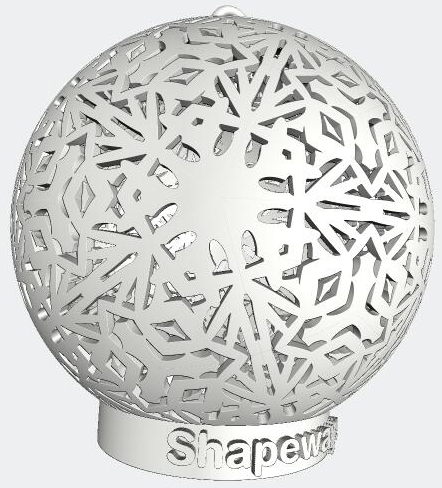
Snowflake Seashell Star is a new mathematical colouring book, by Alex Bellos and Edmund Harriss, aimed at the lucrative ‘grown-up colouring books’ market that’s sprung up recently, heavily intersected with people who are interested in maths – the book can be used as a regular colouring book, but contains lots of interesting mathematical things, and mathematicians will love it. I wouldn’t have expected anything less from maths adventurer Bellos and mathematical artist and tiling fan Harriss, whose personalities both come through in the book – from the beautiful illustration to the playful style (and there’s a sneaky Harriss Spiral in there too).
The first thing I did in order to properly review the book was check an important mathematical fact, in case anyone was worried. And yes, everything in it is colourable using four colours or fewer. Phew.
Some mathematicians at Harvard have formed an organisation called “Gender inclusivity in mathematics”, which is dedicated to “creating a community of mathematicians particularly welcoming to women interested in math and reducing the gender gap in Harvard’s math department.”
They’re running a series of talks by invited speakers and discussion events, and hope to run a conference on women in mathematics this academic year.
More information: Gender inclusivity in mathematics at Harvard
via Nalini Joshi on Twitter
The National Numeracy campaign, a British charity aiming to improve numeracy in adults as well as children, has relaunched its Parent Toolkit as the Family Maths Toolkit. It contains advice for parents on promoting good attitudes towards maths, as well as ideas for activities to get the whole family enthused and practised in maths. There’s also a section with information to help school teachers support parental engagement with maths.
Visit: Family Maths Toolkit
Khan Academy has partnered with Pixar to produce a subsection of their site which explains some of the maths involved in computer animation. There are the usual videos explaining individual topics, but also plenty of interactive diagrams so you can play along at home. It’s also nice to see some “Get to know …” videos, which present real animators who work at Pixar, talking about why they got into computer animation.
Visit: Pixar in a Box, at Khan Academy
Terence Tao has just uploaded a preprint to the arXiv with a claimed proof of the Erdős discrepancy problem.