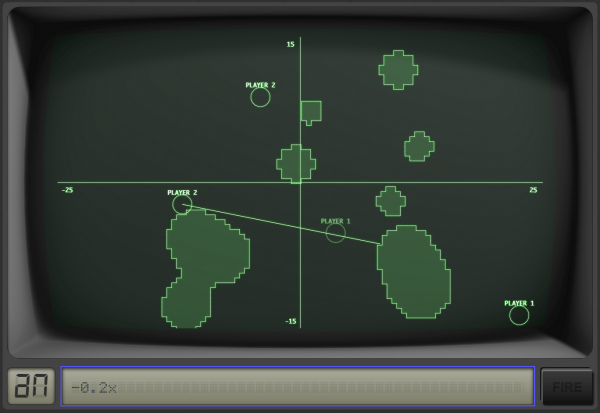
This happened on the BBC’s University Challenge this week:
https://www.youtube.com/watch?v=FOOsLvSfQAY&feature=youtu.be
Jeremy Paxman might never recover from having his mind so thoroughly blown.
This happened on the BBC’s University Challenge this week:
https://www.youtube.com/watch?v=FOOsLvSfQAY&feature=youtu.be
Jeremy Paxman might never recover from having his mind so thoroughly blown.
I just want to be done with Alan Turing posts, but stuff keeps happening. Here’s a very brief round-up of some recent Turing news:
There’s a petition to Pardon all convicted gay men, not just Alan Turing. Sign it or don’t or write 12,000 words hemming and hawing about it all. Up to you.
This is actually really interesting: some “Banbury sheets”, invented by Alan Turing to make breaking naval Enigma codes go quicker (here’s some more info on how that works by Tony Sale) have been found stuffed in the roof of Hut 6 at Bletchley Park.
The UK government is putting together a mega-huge new Alan Turing Institute for Data Science, combining support from all sorts of universities and research organisations. The Guardian tells us that it’s going to be based at the British Library in London, while the Manchester Evening News laments that the University of Manchester, where Turing worked after the war, has not been selected to be an official part of the Institute.
(This post has been updated following an email from Ron Chinitz)
Here’s a new product vying to knock the set square off its throne as Least Useful Tool in the Pencil Case.
CoordiMate is a rubber stamp which prints a teeny tiny set of axes. It’s supposed to help you with your homework.
… for the week or two that you spend learning how to graph functions.
It’s currently the subject of a Kickstarter hoping to raise $25,000 so it can go into full production. Just watch this pitch video.
With all the attention we’ve been giving the LMS’s 150th birthday celebrations, it’s only fair to note that the Mathematical Association of America is 100 this year.
The MAA is a fantastic organisation, as the famous maths people in this video testify:
As is the way of these things, there are events throughout the year to celebrate the MAA’s centennial; all the info is on the MAA’s website. The main event is the MAA’s annual MathFest, which is happening in Washington, D.C. at the start of August.
The nice chaps at Kitki, an educational board game company based in India, have come up with a cool idea for a mathematical board game. They’re funding it through IndieGoGo (which if you haven’t heard of it is a bit like Kickstarter), and they’re looking for your help.
This post popped into our news queue just before Christmas, and was forgotten about thanks to the seasonal good cheer. Well, it’s 2015 now, and our Nonsense Formula Disapprove-o-Matic is beeping angrily. We still can’t muster up enough enthusiasm to properly dig into this, so I’ve just tidied up the links I collected earlier on.
Eugenia Cheng (of nonsense formulas passim) has “found” the formula for the perfect doughnut, for Domino’s Pizza. Coincidentally, they’ve recently started selling doughnuts.
Actually, “formula” should be in quotes as well – the “formula” she gives is, drumroll…
\[ \frac{(r-2)^2}{4(r-1)} \]
Note that that’s not a formula.
Bees have encouraged mathematical speculation for two millennia, since classical scholars tried to explain the geometrically appealing shape of honeycombs. How do bees tackle complex problems that humans would express mathematically? In this series we’ll explore three situations where understanding the maths could help explain the uncanny instincts of bees.
A curvy wild honeycomb.
Honeybees collect nectar from flowers and use it to produce honey, which they then store in honeycombs made of beeswax (in turn derived from honey). A question that has puzzled many inquiring minds across the ages is: why are honeycombs made of hexagonal cells?
The Roman scholar Varro, in his 1st century BC book-long poem De Agri Cultura (“On Agriculture”), briefly states
“Does not the chamber in the comb have six angles, the same number as the bee has feet? The geometricians prove that this hexagon inscribed in a circular figure encloses the greatest amount of space ((Translation by Hooper and Ash in the Loeb. I’ve been told that ‘Hexagonon’ is in its singular form, and the only Greek word (also having Greek grammar) amongst this part of Varro’s Latin text. I would be happier that Varro understood what he was writing about if the text more explicitly described the construction, perhaps ‘Three hexagons encircling a point’, or ‘Six hexagons arranged around a seventh’. In translation, it could be viewed as falsely suggesting that the hexagon is the polygon with the greatest area that fits inside a circle. In his defense though, Varro also earlier suggests that orchards be arranged regularly in quincunxes, the arrangement of spots representing the number five on dice, to take up less room and give better quality produce. The centres of hexagons in a regular hexagonal tiling can be thought of as an elongated quincunx, repeated. As this is essentially the same result used in another context, I’ll give Varro the benefit of the doubt and defer to Varro’s poetic license.)).”