Here’s some quick stories from the world of maths this week.
You're reading: Main
Petition absorbs way more signatures than this product with a stupid advert ever could
An Australian sanitary pad company has hit upon a witty tagline for their product:

Literally thousands of people have signed a petition to tell Libra that that’s not OK.
‘The Imitation Game’ Cryptography Competition
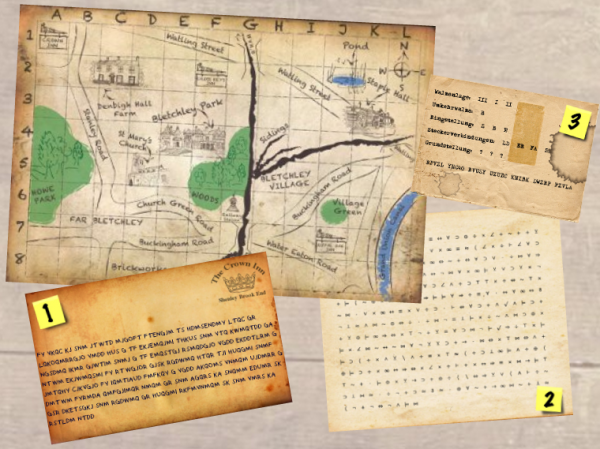
To celebrate the release of the upcoming Alan Turing biopic The Imitation Game (see our incisive analysis of the film’s trailer by James Grime) the guys at the University of Manchester – who have previously run the hugely successful Alan Turing Cryptography competition – have been asked to run a one-off Imitation Game Cryptography Competition. And they have.
The competition is themed around the (possibly true? Who knows. It’s not like it’s my job to research these things) idea that Alan Turing’s fortune in silver is buried in a secret location somewhere near Bletchley Park, and it’s your job to crack the three coded clues and find out where. Prizes will be in the form of exclusive Imitation Game merchandise donated by the makers of the film, and the competition runs until the 28th of November.
More information
Maths at the Manchester Science Festival
Manchester Science Festival takes over the city from 23rd October – 2nd November this year, and it’s got a great selection of mathematical events. If you’re based locally, or thinking of heading over there for any of the time, here’s The Aperiodical’s guide to where to get your factorial fix.
Some more games to entertain a commutative mathematician
A while ago I collected a few of the mathsy games I play on my phone to while away my commute. I’ve found a few new ones since then, so I thought I’d do a new post to tell you about them.
Relatively Prime podcast series 2 Kickstarter
Friend of the Aperiodical Samuel Hansen has launched a Kickstarter to fund a second series of his maths podcast Relatively Prime. The first series was successfully funded in 2011 and consisted of eight hour-long episodes telling “stories from the mathematical domain”, including interviews with Tim Gowers, Matt Parker, David Spiegelhalter and more.
KaTeX is a (partial) alternative to (some of) MathJax
Khan Academy has released a new library to typeset mathematical notation on webpages, called KaTeX.