The number one component of music that really gets my attention is Brian May plays guitar, but a very close second is clever lyrics. The first morning of 2025’s Talking Maths in Public (TMiP) conference, from waking up, through carving myself a slice of scrambled egg at the breakfast buffet, up until the blessed relief of Jon Chase’s fabulous keynote talk, was soundtracked by a repeating refrain that only I could hear:
‘I like the Pope / The Pope’s got notes on polytopes’.
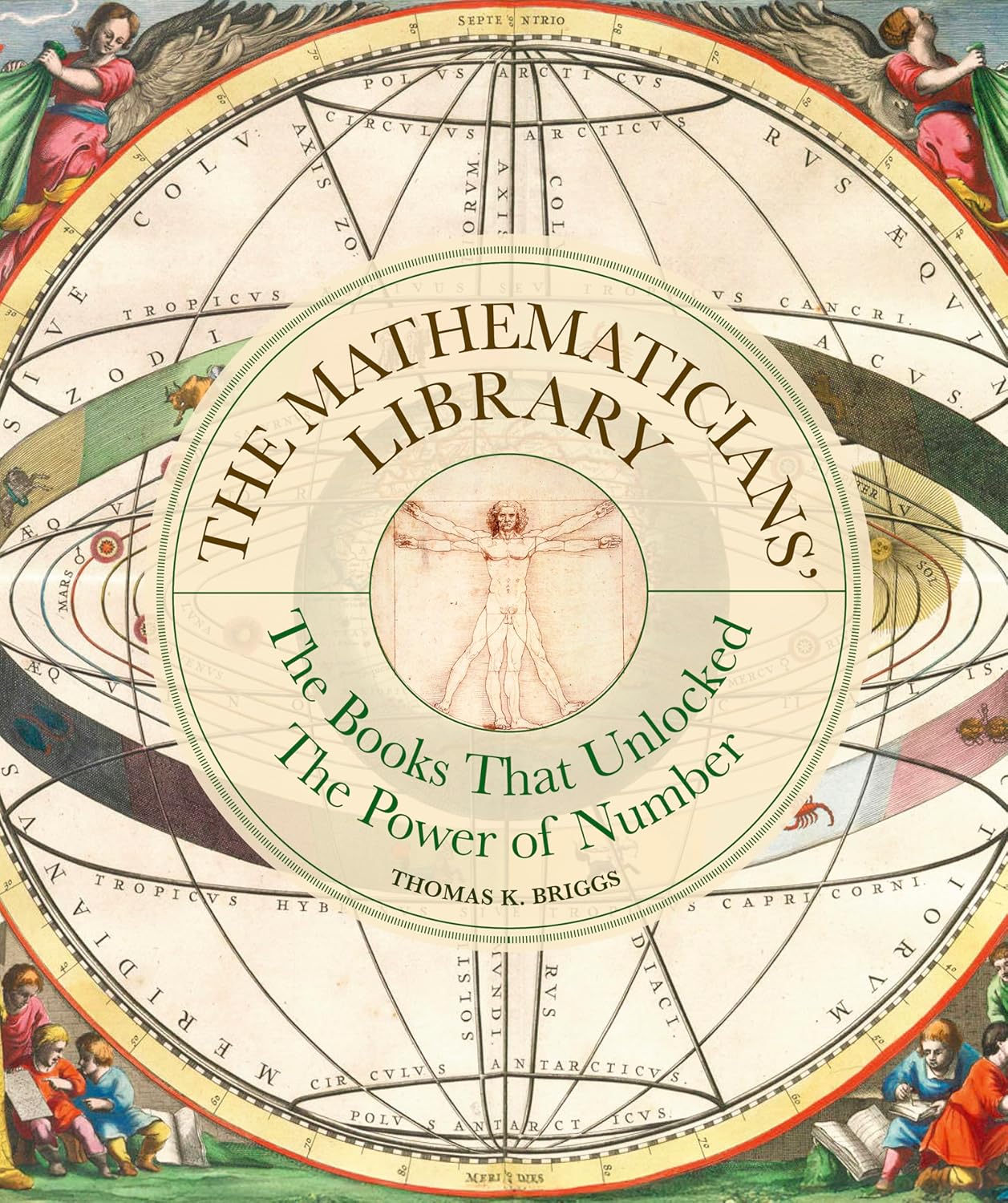
Books. Every self-respecting mathematician’s floor has a pile of them, some half-read, others to re-read, some merely providing structural support. In The Mathematician’s Library, Thomas K. Briggs considers an alternative approach to the literature, instead using the books of the last few millennia to tell the story of mathematical development around the world.
When I say “around the world”, I mean it: Briggs takes care to pick out important early texts from India and China; if the southern hemisphere feels a bit hard done-by, I suspect that’s more a shortage of available works than a deliberate snub. As far as possible, he tries to counter the narrative that all mathematicians conform to the traditional old-white-bloke stereotype by providing counterexamples. The tone is light and friendly, a “hey, look at this cool thing!” approach, typified by the last few selections: rather than pure research, the picks move assertively towards popular maths.
It’s a beautiful book – a gorgeous cover and thoughtfully laid-out illustrations, even if the ligatures on the typeface feel like a little much. It follows a largely chronological path, split into six sections – the first 40,000 years (up to Euclid), the origins of mathematics (up to about 600CE), global evolution (up to the Renaissance), scientific revolution (up to Newton’s Principia), modern mathematics (up to Russell and Whitehead’s), and – somewhat eyebrow-raisingly – the future, from 1932 to 2024.
My main criticism of the book is that there’s obviously a concept behind it, but what the concept is isn’t made clear. Is Briggs an enthusiastic librarian showing us around his imaginary collection? Are we travelling through time to visit the floor-piles of mathematicians gone by? Is it just a list of some interesting books and some commentary on them? I believe it’s the first, but the introduction ought to put it beyond doubt.
There’s something for everyone here: enough detail to get you started if you want to burrow into a rabbit-hole, but not so much as to overwhelm; a mix of familiar and unusual book selections; lots of pretty pictures if you don’t feel like digging into the maths right now; and a wide, tall format that will add stability to my personal pile of books.
Disclosure: Colin received a free review copy of The Mathematician’s Library and hopes the author still considers him a friend after this.
The Mathematician’s Library will be published by Ivy Press on September 11th, 2025, with a list price of £28.00.
This is a review of the book The Big Bang of Numbers by Manil Suri. We were kindly sent a copy of the book to look at, and Ashleigh Ratcliffe shares her thoughts.
In this book, Suri sets out to build the whole of modern mathematics from its foundations, and has chosen to do this by mirroring the Christian 7-day creation story – along with a persistent running joke about the author’s entirely fictional personal rivalry with the Pope, which at times is slightly distracting. Despite this, it’s a clever conceit and allows the story of creation of maths to unfold gradually.
The author takes a holistic approach to the field of mathematics – the book demonstrates the importance of mathematics in the universe, and how it would not be possible to exist without mathematics. Whilst the main story is about building the universe from mathematics, you also get an idea of the historical building and progress of mathematics as a field. I find it such a beautiful concept that in any universe, we would have maths.
On day 1 (my personal favourite) we have arithmetic. This chapter starts with thinking about what numbers are and why we need them. After constructing sets and numbers, we start playing games with numbers and then obtain the different operations. This is a fun way to approach arithmetic, especially as each number gets its own personality. By the end of day 1, we have the building blocks of the universe.
On day 2, we have geometry. Using our building blocks and some abstract ideas, we make space for the universe. We first get lines, then planes, and then space. The chapters in this section are littered with useful diagrams, images and ideas – such as getting points to act as lights to switch on and off, which in turn create shapes. This is a very imaginative and beautiful concept, and an approach to this topic I have never seen before. We also see appearances of geometry in nature, and some fabulous crochet creations.
An illustration from the book
On day 3 we have algebra, and we get further in touch with nature. We can view the things we already made, but now in terms of algebra – which surprisingly includes teaching mother nature how to draw!
On day 4 we have patterns, which introduces us the wonderful concept of symmetry. We also meet some more occurrences of maths in nature through the golden ratio, spirals and fractals. On day 5 we have physics, and the idea of spacetime from which we can build a simplistic gravitational model.
On day 6 we have infinity. The author builds an intuition for the concept of infinity through a sci-fi tale featuring Georg Cantor.
Finally, on day 7, we have emergence: the day of rest, where we sit back and admire what we have created. The ending is left open, which aligns with the exploratory and investigative nature of the book. However, as a reader, I felt slightly annoyed to have followed the path of building the universe for it to all then be questioned.
The first few days are very easy to follow and there are nice images and applications of mathematics throughout the book. The importance of mathematics is well portrayed throughout, especially through its occurrences in nature – for a large section of the book, the narrator is mother nature.
The further into the book we get, the more abstract the ideas become and in parts it is hard to follow. Some bits of the story are a little far-fetched, and there were some explanations that I struggled to get my head round – so I would expect it to be hard for a non-mathematician to completely understand, despite the book’s description on publisher Bloomsbury’s website: “an accessible introduction for enthusiastic novices”.
The endnotes have further content for more advanced readers to find/read more details on certain areas or ideas. In my opinion, some things in the text could have been put in the endnotes, and vice versa, allowing the main story to be easier to follow and understand.
Overall, this is a very unique and interesting book and one I very much enjoyed reading. A truly different maths book, which shows mathematics in a different light.
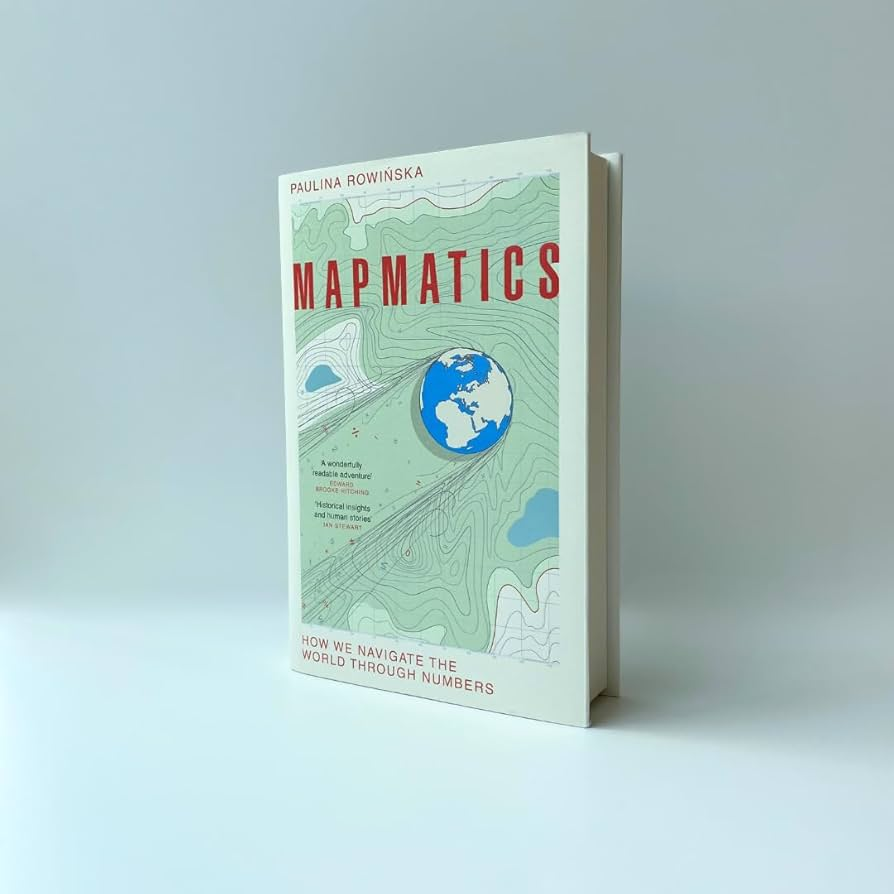
This is a review of the book Mapmatics: How we Navigate the World through Numbers by Paulina Rowińska. We were kindly sent a copy of the book to look at, and Elinor Flavell shares her thoughts.
Do you love maps? Do you hate maps? Have you never given much thought to maps but are now worried that it might be good to know how to navigate if your phone dies? Well, Mapmatics is for you!
Do you know a geography nerd who is always bringing up maps? Do you know someone who always seems to get lost, despite it being easier than ever to get around? Or do you have that one friend who still doesn’t believe that everything can be related to maths? Well, Mapmatics is for them!
Mapmatics is for everyone!
Mapmatics is for you, and for anyone in your life who would like to more deeply understand the connections between maths and the world around them. On the surface Mapmatics is a book about how we create and use maps to interpret the world around us. But Rowińska shows that the reason we can do all of these things with maps is because of mathematics.
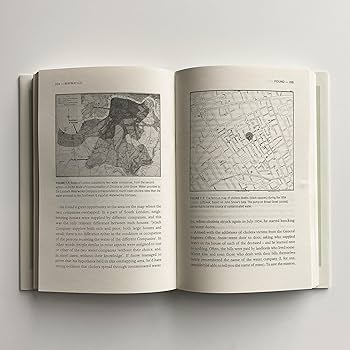
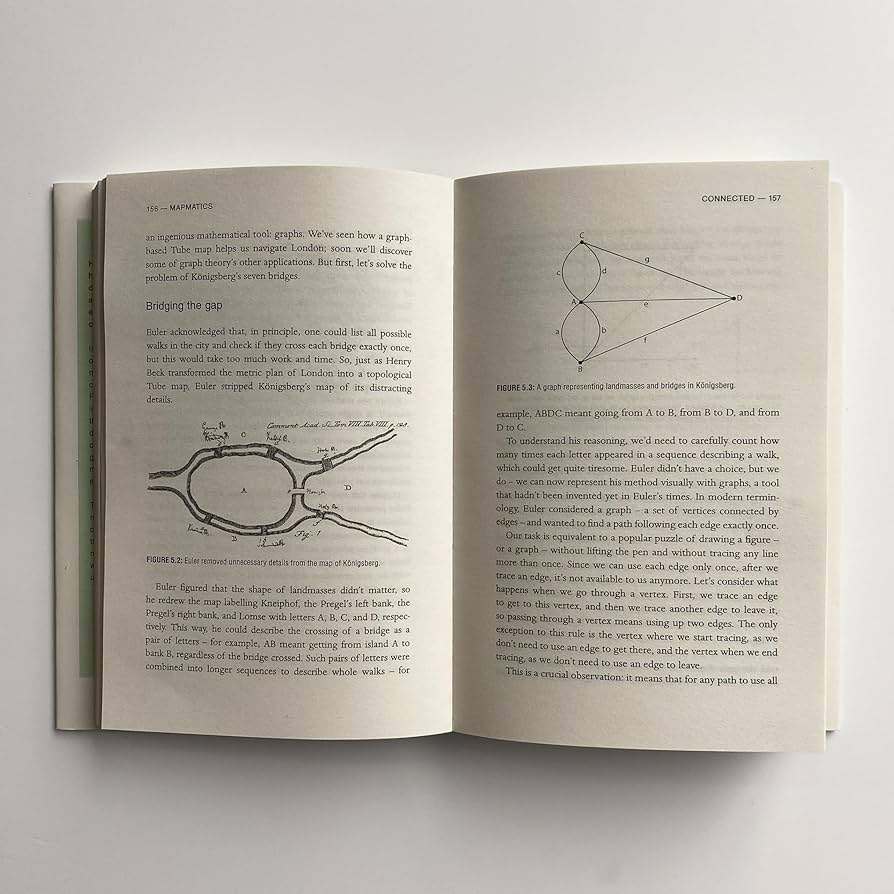
Over eight chapters, Rowińska talks us through problems that humans have wrestled with through the centuries – from “how can we take a 3D globe and turn it into a 2D map?” to “how can we map the inside of our planet without actually going to the centre of the earth?”. And with each problem she takes us through the underlying mathematics. Each chapter explores a different aspect of maps, and includes a diverse range of topics, from gerrymandering to the London Tube map.
Rowińska does a great job at explaining some rather complicated ideas while talking about lots of other researchers, giving you plenty of resources to go and learn more about a certain subject, if you so wish; and she includes some very helpful diagrams! She is very good at defining and explaining geography jargon in terms which a geography novice such as myself could understand. However, I would have found it helpful to include a glossary in the book so I could refer back to them. I also found it rather refreshing that in her examples she does not stick to the gender neutral “he” when talking about a random person experiencing something.
I have two primary criticisms of the book: Rowińska starts off the book by talking about her first experience of maps, but I would love to know more about her link to maps and geography and what prompted her to write the book in the first place. Secondly, I would love to see even more diagrams – in colour- in the book as I think this would support some of the more difficult mathematical ideas included. However, I realise this is the eternal struggle between author and publisher.
This book would suit anyone who loves understanding the mathematics behind things that we use every day. From a technical point of view, I would recommend having at least done mathematics in your final years of secondary school, as some of the mathematics presented would be challenging otherwise.
Overall, this is an engaging book that covers a huge variety of applications – from earthquakes to animation, and will be of interest to anyone who likes to understand the intersection between maths and other topics.
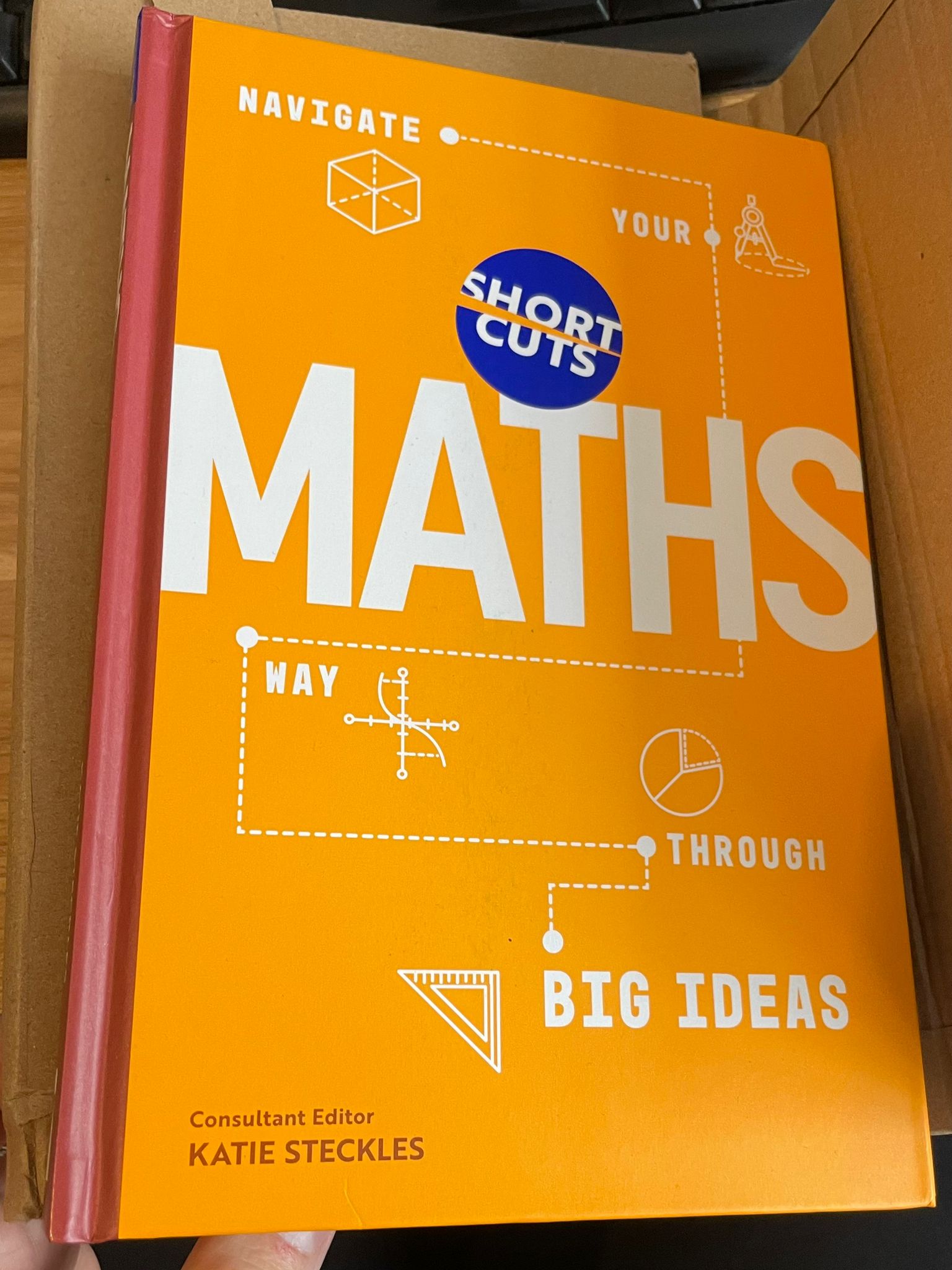
Our own Katie and Peter have collaborated on a new popular maths book, along with friends of the site Alison Kiddle and Sam Hartburn, which is out today. Short Cuts: Maths is an “expert guide to mastering the numbers behind the mysteries of modern mathematics,” and includes a range of topics from infinity and imaginary numbers to mathematical modelling, logic and abstract structures. We spoke to the four authors to see how they found it writing the book and what readers can expect.
How did this project come to be?
Peter: From my point of view, Katie approached me to ask if I’d like to be involved, which was very exciting! She’d worked on a couple of books with the same publisher and was asked to commission authors for this one.
Katie: The publishers wanted to make this book – one of a ‘Short Cuts’ series which needed a maths title – and asked me to be commissioning editor, which meant I could write some of it and ask others to write the rest. I chose some people I’ve worked with before who I thought would have something interesting to say about some topics in maths (in particular, the topics I know less about, so they could help me with those bits!)
Alison: As I was the last of the four of us to come on board, I think everyone had already expressed a preference for their favourite bits to write about, but luckily that left me with the two best topics, logic and probability.
Do any of you have previous experience of working on a project like this?
Alison: I’ve been involved in writing a book before but that one was about maths education, for an audience of mainly teachers, so this was a different sort of challenge, writing for a general audience with different levels of maths prior knowledge and enthusiasm.
Sam: I’ve worked on many books in the same genre as a copyeditor and proofreader, but this was my first time as an author. I enjoyed seeing how the publishing process works from the author’s point of view – it’s definitely had an impact on my editorial work!
Peter: My first time in popular book form, though I felt it used a bunch of skills I’ve developed in other work. And Katie is so great at organising projects that it went really smoothly.
What’s the book like?
Sam: It’s a book you can dip into – you don’t need to read it from front to back. Each page is self-contained and answers a question, and we tried to make the questions as interesting as possible (two of my particular favourites are ‘Is a mountain the same as a molehill?’ and ‘Do Nicholas Cage films cause drownings?’).
Alison: We had quite a strict word limit to write to, which was a bit hard to get used to at first as I have a tendency to use ten words when two will do – but this turned out to be a blessing because it focussed us all on what the really important concepts were, and we found ways to express those concepts in a concise manner.
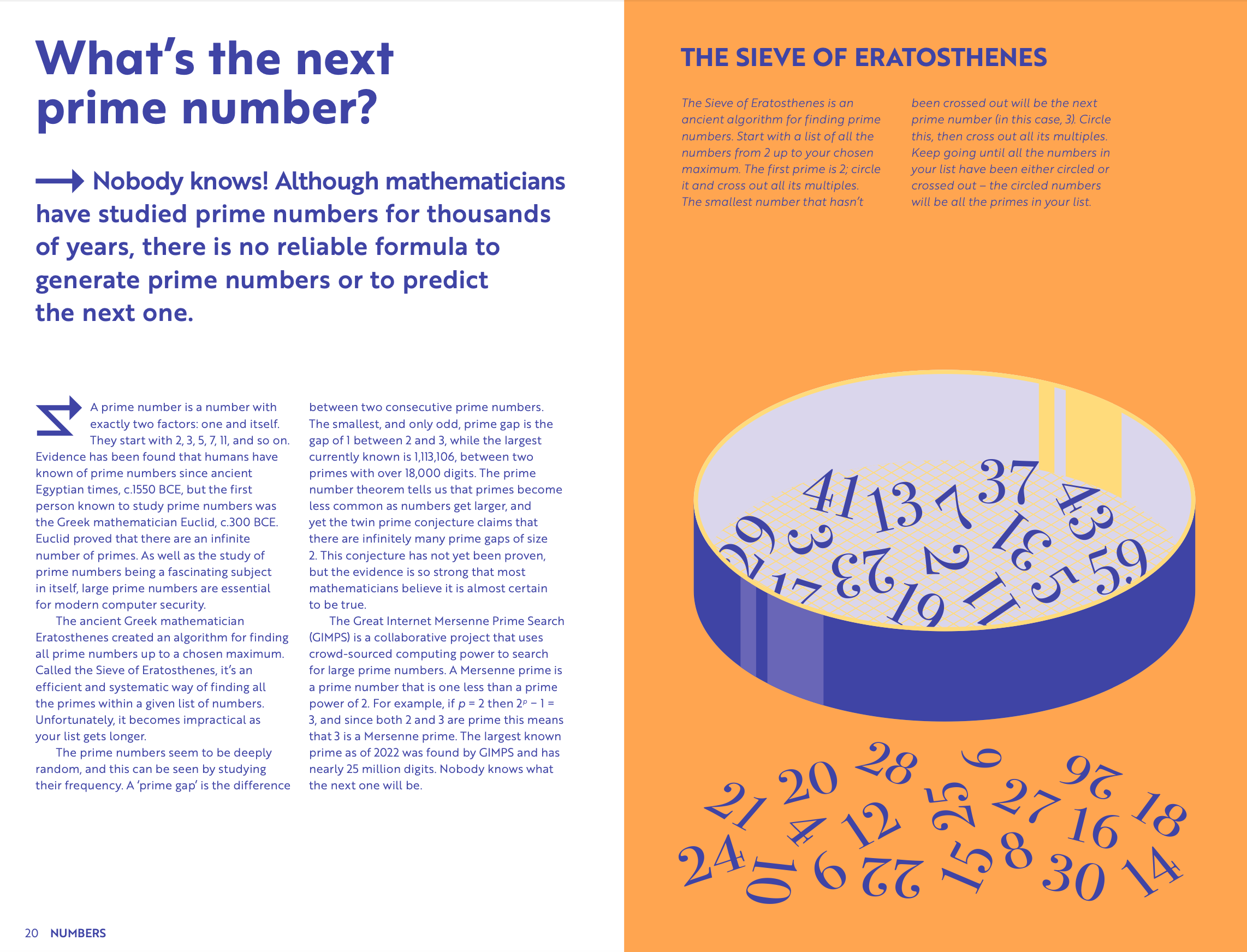
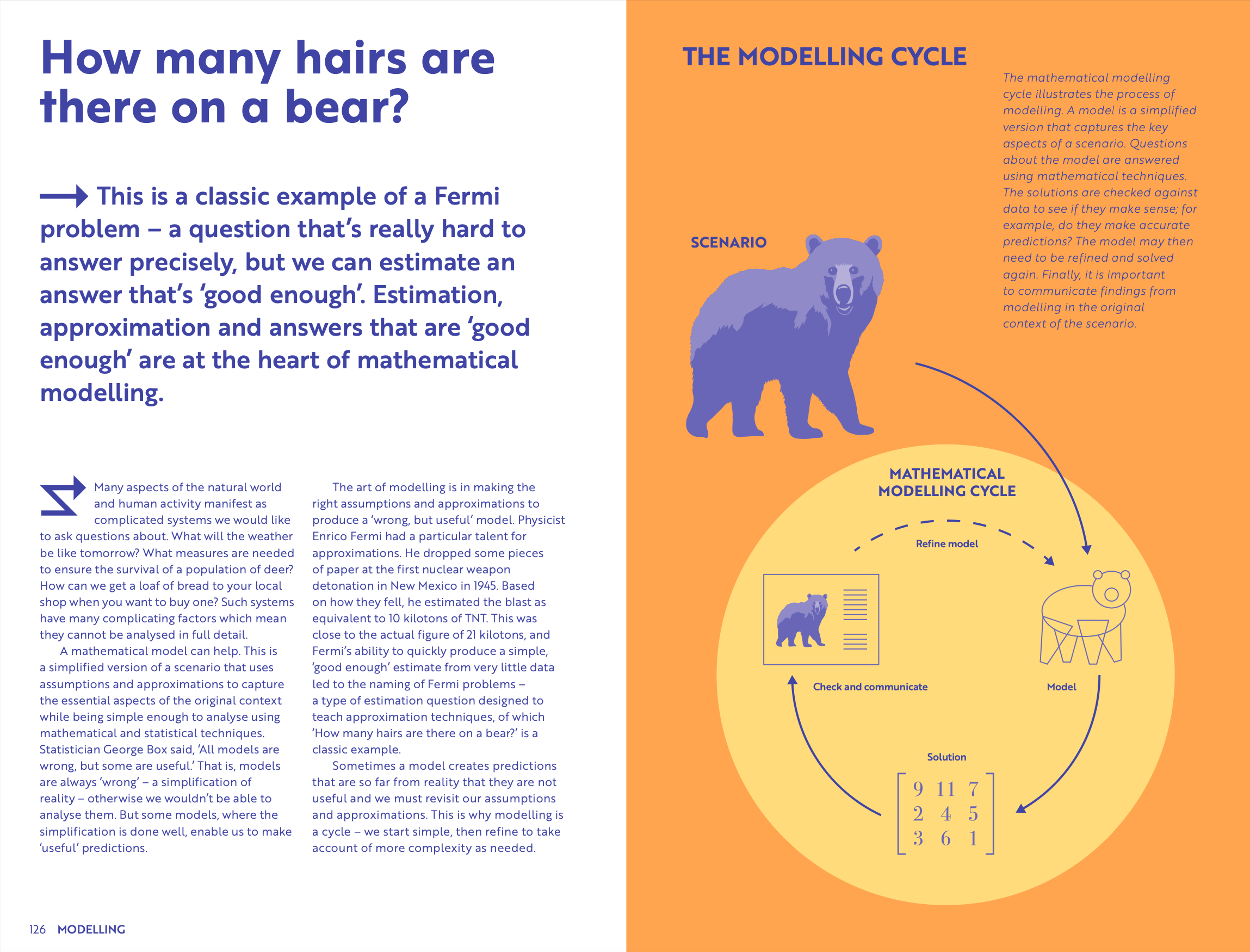
Katie: I love how the style of the book builds in these gorgeous illustrations – we worked with the illustrator to make sure they fit with the text, but also bring out fun aspects of the ideas we’re talking about.
Who do you think would enjoy reading this book?
Sam: I’d like to think that anyone who has a vague interest in maths would get something out of it. Even though it delves into some deep mathematical topics, we’ve (hopefully!) written it in such a way that it’s understandable to anybody with school-level maths. But I’d hope that experienced mathematicians would also be able to find something new, or at least fun, in there.
Alison: I’m definitely going to be recommending it to the students I work with. The bite-size dipping in and out model is great for them to skim read so they can find out a little bit about the mathematical ideas that appeal to them. Particularly useful for people preparing for university interviews where they want to show off that they know some maths beyond the usual curriculum!
Katie: My mum’s definitely getting a copy for Christmas – and not just because I was involved in writing it: she’s not from a mathematical background but I think she’d enjoy the straightforward explanations and discovering new ideas.
What’s your favourite bit?
Sam: The publisher did commission some lovely illustrations. The bear in the modelling cycle is a particular delight!
Katie: Yes! We love the modelling bear. I also liked being able to share ideas people might not otherwise encounter if they read about mathematics, like how mathematical modelling works, or what topology is, or some of the nitty-gritty of mathematical logic.
Peter: There are loads of quick summaries of areas of maths I know less about, which is really nice to have. The illustrations are great — the baby failing to manage a crocodile always makes me chuckle, and I can’t wait to show my son the game theory dinosaurs!
Short Cuts: Maths is available to buy today from all good bookshops.
Disclosure: I know Kit slightly, off the back of conferences and WhatsApp groups. I try to remain impartial in reviews, but you know, human biases. From here on, in the interests of neutrality, Kit will be known only as Yates.
At some point during the pandemic, Kit Yates‘s bushy beard (and the rest of his face) popped onto our TV screen and I said to the kids “oh! I know him!”
It seemed like every news broadcast for the next month was interrupted by shouts of “hey! That’s dad’s maths friend!” Someone they’d never noticed before was suddenly in their consciousness; they had become victims of the Baader-Meinhof phenomenon. Meanwhile, I suffered from linearity bias, fearing that this was going to be the case forever — lockdown would never end, and he would be eternally prevented from writing his book by having to go on telly and explain that COVID is a big deal, actually, to people suffering from normalcy bias.
If you’re not happy with the occasional, justified bit of sweariness, then this probably isn’t the book for you
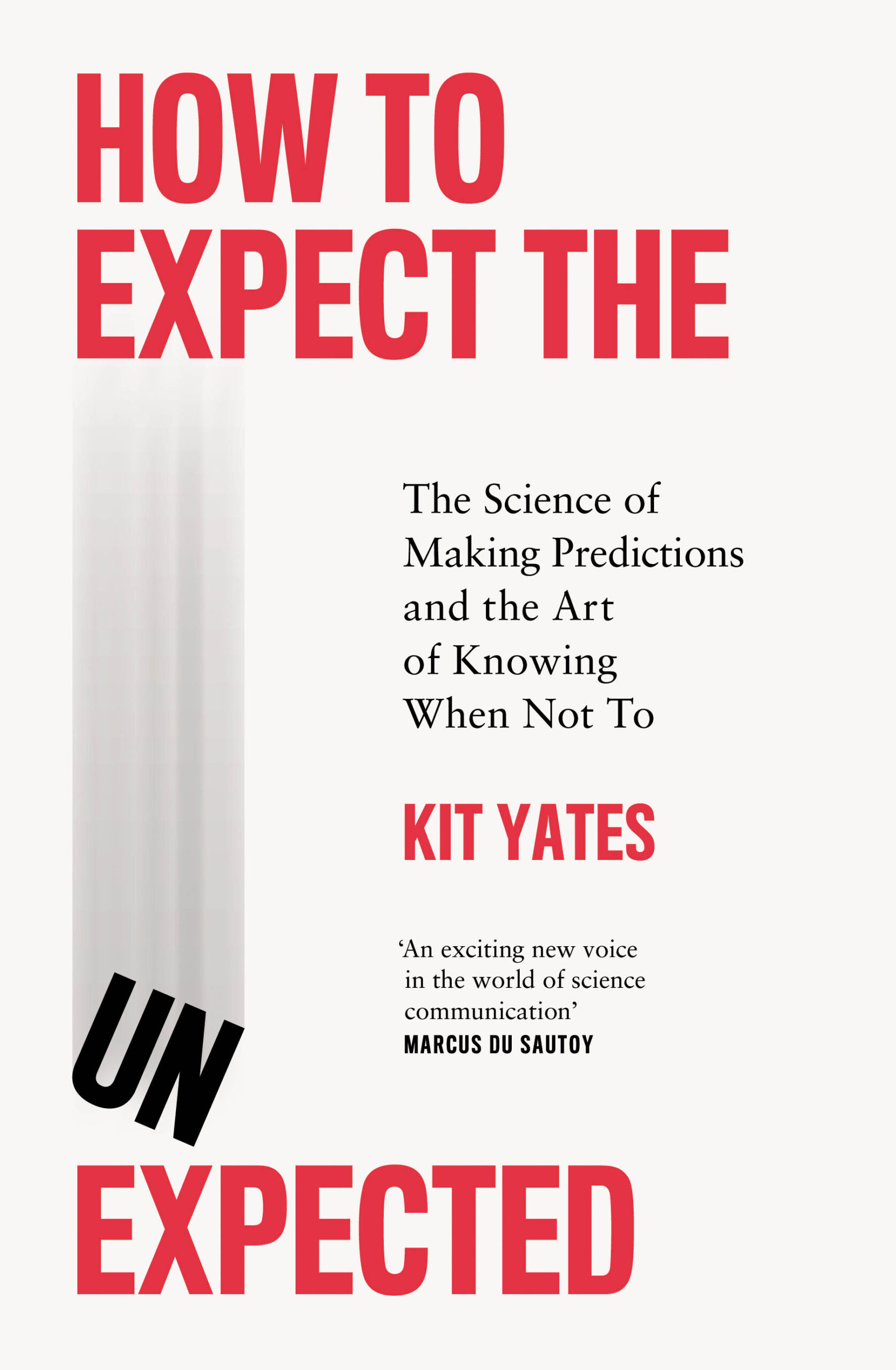
Cards on the table, I’m a Yates fan. His style is all-clarity-no-bullshit, and apparently happy to argue his corner against all-comers. His first book, The Maths of Life and Death, I reviewed here previously; I expected his second to build from there. Which, given that it’s called How to Expect the Unexpected, gave me a slight worry that I’d fallen into a paradox.
Don’t worry. It’s good.
Of course I wasn’t going to miss a chance to mention the Baader-Meinhof phenomenon again, who do you take me for?
The premise is that humans are, by nature, not very good at prediction, but can be better (at least sometimes). We have evolved an ad-hoc collection of heuristics that have served us perfectly well up to now, thank-you-very-much — like the linearity bias of thinking things will continue much as they are, the normalcy bias of thinking it’s not worth moving camp just because Ug saw what might have been a tiger in the undergrowth, and the Baader-Meinhof tendency of paying attention to new things.
These are admirable starting points — but they’re nowhere near the whole story. A linearity bias lulls us into a false sense of security when a process is exponential; everything is absolutely fine until suddenly it goes very very wrong very very quickly. A normalcy bias means that we’re loath to evacuate a building that really is under attack by tigers.
The book gives us tools to overcome these biases, backed up with plentiful examples and supporting evidence. If I say “Bayes’ rule and basic game theory,” you’ll roll your eyes; practically every pop-maths book of the last few decades has covered both in depth. However, Yates doesn’t tackle them from the usual direction; his examples are fresh and shed a new light on them — for example, he doesn’t lead with the birthday paradox when he’s talking about a combinatorial explosion, he uses several different applications first.
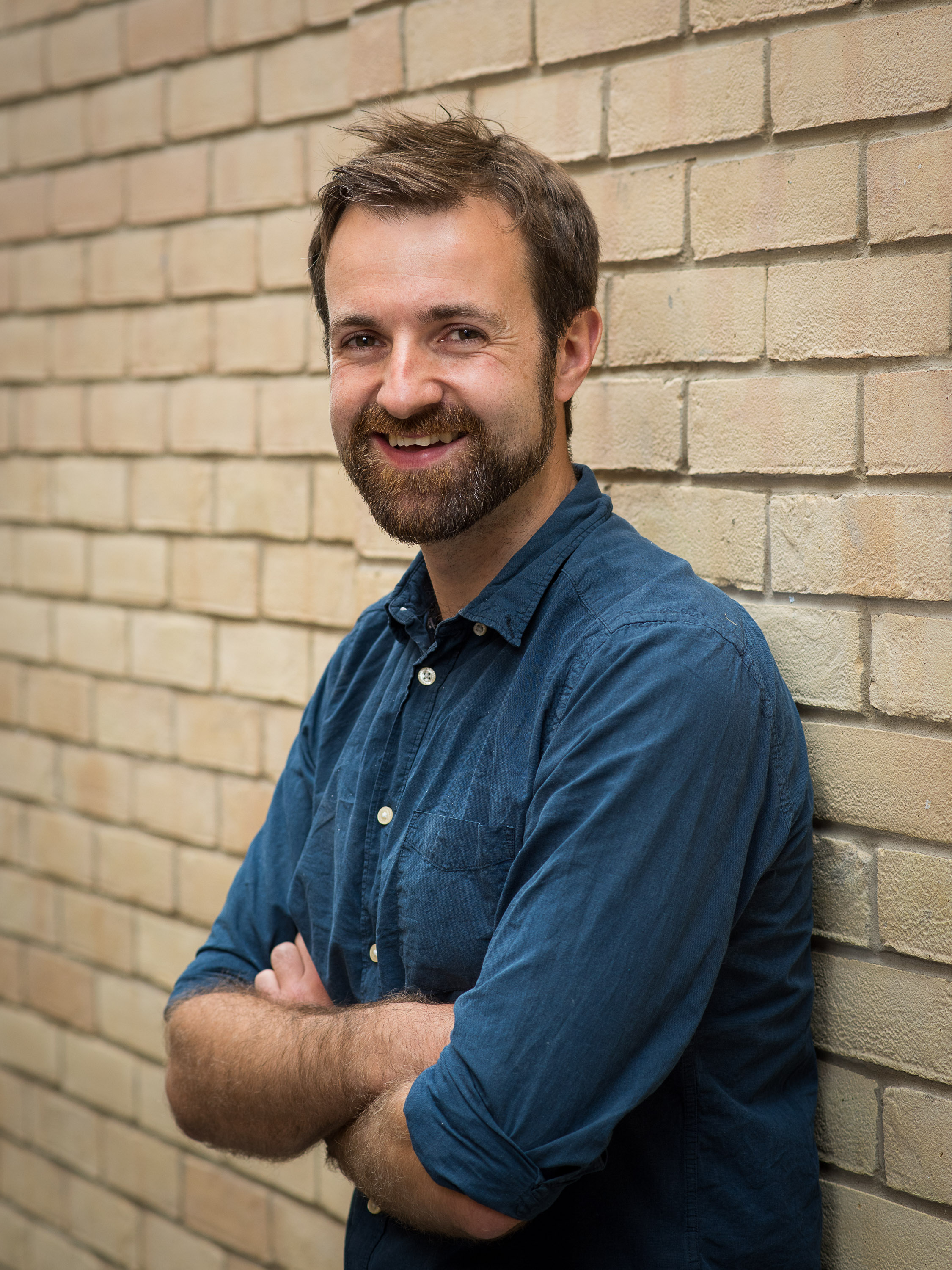
Author Kit Yates
He also looks at the limitations of prediction, for example in the face of feedback loops: if the chief of a bank publicly admits they’re in difficulty, it only makes the difficulty worse (a snowball); if an epidemiologist says “we need to lock down or we risk 500,000 deaths” and we follow their advice, we lose rather fewer people to the disease, making the forecast wrong (a boomerang).
Prediction (especially weather forecasting) is also cursed by people not understanding probability and by chaos; Yates gives a brief history of meteorology, from sailors’ tales to modern supercomputing, that puts these curses in context.
My main gripe with How to Expect the Unexpected is that it starts off a bit dense — it’s really hard to keep track of all of the biases, fallacies and effects introduced, rat-a-tat-a-tat, in the early stages. I was a bit uncomfortable with the first chapter, in which he visits (and gently misleads) a spiritualist; for all that I agree that spiritualism runs a gamut from self-delusion to outright fraud, it still felt a tiny bit mean-spirited.
Despite that, I enjoyed How to Expect the Unexpected as much as I expected to. Yates has good science, good jokes and good explanations, and I hope for all our sakes that his next book isn’t held up by bird flu or something.
How To Expect The Unexpected is published by Quercus and due out in July 2023.
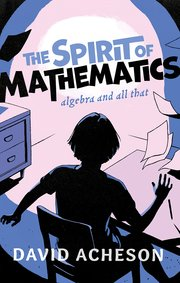
In The Spirit of Mathematics: Algebra And All That, David has pulled together a collection of what he refers to as ‘elegant mathematics using only simple materials’ – neat, short algebraic proofs and definitions, models of physical systems and mathematical tricks and curiosities.
He includes all the classics, from proof by induction to Fibonacci numbers to hitting a snooker ball, and each is presented with enthusiasm, alongside stories of mathematicians – and fearlessly including all the equations and derivations (if every equation really did halve your readership, as Stephen Hawking believed, this would be a very brave book to publish). But the maths is well-explained and very approachable, and it’s refreshing to see it featured so prominently outside of a textbook.
The book is also filled with helpful diagrams and illustrations, as well as humorous asides, cartoons and pictures of many mathematicians (sadly, only one female mathematician is featured, and she’s included only for her joke about how hard she’s found it to get a proof…) – but the book is well-produced and clearly laid out, with well-defined, short chapters each with a clearly defined topic.
The result is a compendium of intriguing ideas which would fascinate and compel a keen mathematician wanting to learn more, and provide hours of intrigue and jumping-off points for further investigation. Most topics are only covered briefly, so a deeper understanding would need research elsewhere, but for an enthusiastic reader this would happen naturally. Each discovery is motivated by a real-world example, or an interesting puzzle or curiosity, and all the key topics from algebra are touched on in one way or another.
However, this book wouldn’t suit an inexperienced mathematician – given which steps in the calculations are described as ‘simple’, a reasonable level of maths is assumed, and I’d imagine a strong GCSE or A-level student, particularly one already keen to learn more, would get much more out of it than a younger student. It’d also suit an adult wishing to refresh their mathematical knowledge from school and pick up some new ideas. But despite the blurb on the back claiming ‘for those who dread the subject, this book may be an eye-opener’, I suspect that such a reader might struggle in places.
Overall, this is a well-presented celebration of the best parts of mathematics, and showcases just how powerful maths can be.