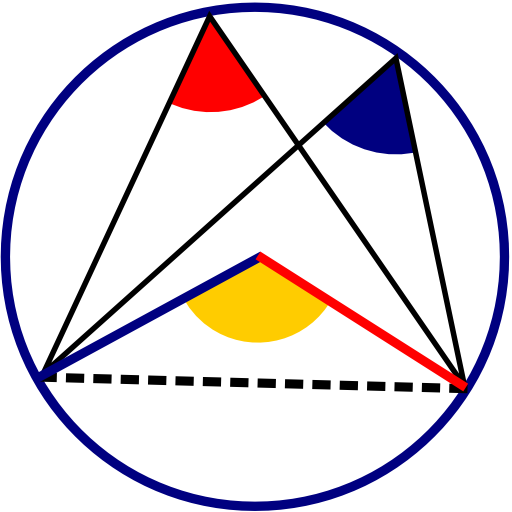
Distributed internet prime number search PrimeGrid has found a new largest generalised Fermat prime. The discovery was made on 29th August, and was double-checked before being announced on 2nd September. PrimeGrid uses a distributed computing approach and uses spare computer time donated by volunteer computers connected to their network. A generalised Fermat prime is a prime…
Maths at the British Science Festival

The British Science Festival is organised annually by the British Science Association, and this year it’s hosted by the University of Brighton and the University of Sussex from Tuesday 5 to Saturday 9 September. For more details and full listings, see the main British Science Festival website. We’ve pulled out some of the mathematics-related events…
London Mathematical Society launches Mathematical Sciences Directory

The London Mathematical Society yesterday launched its Mathematical Sciences Directory (LMS MSDirectory), a directory of mathematical scientists in the UK. Entries include some personal information, academic networks and social media, current employment and information on education/qualifications. Yes, it’s yet another place to list all this information. The LMS website suggests a set of benefits for…
New YouTube videos by me and James Grime
I’ve been at it again, making videos for that YouTube – this time, a collabo with James Grime. We have each posted a video on the topic of a mathematical game, as we both had things we wanted to make videos about but nobody to play with, so we met up after school and made…
P might not be NP, reckons Norbert Blum
Norbert Blum of Universität Bonn has uploaded to the arXiv a preprint of a paper claiming to resolve the problem of whether $\mathrm{P} = \mathrm{NP}$, in the negative. “Proofs” one way or the other turn up on the arXiv pretty much every day, but this one might actually be correct. At least, it’s not immediately…
Review: Factris
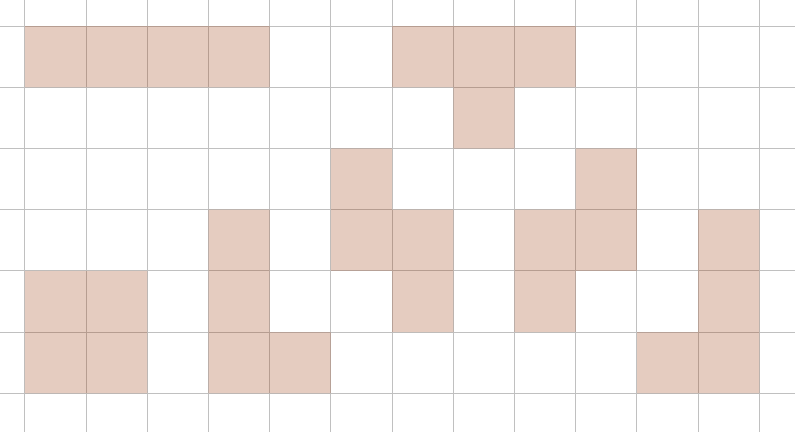
Removing four lines at once with an I-piece in Tetris is the most efficient way to score, which creates a tension: on one hand, you want to build high enough to score quickly, but on the other, building too high puts you at risk of ending the game. The balance between the two is exquisite.…
Landon Clay, founder of the Clay Mathematics Institute, has died
The Clay Mathematics Institute, home of the Clay Millennium Maths Prizes, has announced the sad death of its founder, Landon Clay. “Driven by a deep appreciation of the beauty and importance of mathematical ideas”, Clay donated generously to many organisations and projects, including the Institute which he founded in 1998.
Statement on the CMI website, including an addendum from Andrew Wiles
via @LondMathSoc