Double Maths First Thing is part of Colin’s fight against the forces of tedium. Hello, and welcome to Double Maths First Thing! My name is Colin and I am a mathematician, on a mission to spread joy and delight in maths. More from me I promise not to make this whole thing about me, but…
Double Maths First Thing: Issue 6
Double Maths First Thing is to maths news what the noticeboard outside the coffee shop is to theorems Hello! My name is Colin and I am a mathematician on a mission to spread delight and joy while making people think. More from me! I almost forgot (so strongly do I dislike the academic publishing process)…
Mathematical Objects: A ballot with Sam Hansen
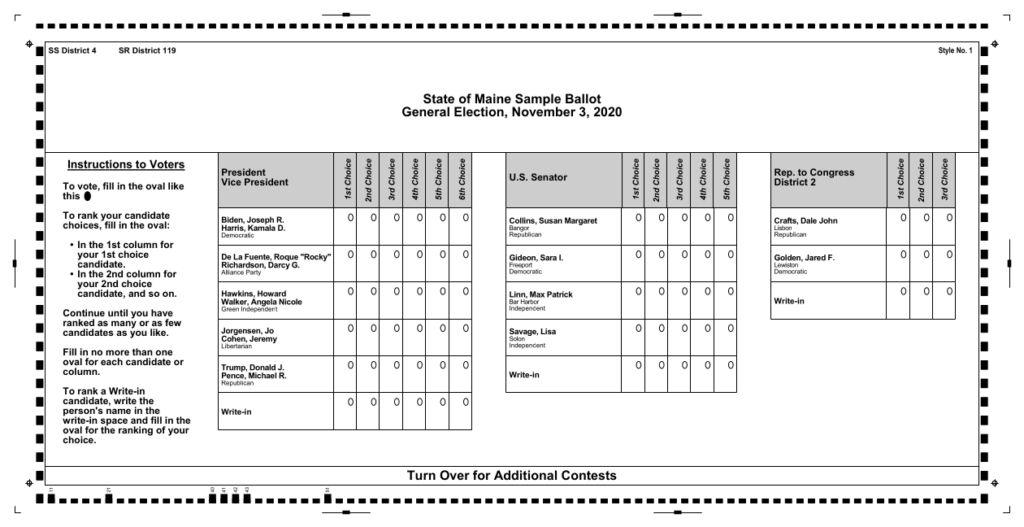
A conversation about election mathematics inspired by a ballot. Presented by Katie Steckles and Peter Rowlett, with special guest Sam Hansen. For more from Sam and the Carry the Two podcast check out this episode about Mathematics and Voting. Podcast: Play in new window | Download Subscribe: RSS | List of episodes
Double Maths First Thing: Issue 5
Double Maths First Thing is, fundamentally, somewhere for Colin to dump all his open tabs. Hello! My name is Colin and I am a mathematician on a mission to spread mathematical mirth, geometric joy, and delight in the beauty of whatever this is. Let’s boogie. A bit random Since I’m applying for a job that…
Aperiodical News Roundup – September 2024

Here’s a round-up of mathematical news stories from last month.
Carnival of Maths 232
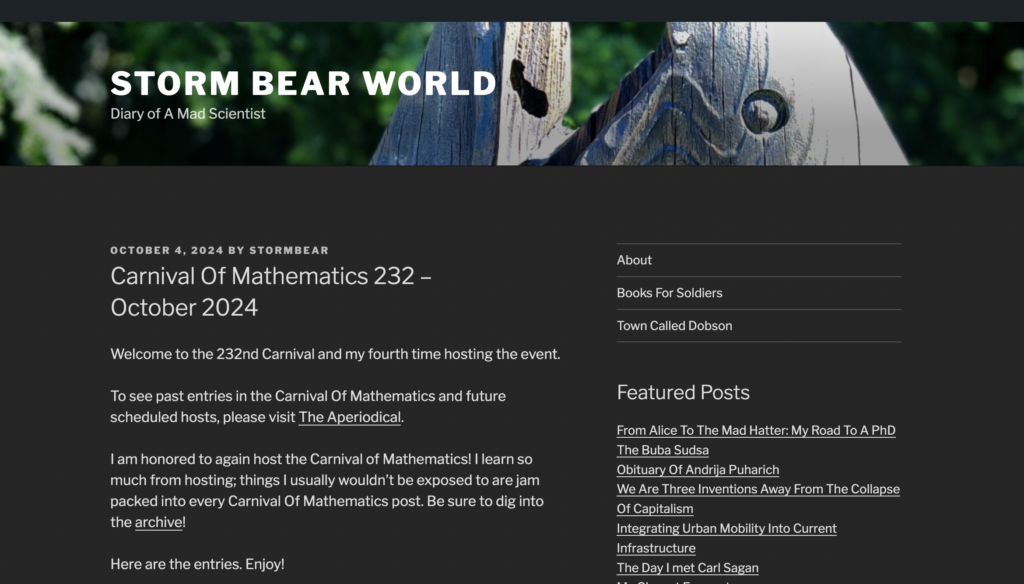
The next issue of the Carnival of Mathematics, rounding up blog posts from the month of September 2024, is now online at Storm Bear World. The Carnival rounds up maths blog posts from all over the internet, including some from our own Aperiodical. See our Carnival of Mathematics page for more information.
Double Maths First Thing: Issue 4
Double Maths First Thing is Colin’s weekly news bulletin. Although it’s more like a nerfpelletin, honestly. Hello! My name is Colin and I am a mathematician on a mission to help everyone find the joy and delight in figuring things out. Art! Up in that London they have these days, the Piccadilly Circus ad boards are…