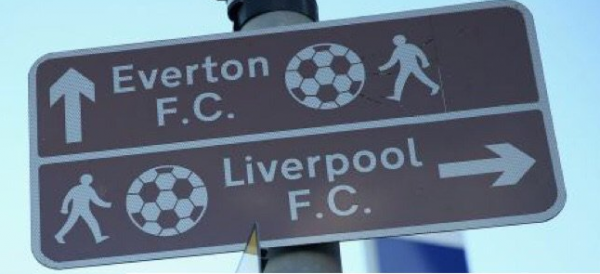
Aperiodipal and number ninja, Stand-up Mathematician Matt Parker, has set up a petition on the UK parliament petitions website to change the awful, awful tourist board official symbol for a football ground (US readers: imagine I’m saying ‘soccer stadium’). In Matt’s words:
The football shown on UK street signs (for football grounds) is made entirely of hexagons. But it is mathematically impossible to construct a ball using only hexagons. Changing this to the correct pattern of hexagons and pentagons would help raise public awareness and appreciation of geometry.
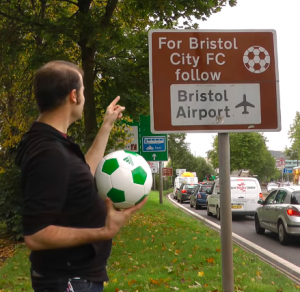 To end this madness, Matt needs 10,000 signatures for the petition to be responded to by the government (and 100,000 for it to considered for debate in parliament). It’s currently around the 3,000 mark – so it’s plausible that he might do it. It’s also had coverage in The Independent already, and Matt’s YouTube video on the campaign already has over 100,000 views.
To sign, you simply need to be a British citizen or UK resident, and fill in your details on the site (you’ll need a valid postcode). Ban this hexagonal filth!
Update the UK Traffic Signs Regulations to a geometrically correct football, on UK Parliament Petitions