Here’s a round-up of maths news stories from this month we haven’t otherwise covered on the Aperiodical (not including, of course, the important enneahedron news Christian just posted about).
You're reading: Posts Tagged: lms
Aperiodical News Roundup – November 2021
Here’s a roundup of some of the news stories from the world of maths in the month of November.
Events
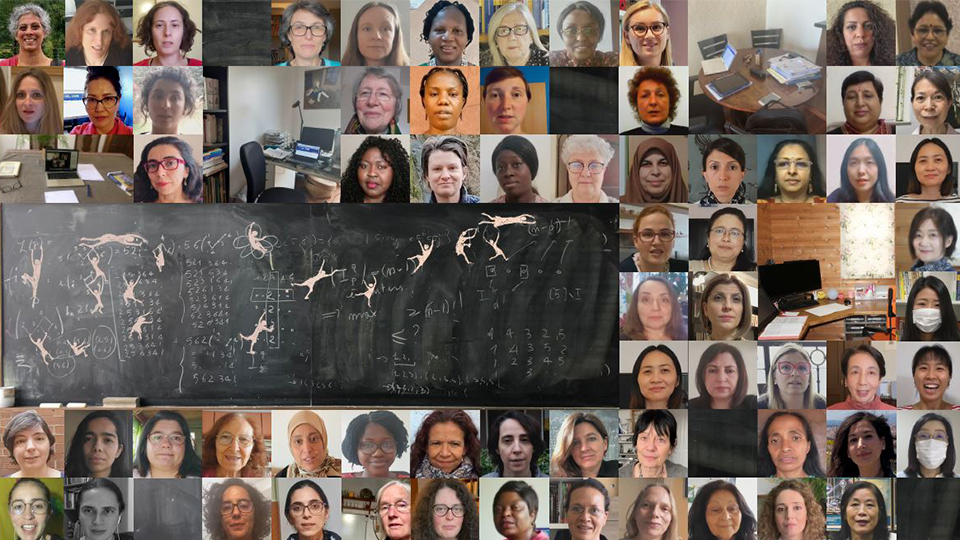
Eugenie Hunsicker and collaborators have produced a film entitled “Words of Women in Mathematics in the Time of Corona”, which raises awareness of the impact of the pandemic on women in mathematics.
The QE Prize for Engineering’s ‘Month of Making’, as featured previously in a post announcing the start, is well under way and continues until 12th December, with scientific, mathematical and engineeringy ideas for make-it-yourself gifts every day.
This month saw the official launch of MathsCity Leeds, as previously covered in this review by hands-on discovery centre correspondent Peter and his son.

Leading mathematicians, council members, and key professionals from tourist attractions and universities across the country were just some of the guests that attended the bustling launch party last night for the UK’s first maths discovery centre. […] Celebrating the milestone achievement by the pioneering charity MathsWorldUK, the MathsCity launch was an opportunity to show donors, supporters, and future investors why the innovative new attraction that opened its doors in Leeds City Centre last month is so important for the future.
North East Post

Attempts to start a proof assistants stack exchange have been successful, and the Stack Exchange team are “are preparing for its launch and expect to create it soon”. (via Andrej Bauer)
A new paper has been published in Nature about the use of machine learning in pure maths research. This isn’t machine learning making new maths, but rather it’s pitched as a collaboration between mathematician and machine – the authors argue that machine learning can be used “to guide intuition and propose conjectures”. The paper gives some examples of new fundamental results in pure mathematics that have been discovered with the assistance of machine learning.
Open Calls
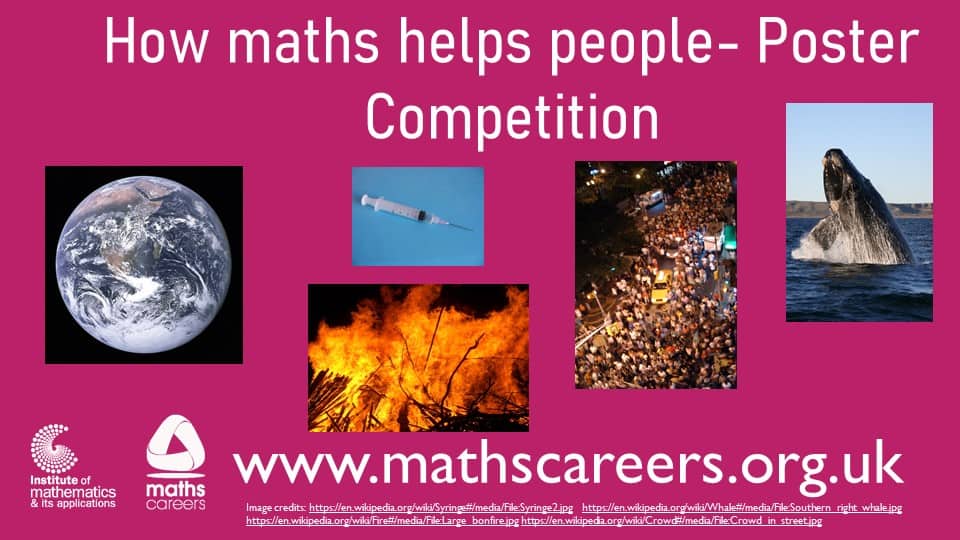
The IMA has launched a poster competition called How Maths Helps People, in which high school students are asked to design an A4 “persuasive poster which shows how maths can be used to help people”. The poster should be aimed at high school students, and students with winning posters in each age group will receive an Android tablet. The closing date is 31st January 2022.
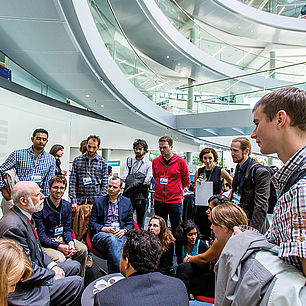
The LMS has announced its annual call for nominations for its 2022 prizes, which are awarded in various categories for mathematical research, innovation and exposition.
Recreational Maths Magazine has issued a call for proposals for its upcoming π-themed issue, which will be their first specially themed issue. Calls close on 14th March 2022 (obviously).
The Heidelberg Laureate Forum, which takes place in September in Heidelberg, Germany, and brings together top-level maths laureates with young researchers for a week of lectures, workshops and networking has announced that applications for young researchers to attend HLF 2022 are now open. If you know any PhD or postdoc mathematicians who would like a chance to meet some cool people and have a great trip to Germany, encourage them to apply!
Aperiodical News Roundup – December 2020
Here’s the latest (well, almost) news of mathematical and maths-related things that happened in December.
Upcoming Mathematical Events/Competitions in October 2020
Here’s a round-up of some mathematical events and competitions that might be of interest, happening from October.
2017 London Mathematical Society Popular Lectures now online
The London Mathematical Society Popular Lectures present exciting topics in mathematics and its applications to a wide audience. The 2017 Popular Lectures were Adventures in the 7th Dimension (Dr Jason Lotay, University College London) and The Unreasonable Effectiveness of Physics in Maths (Professor David Tong, University of Cambridge).
The Lectures are now available on the LMS’s YouTube channel, along with many of the previous years’ videos.
Not Mentioned on the Aperiodical, 10th November 2016
Here’s a round-up of some of the news from this month.
Never-ending Turing centenary, part XLVI
The Alan Turing centenary shows no signs of abating.
First of all, there’s a marvellous new art installation under Paddington Bridge in London, in memory of Turing. There’s also a theatre piece called Breaking the Code, showing at Manchester’s Royal Exchange Theatre until 19th November.
Secondly, work continues to introduce legislation in the UK pardoning all gay men who were convicted of crimes related to homosexuality, in the same way Alan was a few years ago. Ministers said they were ‘committed’ to getting the law passed, but in an emotional session the bill was “talked out” by minister Sam Gyimah, meaning it wasn’t voted on.
LMS wins the first Royal Society Athena prize
The London Mathematical Society (LMS) has been honoured this autumn by receiving the first Royal Society Athena Prize to recognise its advancement of diversity in science, technology, engineering and mathematics (STEM) within the mathematical community. The prize was awarded in a ceremony at the Royal Society’s annual diversity conference on 31 October.
Fourth Christopher Zeeman medal goes to Rob Eastaway
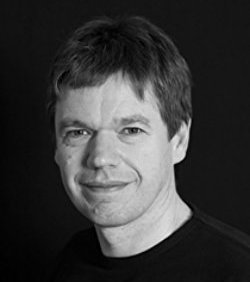 Mathematician, author and friend of the site Rob Eastaway has received the 2016 Christopher Zeeman medal, awarded to recognise and acknowledge the contributions of mathematicians involved in promoting mathematics to the public and engaging with the public in mathematics in the UK.
There will be an award lecture taking place on 22 March 2017, and details will be announced in Mathematics Today and the LMS Newsletter.
IMA website article on the award
Rob Eastaway’s citation (PDF)
Not mentioned on The Aperiodical this month, March/April
Here’s a round up of some other recent (and now less so) news stories we didn’t cover in full.
13 New 3-body orbits discovered
Physicists from the University of Belgrade have discovered numerically 13 new solutions to the 3-body problem, in 2 dimensions. Described as “quite a feat in mathematical physics”, the discovery makes progress towards the long-standing problem of determining how three particles, when left to move under the action of their gravity on each other, will behave. The solutions they’ve found are all for particles moving in a 2-dimensional plane, and are represented using points on the surface of a sphere to describe the position of the three particles.
Claimed disproof of the Triangulation Conjecture
The Triangulation Conjecture, a result in topology, may turn out to be false as UCLA’s Ciprian Manolescu claims to have disproved it. The conjecture claims that every compact topological manifold can be triangulated by a locally finite simplicial complex, which means that, roughly, any surface (well, n-dimensional surface) can be divided into triangles in a specific way that topologists find exciting. The conjecture has already been disproved in dimension 4, although hope was held it might be true in higher dimensions. We’re still waiting for confirmation the disproof is correct, but if it is it wipes out many topologists’ hopes of being able to divide certain types of surfaces into triangles in a specific way.
Blog post on the topic, with an interesting comments discussion
(via Dave Richeson on Twitter)
Math Cannot be Patented
A patent suit filed in the Eastern District of Texas has been dismissed on the grounds that mathematics cannot be patented. Uniloc, described in an article on news blog Rackspace as ‘a notorious patent troll’, alleged that a floating point numerical calculation by the Linux operating system violated U.S. Patent 5,892,697. You can’t patent maths!
Mathematics Cannot Be Patented – Case Dismissed at Rackspace
Transactions of the LMS: an open access journal
Fans of Open Access journals will be pleased to hear that the London Mathematical Society is launching one, titled Transactions of the London Mathematical Society. The LMS would like to emphasise that:
By launching this journal, the LMS is not promoting any particular cause and we do not advocate one publishing payment model over another.
Details can be found on pages 8-11 of their most recent newsletter.