
I hosted the first (proper) Aperiodical recreational maths seminar yesterday. We discussed the paper Picture-hanging puzzles, by Demaine et al. Click through to watch the YouTube recording of the session.
You're reading: Columns
Relatively Prime is done
This is the first Monday in quite a while that I haven’t had a new episode of Relatively Prime to listen to. That’s because all eight episodes have now been released. I meant to put a little post up each week reminding you to listen to the latest episode, but I completely forgot to do that, so here’s a post saying you can now listen to the whole lot. And you should.
Matt Parker’s Twitter Puzzle – 12th Nov
Matt Parker, the internet’s own number ninja, has tweeted the following maths nugget:
Type any number into a calculator and then divide it by 7, 11 and 13. Why do the first six decimal places always sum to 27? #mathspuzzle
— Matt Parker (@standupmaths) November 12, 2012
The Best Writing on Mathematics 2012
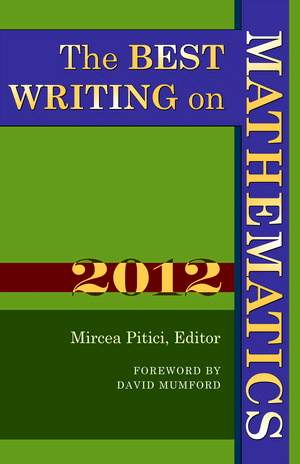 Every year, Princeton University Press gathers together a small anthology of the best writing on mathematics from the past 12 months.
The Best Writing on Mathematics 2012 was released last week. Now that Princeton’s web servers have been dried out after Hurricane Sandy’s visit, I can give you its blurb:
This annual anthology brings together the year’s finest mathematics writing from around the world. Featuring promising new voices alongside some of the foremost names in the field, The Best Writing on Mathematics 2012 makes available to a wide audience many articles not easily found anywhere else–and you don’t need to be a mathematician to enjoy them. These writings offer surprising insights into the nature, meaning, and practice of mathematics today. They delve into the history, philosophy, teaching, and everyday occurrences of math, and take readers behind the scenes of today’s hottest mathematical debates. Here Robert Lang explains mathematical aspects of origami foldings; Terence Tao discusses the frequency and distribution of the prime numbers; Timothy Gowers and Mario Livio ponder whether mathematics is invented or discovered; Brian Hayes describes what is special about a ball in five dimensions; Mark Colyvan glosses on the mathematics of dating; and much, much more.
The “much, much more” alluded to above includes our very own Peter Rowlett’s collection of essays “The unplanned impact of mathematics”, which was published in Nature last year. And at only £13.95, just £1.95 more than what Nature is asking for Peter’s article alone, The Best Writing on Mathematics 2012 is a steal.
The Best Writing on Mathematics 2012 at Princeton University Press. $19.95/£13.95 in paperback or ebook.
Follow Friday, 9/11/12
At what can only be described as far too regular an interval for such things, it’s another Follow Friday! Here’s who you should be getting in line behind people to follow this week, as well as some of their recent interesting links.
MAA Mathematical Pumpkins
The Mathematical Association of America asked its Facebook fans to send in pictures of their mathematical pumpkins. They answered the call admirably!
You can see the pictures at the MAA’s Facebook page. I particularly like the honeycomb one.
Starburst by Tim Locke
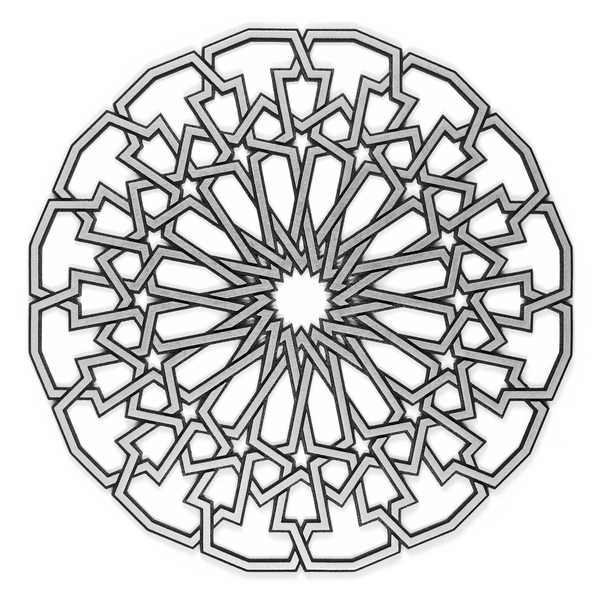
Tim Locke displayed his geometric metalwork at the 2012 Bridges conference.
via Mr Honner