
She literally got her art in my maths!
She literally got her art in my maths!
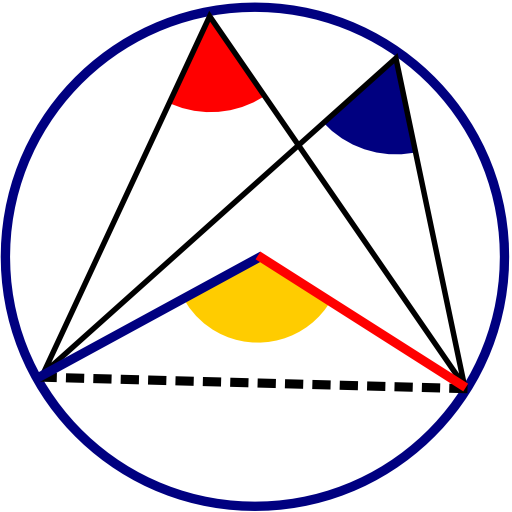
Recently, someone left my office at Newcastle University and a new person took their place, so we needed a new sign on our front door. I wanted to do something clever with it, but it needed to be instantly legible to lost supervisors trying to find their students.
My first thought was that since there are seven of us, something to do with the Fano plane would look good. Our names didn’t have enough of the right letters in the right places for it to work, though.
That got me thinking about the Levenshtein distance. The Levenshtein distance between two strings is a measure of how many changes you need to make to one to end up with the other.
Click here to continue reading The sign on my office door on cp’s mathem-o-blog
This morning on Twitter Tony Mann asked the question: “This morning’s class is “What is Mathematics?” Answers in a tweet please.” Answers were collected via the #MATH1103 hashtag.
Some of the answers were what you might expect: patterns, abstraction, order.
Stuart Ravn sent a series of tweets giving his views:
Math is everything you can do with the abilities to count and deduce. There’s literally no end to the fun you can have. No joke.
Math is the only thing which is truly universal; it underlies and makes it possible to understand and communicate with everything.
Everything, immediately or ultimately, is mathematical and arises from mathematics.
Ask yourself what isn’t mathematics, and try to prove yourself right.
Noam Chomsky said of love, “I can’t tell you what it is, but life’s empty without it.” The same is viscerally true of mathematics.
I don’t just have enthusiasm for maths. I love it. It’s the closest thing to my heart after my family. I’m emotional about it.
Noel-Ann Bradshaw noted that “What is mathematics?” is the name of “an excellent book by Courant & Robbins revised by Stewart“. I have the tenth printing from 1960. Although this has a lot to say on the subject, it opens a discussion of historical development with:
Mathematics as an expression of the human mind reflects the active will, the contemplative reason, and the desire for aesthetic perfection. Its basic elements are logic and intuition, analysis and construction, generality and individuality. Though different traditions may emphasise different aspects, it is only the interplay of these antithetic forces and the struggle for their synthesis that constitute the life, usefulness, and supreme value of mathematical science.
I was interested in a related question: When does mathematics become something else? At some point some topic is clearly applied maths and at some point it is physics, astronomy, engineering, economics, computer science, biology, and so on.
We struggle with this a little on the Math/Maths Podcast, where we try to report news from mathematics and its applications. On Twitter I said that I think I tend to stray a little further from that which is unambiguously mathematics than does Samuel Hansen. We both report applications but I think mine are often more tangential than Samuel’s. This was quite noticeable on episode 80 this week when Samuel picked me up on an astrophysics story I was defending as involving statistical models. He said:
This is ‘Math/Maths’, not ‘Stat/Stats’, and it’s definitely not ‘Astronomy/Astronomies’. I’m assuming you put ‘s’ at the end of every single science – you have ‘Chemistries’ and ‘Physicses’, right?
and later
Now you’ve turned us into ‘Geology/Geologies’.
Answering my question on Twitter, Samuel said: “if an application has been around long enough to have own name, Physics astronomy or thermodynamics. It’s not math“. I don’t fundamentally disagree with this and some disciplines, notably computer science, were born this way. However, Sharon Evans made a very practical (if teasing) counter-point: “so it’s only maths if it hasn’t got a name? You’re not leaving much to report on in [the podcast]“.
Clarissa Wornack replied to say “Well, when you start writing code; it’s IT/software eng/comp sci; if you create something that is a material object; it’s eng” and Charles Brain said “Applied maths becomes Engineering when it hits the real world and money becomes part of the equation!” I don’t particularly agree with these. I know people who use high end computing to do mathematics and just because they are using computing as a tool (and writing bespoke code) this doesn’t mean they are doing computer science research. I also don’t agree that it stops being applied maths when it creates a material object. Defining mathematics as that which doesn’t involve the real world or money seems very self-defeating.
Felipe Pait offered this definition: “Applied math interests mathematicians and non mathematicians. Otherwise it’s pure math, or pure engineering. Math stops being applied math and becomes pure physics when it doesn’t interest mathematicians. An operational definition.”
There’s something in this. When I think about “what is mathematics?” I am really thinking “what can mathematicians do?” I am particularly interested in what university mathematics graduates might become and would like this to be a broad as possible. I meet a lot of mathematics researchers working in different application areas. For example, back when I was doing the Travels in a Mathematical World podcast for the IMA I spoke to Paul Shepherd. I am much more naturally inclined to consider Paul a mathematician working in architecture than an architecture researcher who once did a maths degree. By extension, I am happy to include Paul’s use of geometry in architecture as part of mathematics than to exclude it.
Daniel Colquitt suggested “a lot depends on the user” and “in many cases, the distinction is arbitrary“. I think this may be the wisest view on the subject I have heard. From my point of view I am biased towards including topics on the edge within mathematics rather than excluding them, and maybe even collecting a little of the host subject along with them. I would rather cast the arbitrary net as wide as possible.
Shadow Pavilion by PLY Architecture:

Later this year I am to give a session at a teachers conference on using maths in the news for enriching school maths lessons.
In my session, I intend to go over some recent maths news. I would also like to give some real examples of teachers having used some news in class.
Samuel Hansen and I keep track of mathematics news and mathematics in the news for our podcast. I am aware that people have written in from time to time to say they have used some bit or another in class but I haven’t recorded these instances.
My plea, then, is this: Whether from the podcast or not, please could you send me your examples of how you’ve used current events in mathematics class for enrichment? I’d like to know what the news story was, what you did and how it worked.
You can leave a message in the comments of this post or send me a message various ways that are listed on the contact page of my website.
Thank you!
[vimeo url=https://vimeo.com/33342571]
A while ago Christian Perfect suggested the monthly local Maths Jam organisers might write up what happens at Maths Jams to their blogs so others can get a feel for what goes on. I regard this as a good idea I haven’t got around to yet.
Luckily, Christian has just made a video showing a card trick we have played with at the Nottingham Maths Jam, so that makes this an easy post!
I was shown this trick by Matt Parker in a hotel bar in Coventry, who refused to say how it works. I went to the Nottingham Maths Jam in November 2011 having worked out how to do the trick but having spent no time at all considering how it might work, saving this for Maths Jam. I showed John Read, Kathryn Taylor and Sharon Evans and together we worked out the details given in Christian’s video.
I made a joke on Twitter based on Gauss’ reaction to Bolyai’s work on non-Euclidean geometry: “Enjoying video by @christianp. However, ‘to praise it would amount to praising myself’ ;)”. Gauss is reported to have written to Bolyai’s father:
To praise [Bolyai’s work] would amount to praising myself. For the entire content of the work … coincides almost exactly with my own meditations which have occupied my mind for the past thirty or thirty-five years.
while privately writing to a friend to say:
I regard this young geometer Bolyai as a genius of the first order.
Of course, by invoking the former I meant to imply the latter. Perhaps a more suitable quote might be that of Kelvin, having first read George Green’s Essay on electricity and magnetism:
I have just met with Green’s memoir, which renders a separate treatise on electricity less necessary… I have, most unwittingly, trodden almost exactly in his steps as far as regards electricity.
I’d say playing around with tricks and working out how they work is a very Maths Jam activity so anyone considering attending one should regard this as very much the sort of thing that happens at a Maths Jam. Find your local one, or set one up!