Between the three Aperiodical editors (myself, Christian Lawson-Perfect and Peter Rowlett), there’s a developing tradition of excellent mathematical gift-giving. This year, Christian has excelled himself by designing and creating a brilliant mathematical hoodie, which features a meme about an in-joke (and who can resist either a meme or an in-joke?)
You're reading: Columns
Pascal’s Triangle and its Secrets – Introduction
This is the first in a series of guest posts by David Benjamin, exploring the secrets of Pascal’s Triangle.
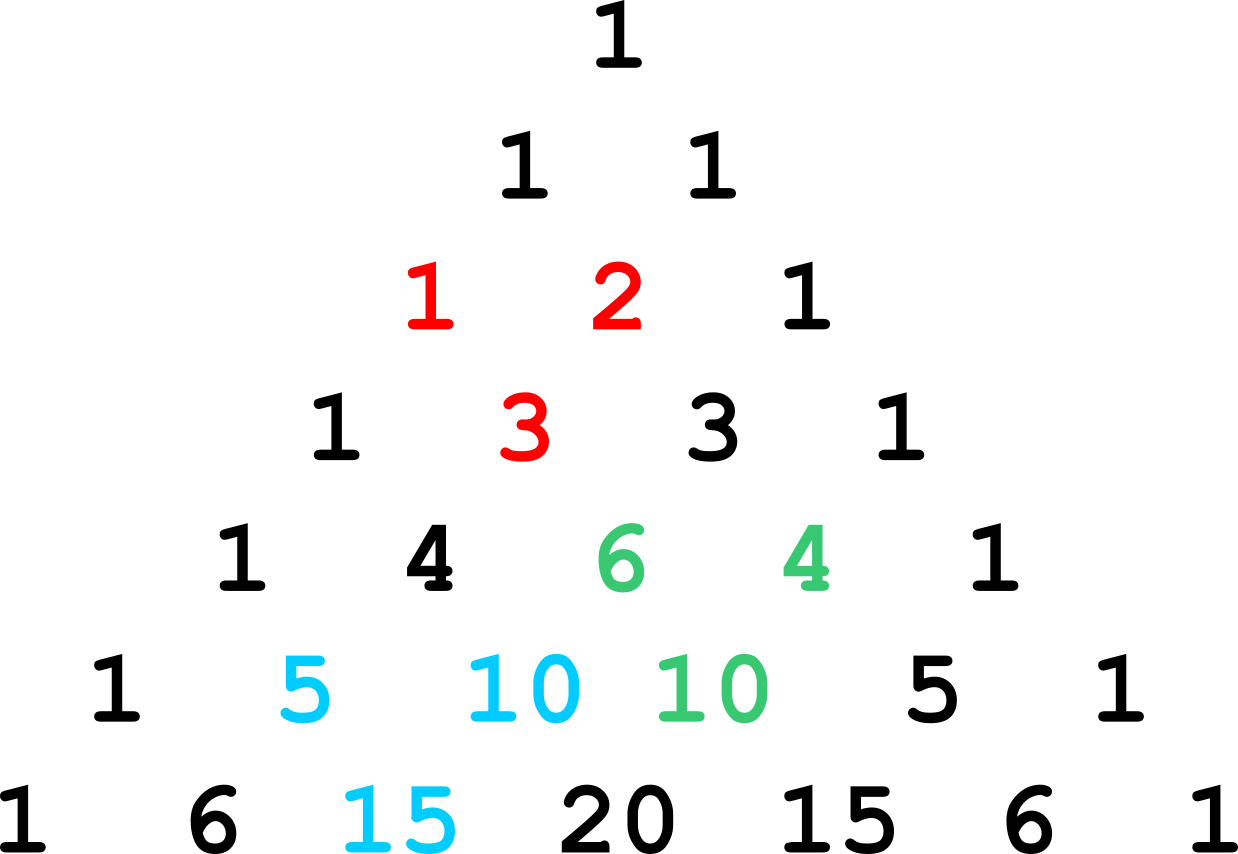
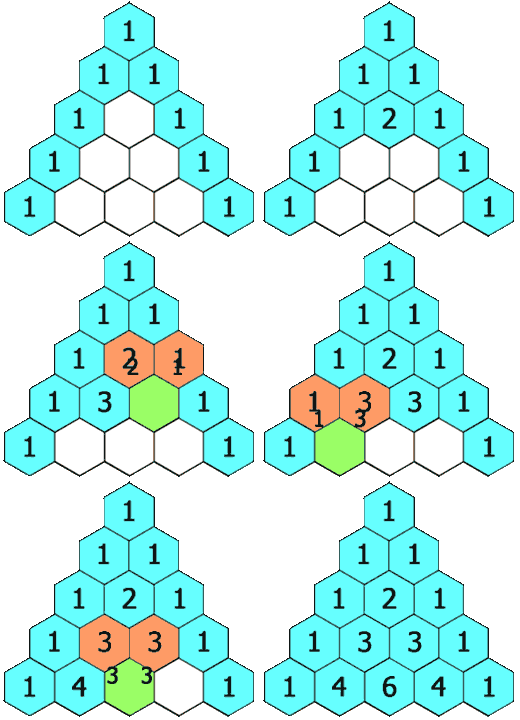
The triangle of Natural numbers below contains the first seven rows of what is called Pascal’s triangle. Each row begins and ends with the number 1, and each of the remaining numbers, from the third row onwards, is the sum of the two numbers ‘above’:
Carnival of Mathematics #200
Welcome to the 200th Carnival of Mathematics! Since it’s a special occasion, we’re hosting it right here at the Aperiodical, and presenting a round-up of some of our favourite blog posts, videos and content from the internet in the month of November 2021.
The Carnival is hosted by a different blog each month, and brings together submissions from readers and the hosts’ own favourites. To find out more about the Carnival, or offer to host a future edition, visit our Carnival of Maths page.
Carnival of Mathematics 199
The next issue of the Carnival of Mathematics, rounding up blog posts from the month of October, is now online at Double Root.
The Carnival rounds up maths blog posts from all over the internet, including some from our own Aperiodical. See our Carnival of Mathematics page for more information.
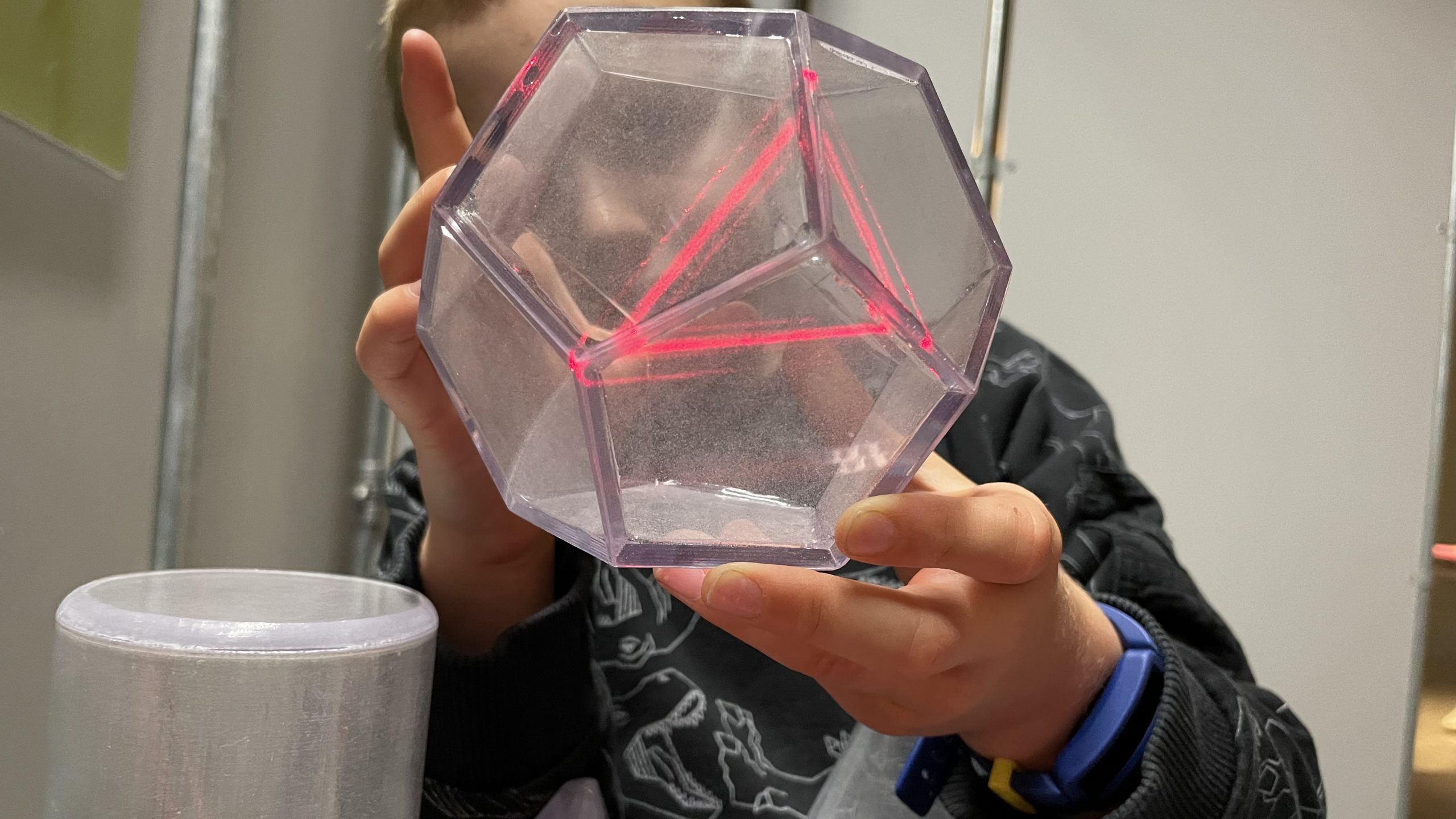
MathsCity Leeds opening weekend
One day in February 2014, I was fortunate enough to battle through London during a Tube strike to attend a reception at the House of Commons for MathsWorldUK – an initiative then just two years in development which aimed “to establish a national Mathematics Exploratorium in the United Kingdom … an interactive centre full of hands-on activities showcasing mathematics in all its aspects for people of all ages and backgrounds”.
That initiative took a huge leap forwards last week with the launch of MathsCity Leeds, which my son and I visited on its opening weekend.
Carnival of Mathematics 198
The next issue of the Carnival of Mathematics, rounding up blog posts from the month of September, is now online at Comfortably Numbered.
The Carnival rounds up maths blog posts from all over the internet, including some from our own Aperiodical. See our Carnival of Mathematics page for more information.
Partially-automated individualised assessment of higher education mathematics
A while ago I wrote an article based on my work in partially-automated assessment. The accepted manuscript I stored in my university’s repository has just lifted its embargo, meaning you can read what I wrote even if you don’t have access to the published version.
Thinking about assessment, it seems there are methods that are very good at determining a mark that is based on a student’s own work and not particularly dependent on who does the marking (call this ‘reliability’), like invigilated examinations and, to some extent, online tests/e-assessment (via randomised questions that are different for each student). These methods tend to assess short questions based on techniques with correct answers and perhaps therefore are more focused on what might be called procedural elements.
Then there are methods that are probably better at assessing conceptual depth and broader aspects that we might value in a professional mathematician, via setting complex and open-ended tasks with diverse submission formats (call this authenticity and relevance ‘validity’). People are often concerned about coursework because it is harder to establish whether the student really did the work they are submitting (not an unreasonable concern), which impacts reliability.
It is hard to ask students to complete high-validity coursework tasks (that might take weeks to complete) in exam conditions, and diverse submission formats do not suit automated marking, so two ways to improve reliability are not available. The idea with partially-automated assessment is that an e-assessment system can be used to set a coursework assignment with randomised elements which is then marked by hand, gaining the advantageous increase in reliability via individualised questions without triggering the disadvantage of having to ask for submission in a format a computer can mark. The payoff is that the marking is a bit more complex for the human who has to mark it, because each student is answering slightly different questions.
In the article I write about this method of assessment, use it in practice, and evaluate its use. It seems to go well, and I think partially-automated assessment is something useful to consider if you are assessing undergraduate mathematics.
Read the article: Partially-automated individualized assessment of higher education mathematics by Peter Rowlett. International Journal of Mathematical Education in Science and Technology, https://doi.org/10.1080/0020739X.2020.1822554 (published version; open access accepted version).