In Part I of this series of posts, I introduced the sporadic groups, finite groups of symmetries which aren’t the symmetries of any obvious categories of shapes. The sporadic groups in turn are classified into the Happy Family, headed by the Monster group, and the Pariahs. In Part II, I discussed Monstrous Moonshine, the connection between the Monster group and a type of function called a modular form. This in turn ties the Monster group, and with it the Happy Family, to elliptic curves, Fermat’s Last Theorem, and string theory, among other things. But until 2017, the Pariah groups remained stubbornly outside these connections.
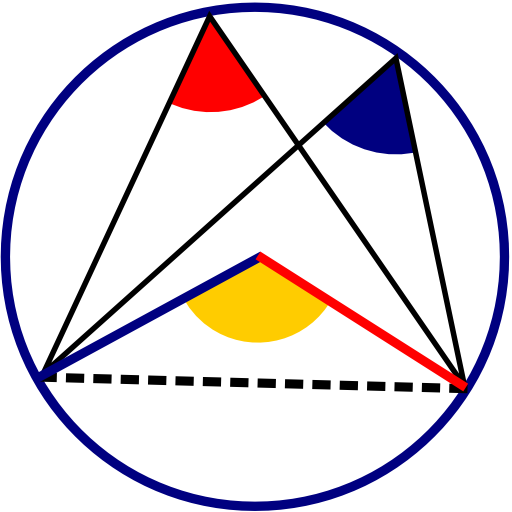
 Ed Rochead sent us this review of Aperiodipal Colin Beveridge’s latest pop maths book.
 The next issue of the Carnival of Mathematics, rounding up blog posts from the month of November, and compiled by TD, is now online at