Diana Betz and Denise Sekaquaptewa conducted two studies in the USA into attempts to counter stereotypes, reported in a University of Michigan press release.
You're reading: News
Mathematical thinking and religious belief
According to this paper, published this week in Science, and described in this article from Psychology Today, the answer you give to the following simple maths question is a predictor of whether or not you are likely to be religious:
Q: If a baseball and bat cost $\$110$, and the bat costs $\$100$ more than the ball, how much does the ball cost?
City & Guilds survey on views of maths – says more about media stereotyping?
A survey of 3000 pupils aged from seven to 18 for City & Guilds is reported by the BBC to have found that “maths lessons are seen as difficult, irrelevant and boring by about a third of teenagers” and that the subject could be “geared more towards real life”, but that “most agreed that maths would be useful once they had left school”.
Saharon Shelah has written more than 1000 papers
From David Roberts on Google+:
Saharon Shelah, the well-known Israeli set-theorist and logician, has passed 1000 papers!
http://shelah.logic.at/listb.html
The page was updated with a rush of almost twenty papers, taking him over the line. Notably, paper #1000 is not listed. +Richard Elwes and I were wondering what the topic of this (rather artificial) milestone paper would be.
Every now and then, when finding a citation for a paper, you come across one of these giants of prolificacy and their unreasonably long lists of publications. It makes me wonder why I don’t just give up and let them discover all the maths.
Shelah was the first recipient of the Erdős Prize and he is certainly following in the great man’s footsteps – though he’s still got a way to go before he can think about beating Erdős’s approximately (can’t blame him for losing count) 1525 publications.
Ideas Illustrated
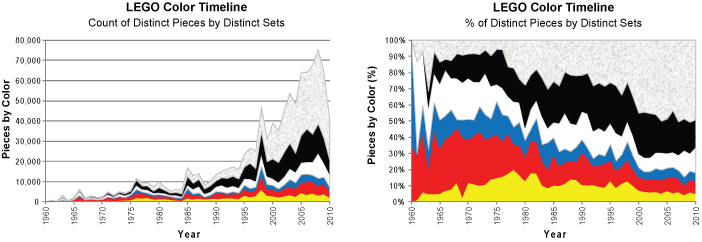
Interesting, non-mathematically-unaware data visualisations on the blog Ideas Illustrated, including the origins of English words, the distributions of LEGO bricks, and how Wisconsin voters ended up on Null Island.
(via David Roberts on Google+)
Talk: Alan Turing and the Enigma Machine, by James Grime
James Grime has written an all-new talk, titled “Alan Turing and the Enigma Machine”, which he’ll be delivering 5:30-6:30 on Tuesday the 12th of June at the Centre for Mathematical Sciences, Clarkson Road, Cambridge.
Alan Turing was one of our great 20th century mathematicians, and a pioneer of computer science. However, he may best be remembered as one of the leading code breakers of Bletchley Park during World War II. It was Turing’s brilliant insights and mathematical mind that helped to break Enigma, the apparently unbreakable code used by the German military. We present a history of both Alan Turing and the Enigma, leading up to this fascinating battle of man against machine – including a full demonstration of an original WWII Enigma Machine!
You can find more details of the event on the Millennium Mathematics Project site.
A mathematician’s survival guide, by Peter Casazza
A survival guide for young mathematicians written by Pete Casazza has been doing the rounds today. It contains an experienced mathematician’s advice for young mathematicians starting out on their careers and unsure of what to expect or what’s expected of them.