He’s always busy doing something: here’s some news about friend of the site and Stand-up Mathematician Matt Parker, who’s got big plans for October.
You're reading: News
Taking Maths Further podcast launch
The Further Maths Support Programme (FMSP), which provides support for students and teachers in the UK doing Maths and Further Maths at A-level, has commissioned a series of podcasts, called Taking Maths Further, showcasing different people who work using maths as part of their job, and the mathematical tools they use.
So what happened to the abc conjecture and Navier-Stokes?
Has there been any progress on verifying the proof of the abc conjecture or the solution to the Navier-Stokes equations? It’s been eerily quiet. I’m never going to come close to understanding any of those things, so I’ve been eagerly awaiting news that they’ve been either accepted or rejected.
Particularly mathematical Birthday Honours 2014
With the announcement the Queen’s Birthday Honours list, it’s time for the latest in our ongoing Honours-watch series of posts. In this, we search arbitrarily for ‘mathematics’ in the PDFs of the various lists, and hope our well-informed readers fill in the blanks where actual knowledge is required.
IMA 50th Anniversary events

The IMA turns 50 this year, and is holding two celebration events and publishing a book.
Oh, Stephen
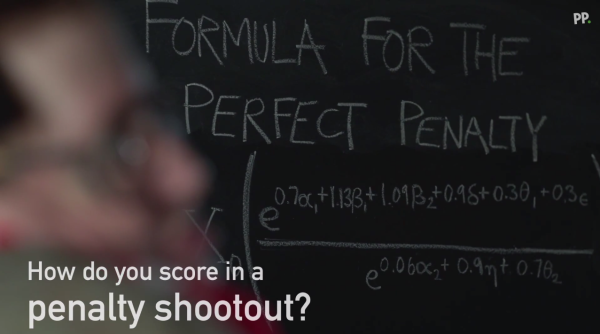
“It is hugely complicated. In fact, compared to football I think Quantum Physics is relatively straightforward.”
– Professor Stephen Hawking
Even you, Stephen?
If you pick up basically any newspaper in Ireland or the UK today, you’ll probably find a story about Professor Stephen Hawking’s “formula for World Cup success”. At first glance, it doesn’t look good: The World’s Most Famous Scientist appears finally to have succumbed to the temptation of nonsense formula publicity.
Vi Hart has 3D printed a hypercube made of monkeys that has the symmetries of the Quaternion group
Group theorists, often interested principally in the abstract, have been known to neglect the vital importance of producing funky gizmos that exhibit the symmetries they have theorized about. Internet maths celeb Vi Hart, working with mathematician Henry Segerman, has addressed this absence in the case of $Q_8$, the quaternion group. The object they’ve designed is four-dimensional and made of monkeys, and they’ve done the closest thing possible to making one, which is to 3D-print an embedding of it into our three-dimensional universe, also made of monkeys. Their ArXiv preprint (pdf) is well worth a read, and when you get to the photos of the resulting sculpture (entitled “More fun than a hypercube of monkeys”), you’ll fall off your chair.
Further reading
The Quaternion Group as a Symmetry Group by Vi Hart and Henry Segerman, on the ArXiv.
Nothing Is More Fun than a Hypercube of Monkeys at Roots of Unity, including an animated gif of a virtual version of the sculpture rotating through 4D-space.