A conversation about mathematics inspired by a piece of folklore. Presented by Katie Steckles and Peter Rowlett.

Podcast: Play in new window | Download
Subscribe: RSS | List of episodes
A conversation about mathematics inspired by a piece of folklore. Presented by Katie Steckles and Peter Rowlett.
Podcast: Play in new window | Download
Subscribe: RSS | List of episodes
Here’s some mathematical news from last month that we didn’t otherwise report here.
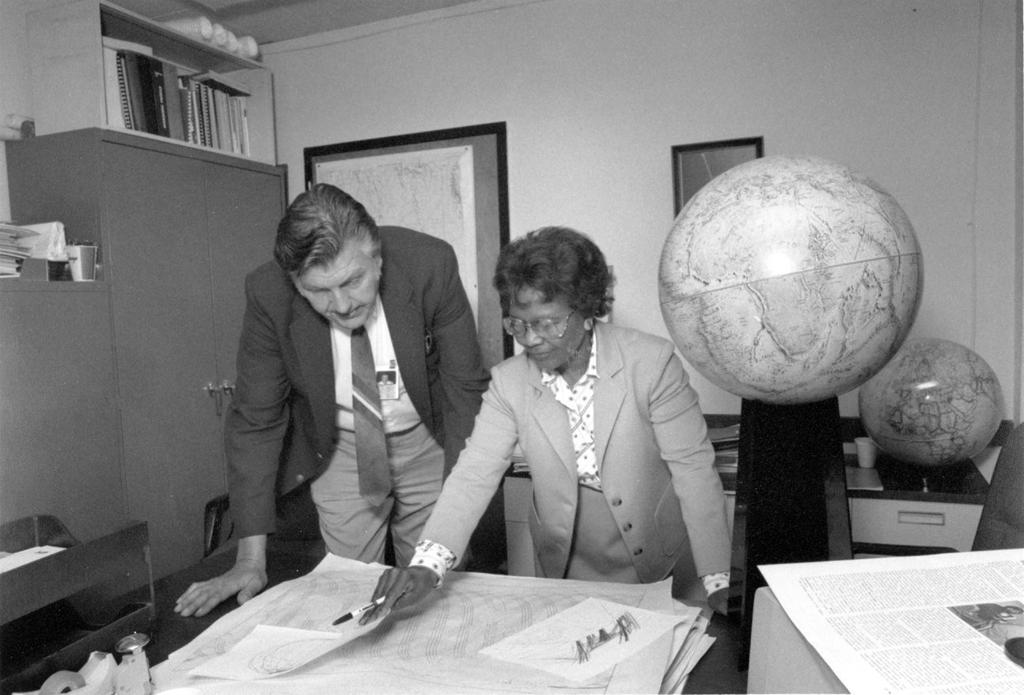
Dr Gladys West, one of the “Hidden Figures” behind developing the maths of GPS, has died. She was 95. (via A. Rivera). Metafilter has a comprehensive post about her work and influence here.
While it’s sad to lose nonagenarian heroes, it’s perhaps unavoidable. That seems less the case for another recent loss: the Mathematical Center of the Venezuelan Institute for Scientific Research was destroyed by the USA in its operation last week. (in Spanish; via matematiflo on mathstodon).
Accessibility of mathematical materials is often an afterthought, if it’s a thought at all. I had to hurry back to put alt-text on the picture above. It’s good to see that several of maths’s learned societies (the AMS, EMS, LMS and SIAM) have published author guidelines for preparing accessible mathematics content.
There’s a fair amount of chat lately about whether the current set of AI tools can be useful to research mathematicians. In establishing whether AI tools can really help with new maths or whether they’re just regurgitating something they’ve seen elsewhere, it would be useful to have a set of problems whose answers are definitely known to humans, but haven’t appeared in any text corpus that the AI might have been trained on.
Eleven Serious Mathematicians have announced a project called “First proof” (1stproof.org), aiming to do just that. They’ve come up with ten mathematical questions and solved them, but rather than publishing the answers straight away, they’ve encrypted them for a week. So people have a week to try to get AI tools to come up with solutions, after which the human answers will be published and the AI solutions verified.
(via Terence Tao, who noticed the similarities with the old practice of publishing encrypted proofs to establish priority before properly writing them up)
Applications are open for PROMYS Europe 2026, a six-week residential summer programme at the University of Oxford, UK (July 12th to August 22nd). It’s open to pre-university students (age 16+) from across Europe (including “all countries adjacent to the Mediterranean”); the deadline is March 8th, but PROMYS recommend allowing plenty of time to tackle the problems that form part of the application.
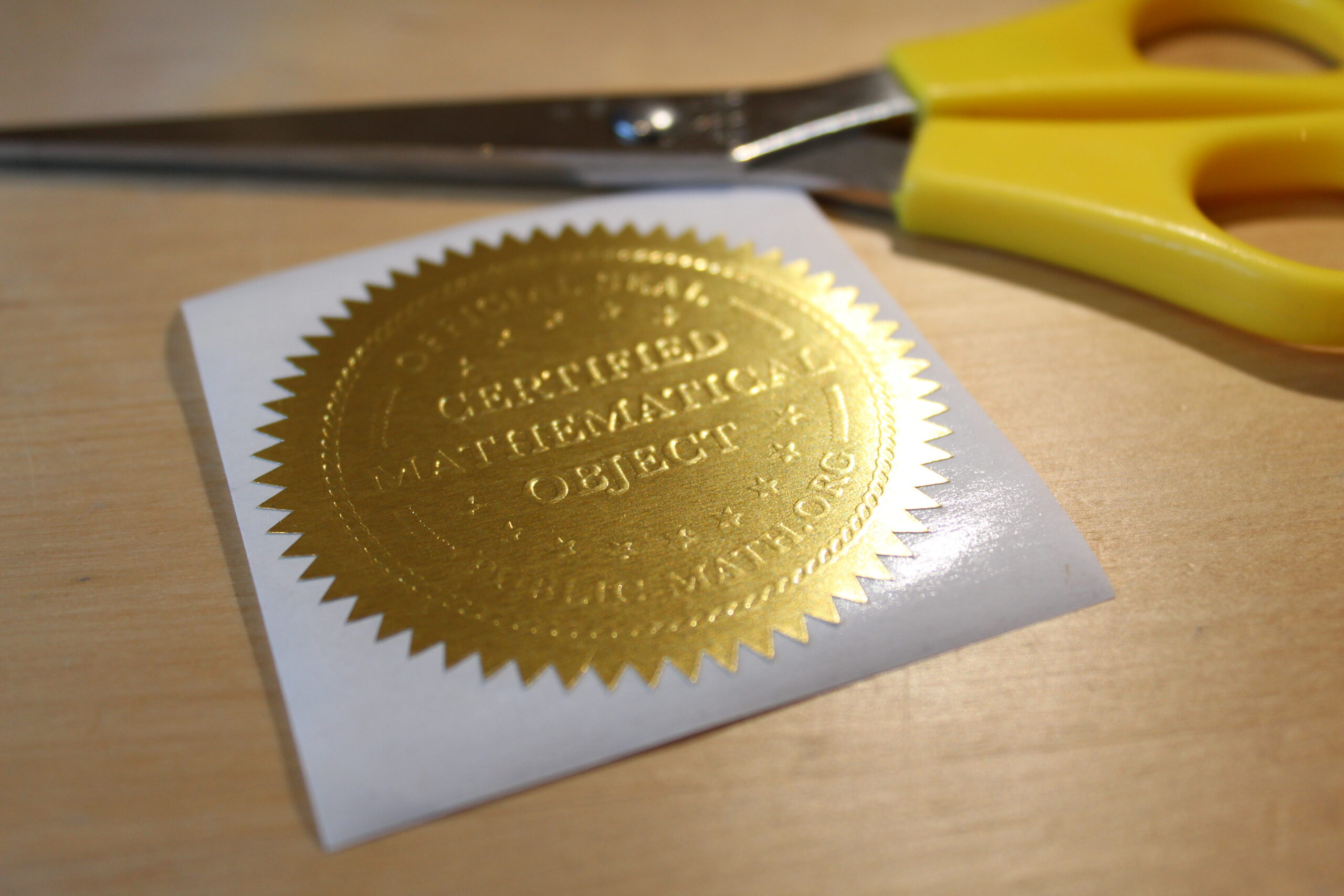
A conversation about mathematics and communicating mathematics inspired by a ‘Certified Mathematical Object’ sticker. Presented by Katie Steckles and Peter Rowlett, with special guest Chris Nho from Public-Math.org.
Podcast: Play in new window | Download
Subscribe: RSS | List of episodes
A conversation about mathematics inspired by a taxicab. Presented by Katie Steckles and Peter Rowlett.
Podcast: Play in new window | Download
Subscribe: RSS | List of episodes
Here’s some mathematical news from last month we didn’t otherwise report on here.
The European Mathematical Society has awarded the 2025 Fermat prize to Vesselin Dimitrov and Vlad Vicol, “for breakthroughs in number theory, Diophantine geometry, and the analysis of fluid mechanics and turbulence.”
A portrait of mathematician Hannah Fry (below) has been commissioned by the Royal Society from Sky Arts Portrait Artist of the Year Chloe Barnes. The commission is part of a year-long celebration of the 80th anniversary of the first women elected to Royal Society Fellowship, Kathleen Lonsdale FRS and Marjory Stephenson FRS. Visitors can view the portrait at the Royal Society’s public events, including the Summer Science Exhibition during the first week of July, and Open House London in September (or by appointment on weekdays, or by looking at the image below).
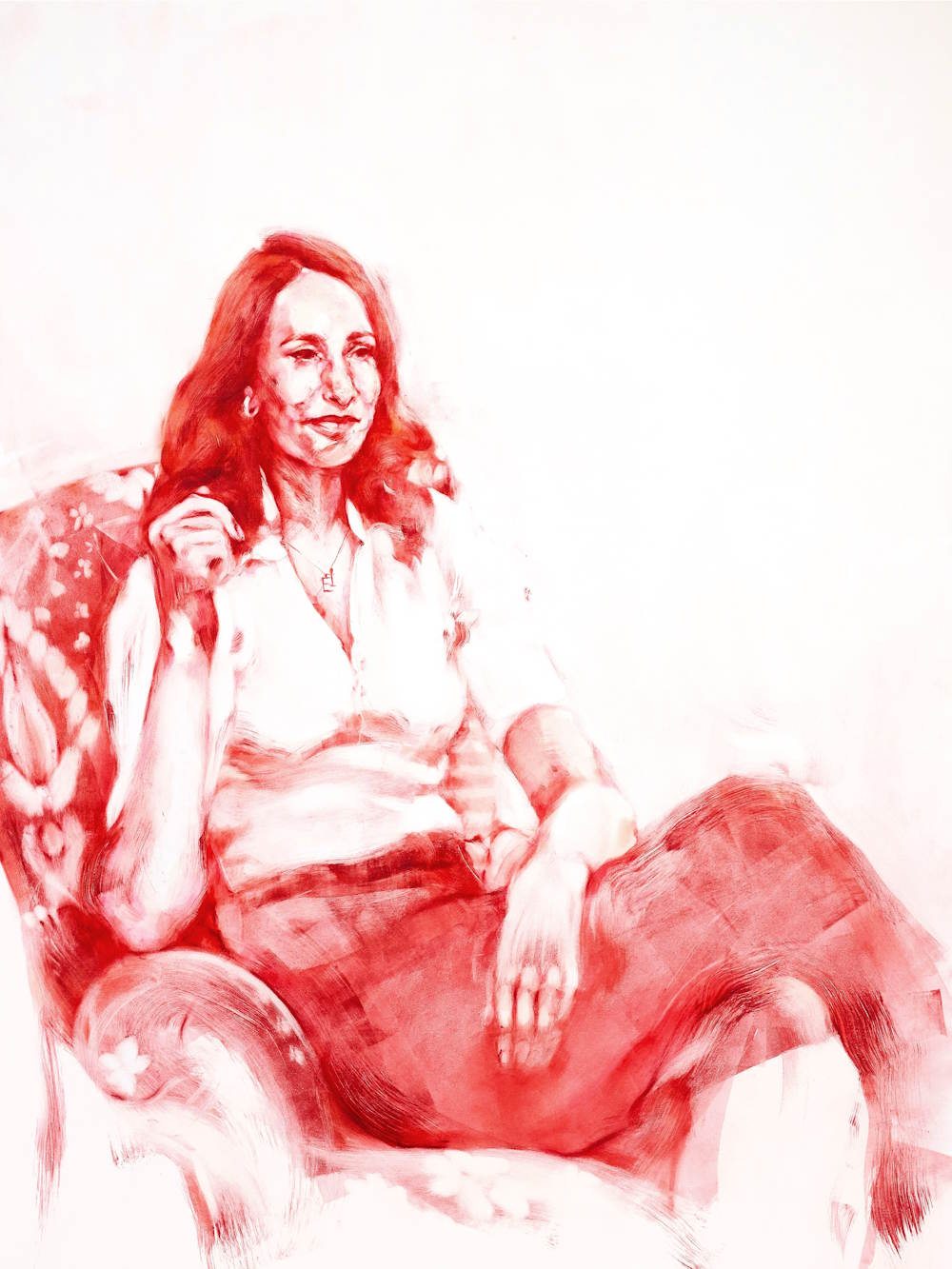
Hannah Fry was awarded the Royal Society’s David Attenborough Award and Lecture 2024 in recognition of her significant work in public engagement with science and for her prolific role in popularising mathematics.
New Game of Life discovery: a one-dimensional spaceship that’s 3,707,300,605 cells wide, that eventually recreates itself translated two cells to the right. (via Robin Houston on Mastodon).
There’s a new π calculation record – starting last July, computing industry reviewing publication StorageReview crunched a whopping 314 trillion digits, using a Dell PowerEdge R7725. The calculation took 110 days and finished in December. Still don’t know what the last digit is though, do they?
And in other slightly-larger number news, the number 751882!/751879# + 1 is the new largest known compositorial prime number, found by PrimeGrid. A compositorial number is one which is $n$ factorial (the product of all the numbers less than or equal to $n$, denoted $n!$) divided by $n$ primorial (the product of all the primes less than or equal to $n$, denoted $n\#$), so-called because it’s the product of all the composite numbers less than or equal to $n$. This number plus one, if prime, is then called a compositorial prime. At a truly whopping 3765621 decimal digits, this is now the largest known prime of this form. (via MOULE on mastodon)
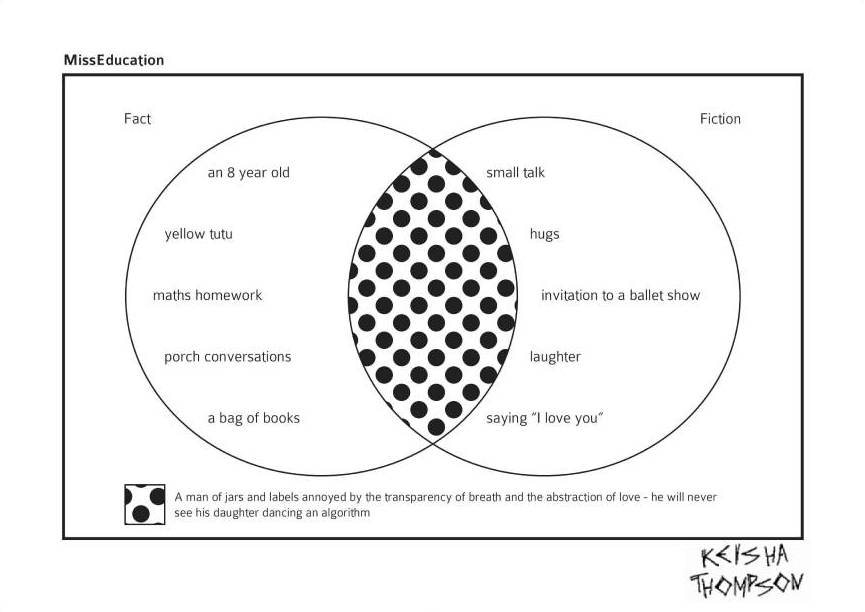
A conversation about mathematics inspired by a Venn diagram. Presented by Katie Steckles and Peter Rowlett, with special guest Keisha Thompson.
Katie mentioned the MathForEquality badges and pins.
Podcast: Play in new window | Download
Subscribe: RSS | List of episodes
The UK Government have announced the latest list of honours, and we’ve taken a look for the particularly mathematical entries. Here is the selection for this year – if you spot any more, let us know in the comments and we’ll add to the list.