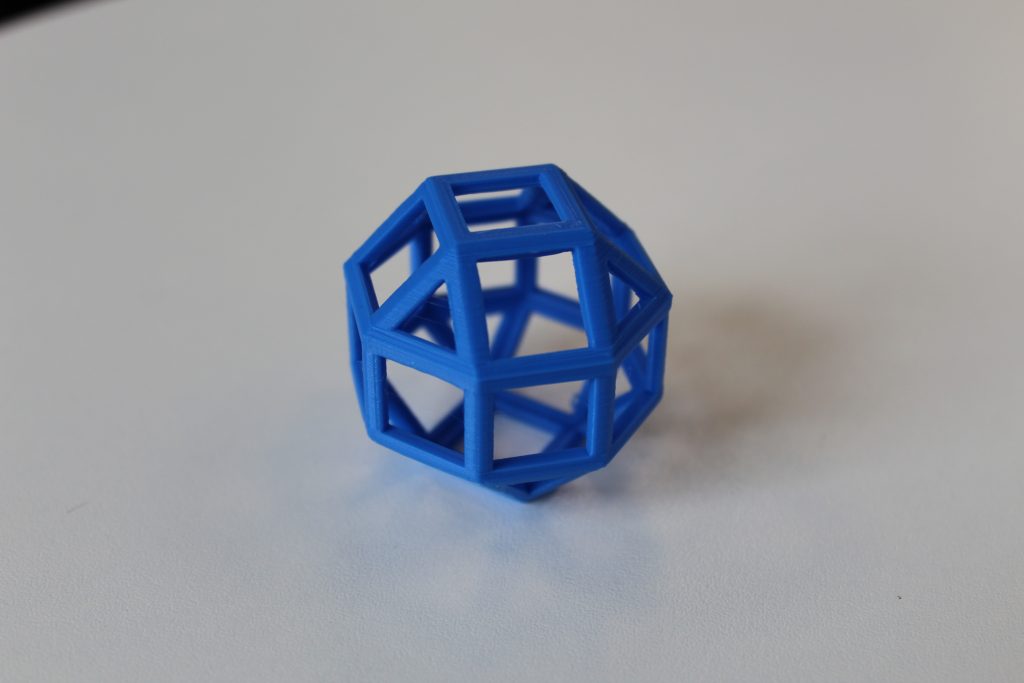
A conversation about mathematics inspired by the pseudorhombicuboctahedron. Presented by Katie Steckles and Peter Rowlett. Podcast: Play in new window | Download Subscribe: RSS | List of episodes

A conversation about mathematics inspired by the pseudorhombicuboctahedron. Presented by Katie Steckles and Peter Rowlett. Podcast: Play in new window | Download Subscribe: RSS | List of episodes
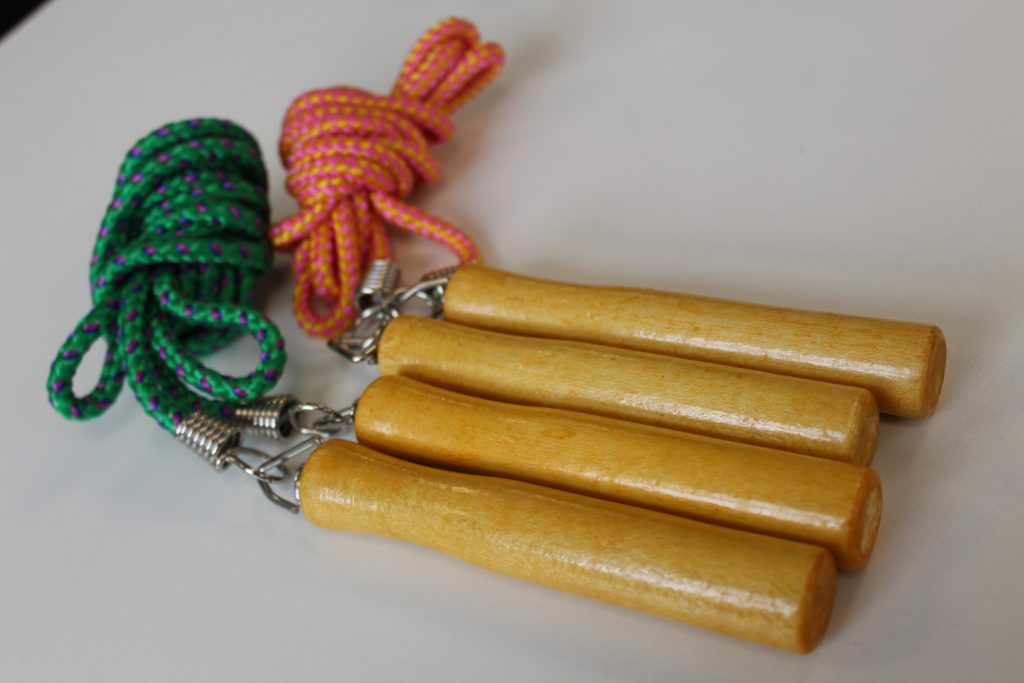
A conversation about mathematics inspired by a pair of skipping ropes. Presented by Katie Steckles and Peter Rowlett. Podcast: Play in new window | Download Subscribe: RSS | List of episodes
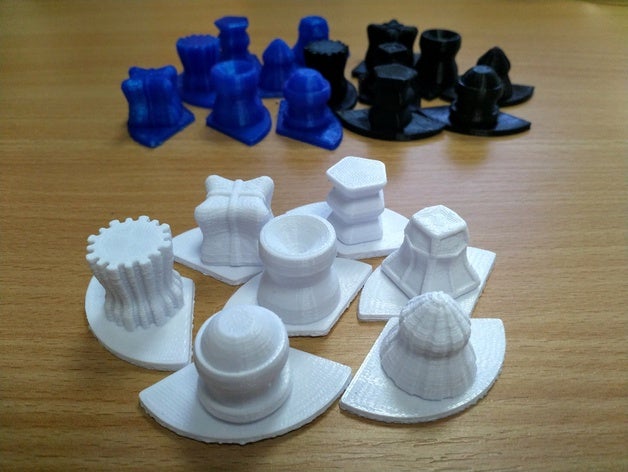
At work we’ve got a 3D printer. In this series of posts I’ll share some of the designs I’ve made. There are seven kinds of shape. There are three copies of each shape. The pieces like to group together in threes. Can you arrange the pieces into seven groups of three so that for each…
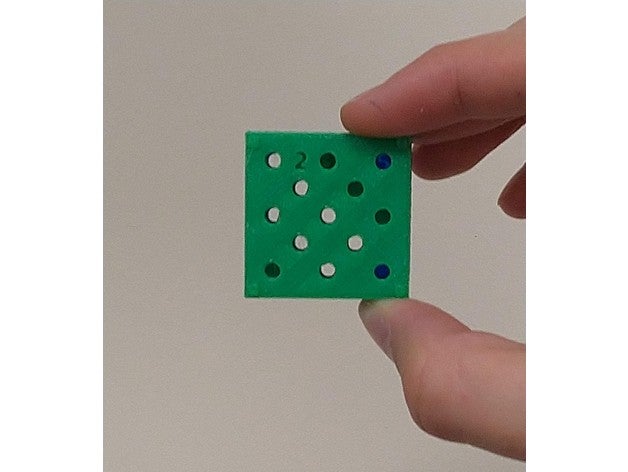
At work we’ve got a 3D printer. In this series of posts I’ll share some of the designs I’ve made. This is something I’ve wanted to make for a long time: a literal sieve of Eratosthenes. This is a collection of trays which stack on top of each other. Each tray has a grid of…
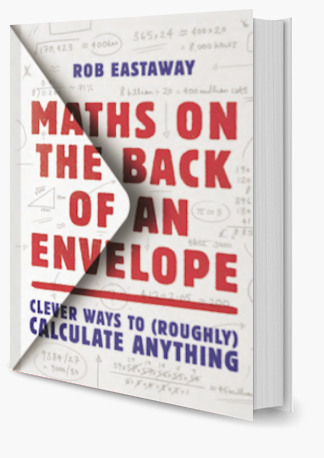
A book about mental arithmetic? By Rob Eastaway? Count me in! In my fuzzy mental Euler diagram of topics and authors, Maths On The Back Of An Envelope lies in the intersection of several ‘favourite’ circles. Perhaps paradoxically, this meant I was expecting to be a little disappointed: how can a book, by an author…
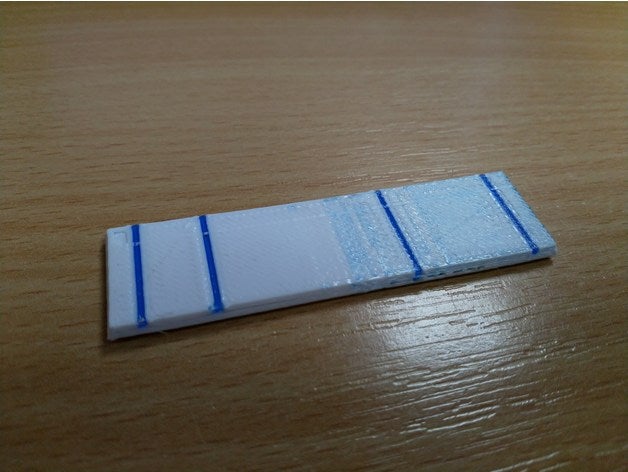
At work we’ve got a 3D printer. In this series of posts I’ll share some of the designs I’ve made. At the start of the Summer we (I) bought a new 3D printer for the department, a FlashForge Dreamer. It’s got two extruder heads, so it can do two-colour prints. To test that out, I…
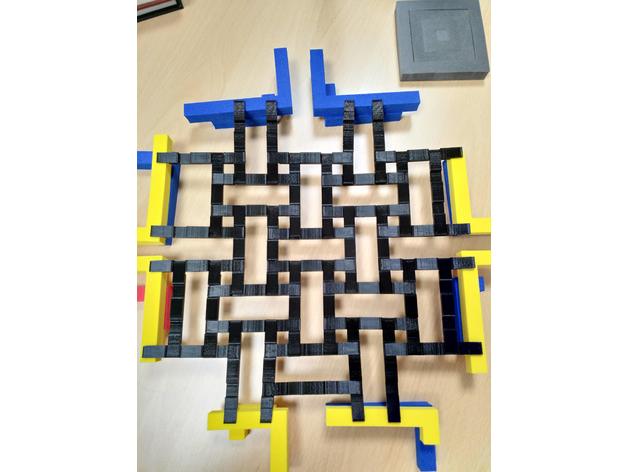
At work we’ve got a 3D printer. In this series of posts I’ll share some of the designs I’ve made. The roof of the Sheldonian theatre in Oxford, built from 1664 to 1669, is constructed from timber beams which are unsupported apart from at the walls, and held together only by gravity.