Here’s a round-up of some news from the last couple of months.
Mathematical discoveries
Lerch primes are defined as odd primes that divide their Lerch quotients (obviously) and until now we only knew four of them existed. This month, Veljko Vranić has found the fifth Lerch prime: it’s 42,447,347, if you were wondering. (via the SeqFan mailing list)
Ruslan Mizhaev has written about an octahedron of genus 3 which is equivelar (all vertices have the same degree and all faces the same number of edges). The author had first described the shape in 2020 – the new work gives coordinates for vertices and equations for edges so we can check it’s really a polyhedron.
A new 3D aperiodic monotile has been discovered, based on the existing ‘chair’ substitution tiling which consists of a cube with a cube-shaped corner missing, 8 copies of which can be arranged to make a larger copy of the original shape (and extended to a tiling of 3D space, which can be periodic). (Image below from the Chair tiles page at aperiodictiling.org.)
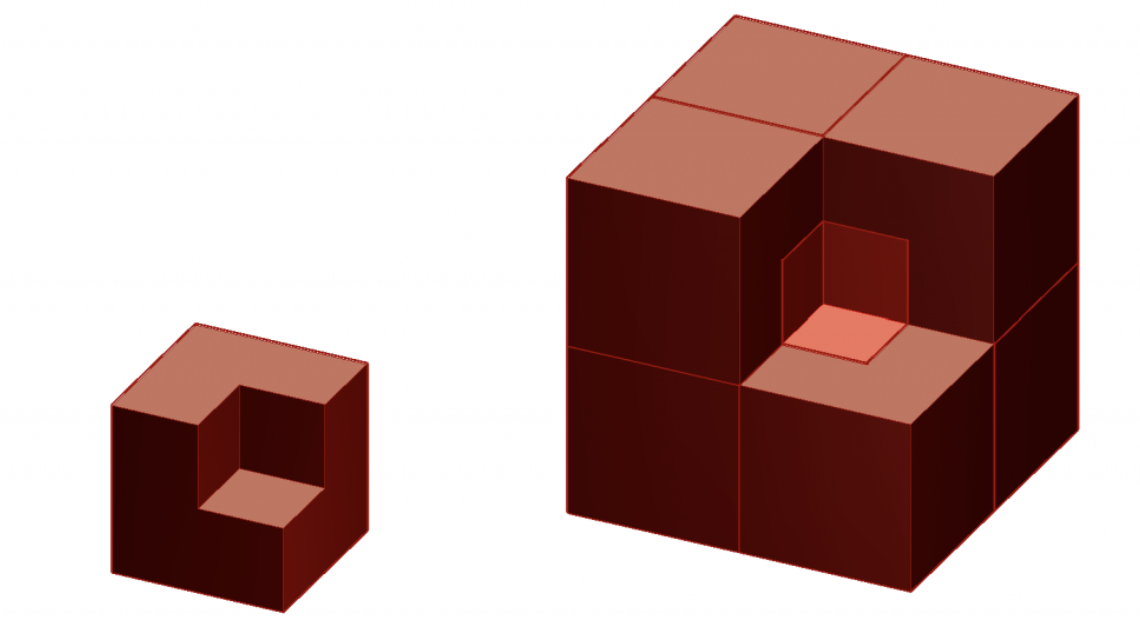
The newly discovered shape, called Chair44, adds matching rules to the faces of the shape which force an aperiodicity. Chair44 was discovered by Ioannis Tsiokos, a software developer from Athens, with the assistance of OpenAI’s GPT-6 Astra – along with a formalised Lean proof of the aperiodicity.
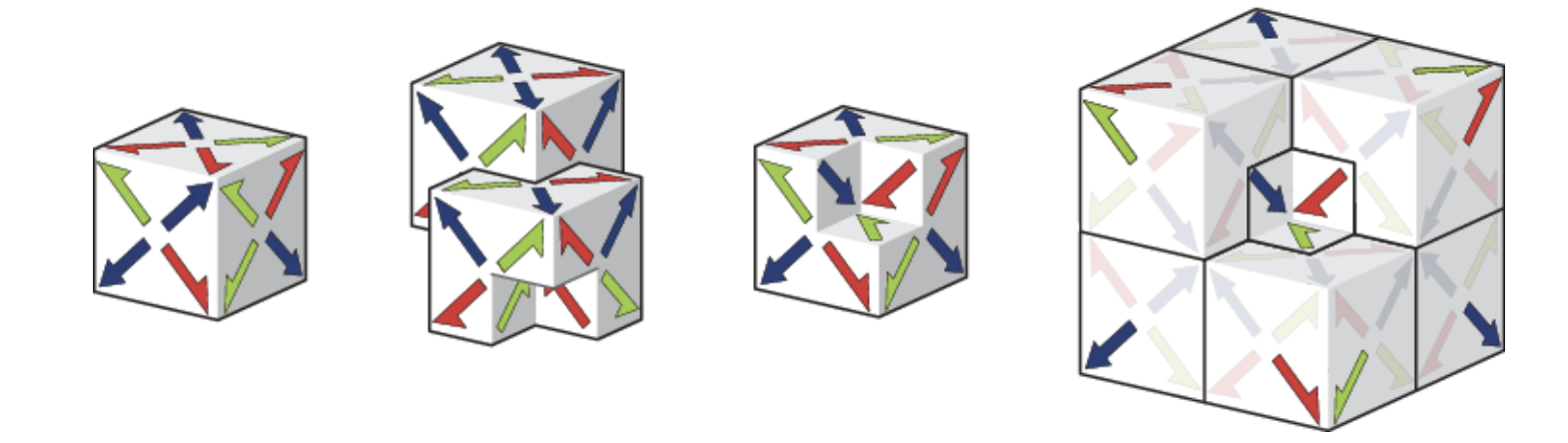
The original paper was released as a preprint on 16th September, but was considered by some to be poorly explained – but the maths community obliged with a write-up from hat aperiodic monotile bod Chaim Goodman-Strauss (from which the above image is taken), and another nicely explained follow-up from Felix Flicker.
This is not the only AI-assisted result announced recently. Maths is having a bit of an AI moment, and it is viewed as extremely problematic by some. Some results we spotted include an Anthropic press release about their work to formalise Wiles’ proof of Fermat’s Last Theorem in Lean, and Tristan Buckmaster and Levent Alpöge claim three results in fluids and progress on Navier-Stokes, achieved “with a great deal of help from LLMs”.
The former is a result that is also the goal of a project by Kevin Buzzard. The latter came shortly before OpenAI claimed its resolution of the Millennium Prize Problem about the Navier-Stokes equations. This followed concerns about OpenAI’s interaction with mathematics, and has provoked considerable discussion from commenters, including a piece by Terence Tao in New Scientist under the heading ‘AI companies are harming mathematics‘ (paywall). Much coverage for those interested from Proofs and Prompts.
Other news
UN members recently voted to encourage organisations to use map projections which maintain the relative size of areas, naming the Equal Earth projection in particular. It neither requires Equal Earth or any other projection, nor bans the Mercator projection. Only the USA voted against, dismissing the initiative as part of a “radical ideological project.” Six other countries abstained, including Ukraine which cited concerns about ambiguity around disputed territories.
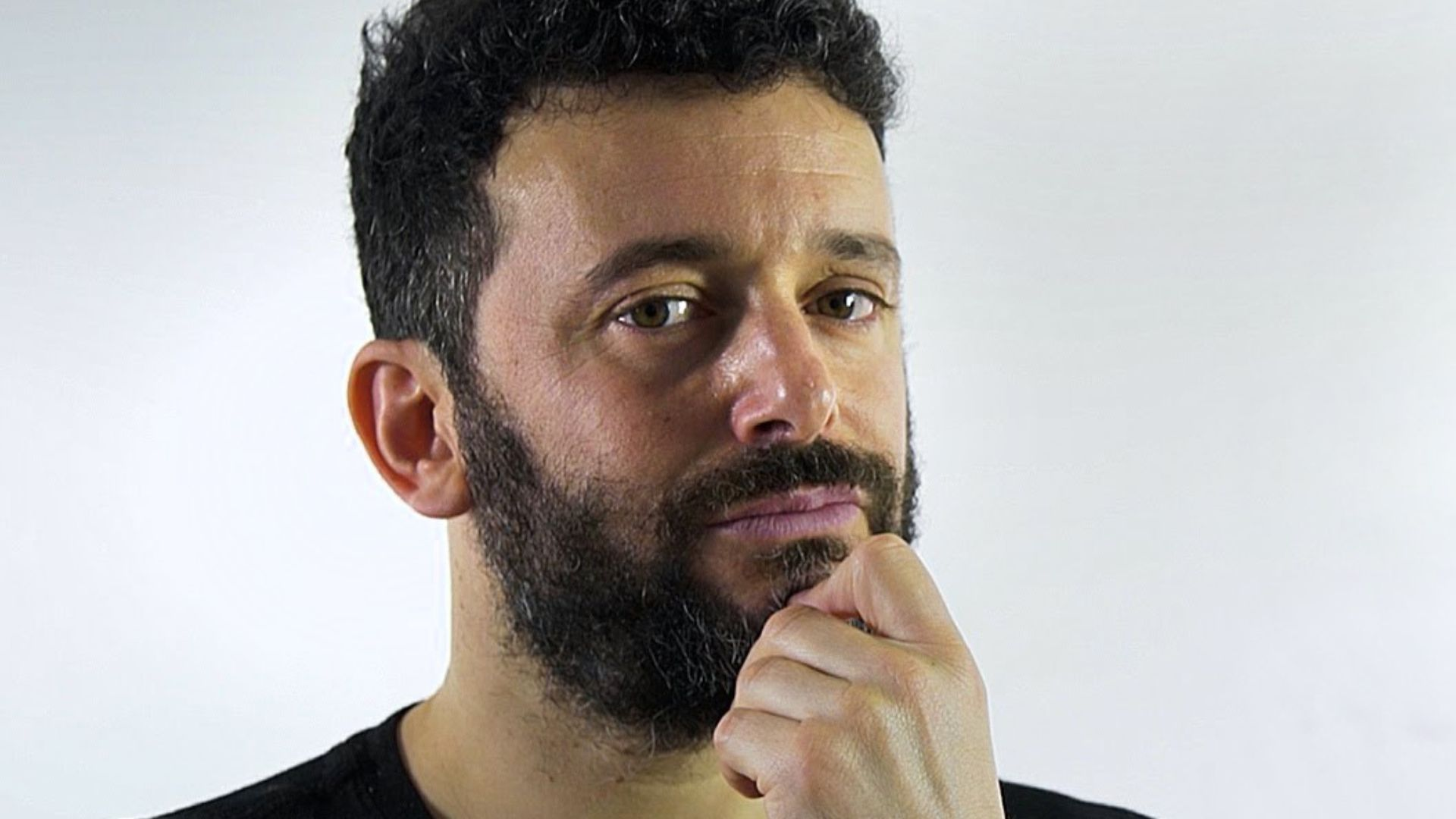
And finally, author Alex Bellos has been awarded the Christopher Zeeman Medal 2026 by the IMA and LMS, in recognition of how “he has brought mathematics to audiences far beyond its traditional reach through bestselling books, newspaper columns, radio and television appearances, online media, and public engagement activities.” Congrats, Alex!